Avoiding certain foods because of a chip
Describe the damage and how long you have been avoiding that side. The amount lost and the condition of the rest of the bridge guide whether a focused repair or a new restoration should be considered.


Many people quietly work around a troublesome implant bridge for months, chewing on one side and hoping it settles. From Campbellville, you can have the bridge, how it is fastened, the implants and your cleaning reviewed in a well-organised visit, so a small problem does not grow.
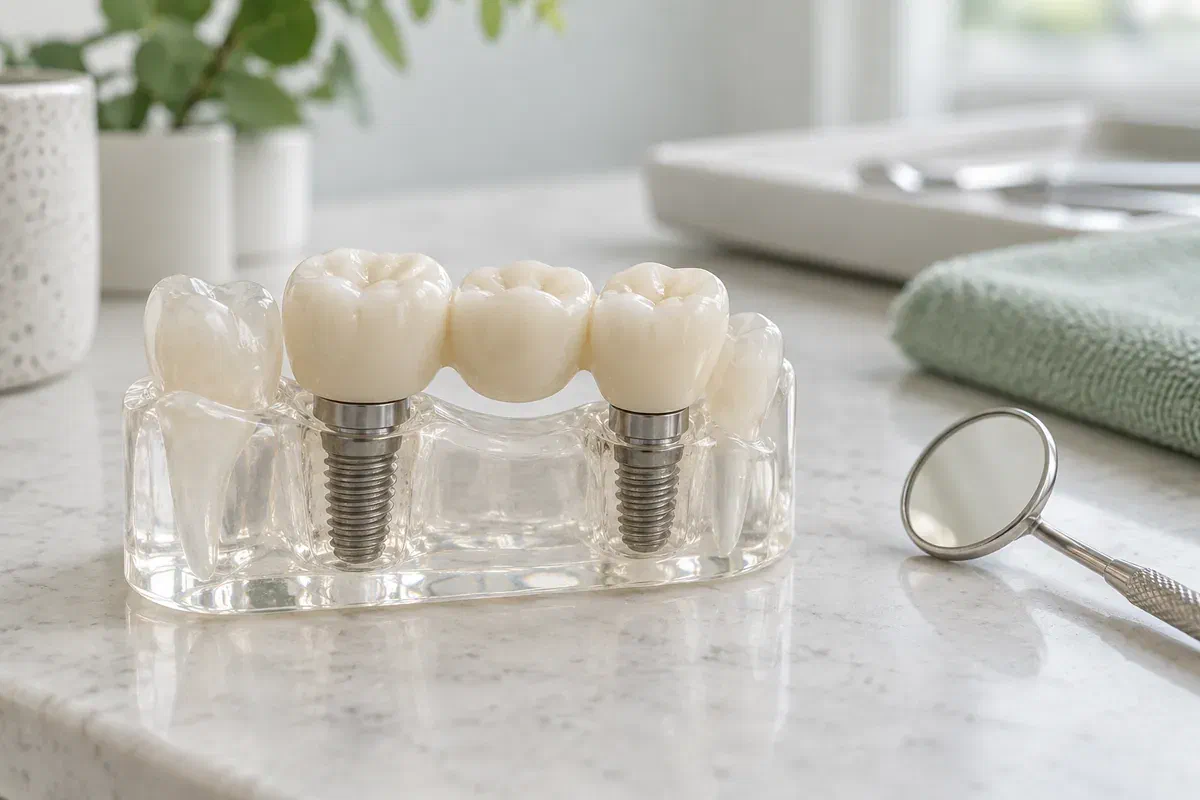
When life is busy and appointments mean planning, it is easy to adapt instead. You avoid crusty bread on the left, you rinse more after meals, and the bridge slips down the list. Yet small changes in an implant bridge are easier to manage early. The bridge sits on implants through connecting parts, and fixing or renewing it often leaves the implants in place.
What you have been working around matters. A chipped surface, a frame that has flexed or cracked, a screw that keeps loosening, or a design that traps food all suggest different care. Movement especially has more than one explanation, so a complete remake should not be presumed before an exam.
Tell us at booking that you are coming from Campbellville and would like to group things where possible. Bring what you know about the bridge’s age and origin. After examining it, we will explain which parts can stay, whether a specialist should be involved, how the gap would be covered and how to keep the number of trips sensible.
The ways you have adapted are useful clues. Combined with the state of the implants, your bite and how cleanable the area is, they help shape the recommendation.
Describe the damage and how long you have been avoiding that side. The amount lost and the condition of the rest of the bridge guide whether a focused repair or a new restoration should be considered.
Even mild movement needs the bridge, its connections and the implants examined. Stop testing it with your tongue, keep chewing gentle and call for advice on how soon to come in.
If you are rinsing or picking more than before, or the gums are sore, mention it. A redesign might ease access, but gum changes need their own diagnosis and care.
If the bridge moves suddenly, causes pain or loses a piece, mention it when you call. Do not attempt to tighten, glue or remove an implant bridge at home.
If the exam finds the bridge no longer serves you, a replacement can address those findings. It also opens a discussion about tooth layout, material, contacts and room for cleaning, all within the limits of the implants you already have.
Those limits are part of the conversation from the start. A new bridge cannot by itself cure every implant or tissue concern, and retained implants may narrow design choices. Ask which issues the plan should resolve and which need separate care or monitoring over time.
Patient information: Cambridge University Hospitals — implant restorations and long-term care
The teeth, the fastening hardware and the implants are linked but distinct. Finding the one at fault explains why a repair, connection work, a remake or another route is being recommended.
How you have adapted, at meals and while cleaning, shows what the bridge has not been doing well. That shapes the design, while recognizing that some changes may not be clinically possible.
Ask how a new bridge would be cleaned at home, how often it needs checking and how repairs would work. Upkeep that fits your routine is part of choosing the right design.
The sequence depends on your implant system, how the bridge is held and its condition. We will tell you at the start if removal, additional records, lab time or referral is likely, so you can plan around it.
Implant cards, earlier treatment notes and any saved loose part are helpful. Note when the problem began and how you have been managing it.
Dr. Anjum checks the bridge, its connections, the gums and your bite, and X-rays may be taken at the same visit where appropriate. This distinguishes a bridge fault from an implant concern.
Together we confirm what can be kept, what should change and how the space will be managed, with materials, fees, an estimate of visits and any interim teeth laid out clearly.
The new or repaired bridge is checked for seat, contacts, chewing and cleaning access. Follow-up for the implants and gums is scheduled with your routine in mind.
A replacement can feel different even in the same space. Ask for care steps that fit its design, and phone with questions rather than waiting for your next appointment.
Have the team show you the tools and angles that work for the new bridge. If an area proves hard to reach once you are home, call so we can advise.
An uneven bite, a click or any sense of movement should be reported rather than adapted to. Avoid heavy chewing on a section that feels unstable.
Implants need their gums and bone checked as faithfully as the teeth on top. Booking the next review before you leave makes it easier to keep up.
Putting off a visit is common, and nothing to feel bad about. These points may help you decide what to do now; specifics depend on your bridge, implants and gums.
Arrange an appointment at our Bronte Street clinic about an implant bridge you have been managing around. We will examine it, explain whether repair, a remake or further tests are the next step, and help you plan visits efficiently.
Bring implant records, notes on any earlier repairs and a list of the ways you have adapted at meals.
