A tooth on the bridge has chipped or worn
Mention whether this is the first time. The extent of the damage, and how the rest of the bridge is holding up, inform whether a small repair might avoid the need for interim teeth altogether.


The thought of a gap while a new implant bridge is made puts many people off. Coming from Georgetown, you can have the bridge, its connectors, the implants and your cleaning routine reviewed, and learn how the space would be handled before agreeing to anything.
Work meetings, family events and everyday errands do not pause while a bridge is being made, so it is fair to ask about the interim before anything else. The answer depends on how your current bridge is fastened to its implants and what needs to change. In many cases the implants stay put while only the bridge on top is renewed.
First, though, we need to know why replacement is on the table. Worn or fractured porcelain, a broken frame, connectors that keep working loose, or contours that make cleaning a struggle all lead to different recommendations. A bridge that moves may not need remaking at all until the source is found.
Bring your questions about timing to the first visit, along with anything you know about the bridge. Once we have examined it, we will explain which parts are still serving you, whether a specialist should be involved and what temporary arrangement, if any, would cover the space while new work is prepared.
The thing you notice is a starting clue. The condition of the implants, how your bite meets and whether you can keep the area clean all shape the advice you receive.
Mention whether this is the first time. The extent of the damage, and how the rest of the bridge is holding up, inform whether a small repair might avoid the need for interim teeth altogether.
Any looseness needs the bridge, its connectors and the implants looked at together. Avoid fiddling with it, keep to softer foods on that side and call us for guidance until your appointment.
Persistent soreness or trapped food deserves attention. A new bridge might improve access, but gum changes need their own diagnosis so they are not simply carried over to the next restoration.
If the bridge suddenly moves, hurts or loses a piece, please tell us when you call. Do not try to tighten, glue or take out an implant bridge yourself.
When the exam shows a bridge no longer meets your needs, a replacement can respond to those findings. Planning it properly also lets you revisit tooth shape, material, how the teeth meet and how a brush reaches underneath, all inside what your existing implants allow.
Limits deserve equal attention. A new bridge does not resolve every implant or gum concern by itself, and the implants you keep may narrow the design choices. Ask which issues the remake is meant to address and which will need other treatment or monitoring.
Patient information: Cambridge University Hospitals — implant restorations and long-term care
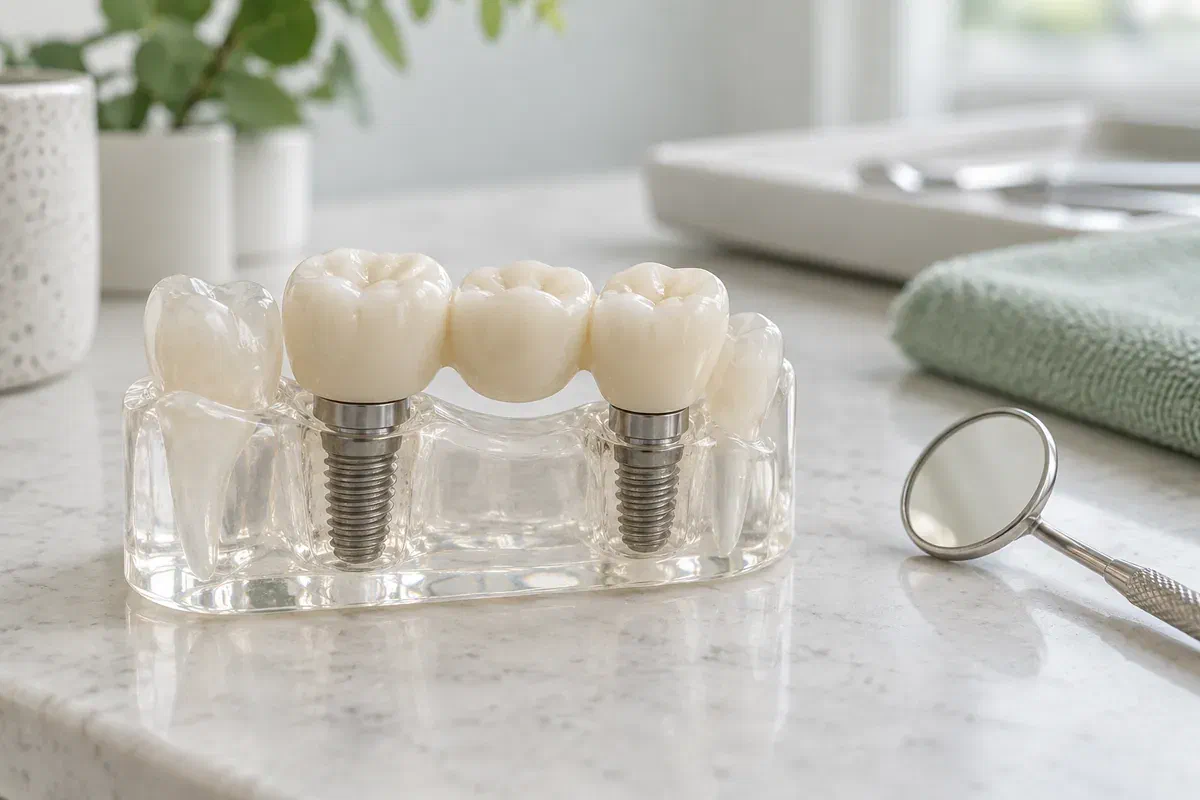
Bridge, retaining hardware and implants form one system with separate parts. Knowing which is at fault explains whether repair, connection work, a new bridge or another kind of care makes sense.
Share what has worked for meals, speaking and appearance, and what has not. That experience shapes the plan, even though not every preference will be clinically possible.
Find out how the temporary arrangement will be looked after, then how the final bridge will be cleaned, checked and repaired. Thinking about both early prevents awkward surprises.
No two bridges come out and go back in quite the same way. We will tell you early if removal, new records, lab work or a referral is likely, so you can plan around them.
Implant cards, earlier treatment notes and any part you kept safe are all useful. Tell us when the problem began and which repairs have been attempted.
Dr. Anjum examines the restoration, connectors, gums and bite, and X-rays may be advised. This tells us whether the problem sits in the bridge or extends to the implants.
We cover what can be kept, what should change and exactly how the space will be handled: whether the old bridge can be reused short-term, what a temporary would look like, materials, fees and visit count.
The final bridge is checked for its seat, contacts, comfort and cleaning access. You go home with care instructions and a follow-up plan that includes the implants and gums.
After weeks with a temporary, the final bridge may feel different again. Ask for care tips that match its design, and mention anything that seems wrong during everyday use.
Have the team show you which tools suit the new contours. If an area is hard to reach or food collects in a new spot, let us know so we can review technique or design.
An uneven bite, a click or a feeling of movement should be checked. These are not part of normal settling, and an unsteady area should be spared from heavy chewing.
Recall visits look at the gums and bone holding your implants as well as the new teeth. Keep them, and ask who handles maintenance if another office was involved.
These answers can help you plan around a replacement. Your own situation depends on how the bridge is designed and the condition of the implants and gums.
Reserve time at our Bronte Street practice to look at a bridge that is chipped, loose or simply awkward to live with. You will hear what we found, how the space would be covered, and whether a fix, a remake or more tests come next.
Bring implant records, any notes on earlier repairs and a safely stored loose part, plus dates you need to plan around.
