How much of the tooth material is damaged
A small, first-time chip may be repairable. Repeated breakage, or damage across several teeth, makes a replacement more likely to be discussed. Tell us the history so we can see the pattern.


Facing a choice between fixing an implant bridge and starting again? From anywhere in Halton Hills, you can have the bridge, how it attaches, the implants beneath and your cleaning access assessed, so the decision rests on findings rather than guesswork.
Most people arrive with one question: is this bridge worth saving? To answer it, we look at three layers separately. There are the replacement teeth you see, the parts that link them to the implants, and the implants themselves in the bone. A brand-new bridge can sit on implants that are kept, and sometimes nothing beyond a repair is needed.
The type of damage steers the outcome. A single chipped tooth is a different conversation from a framework that has cracked, a connection that will not stay secure, or a shape that has made cleaning a nightly battle. Looseness, too, can come from several places, so starting over is never the default before the exam.
From Georgetown, Acton, Glen Williams or a smaller hamlet, the first visit works the same way. You tell us the bridge’s age, where it was made and what has changed. We examine it, then explain what is still sound, whether a specialist should be consulted and how the gap will be covered during any new work.
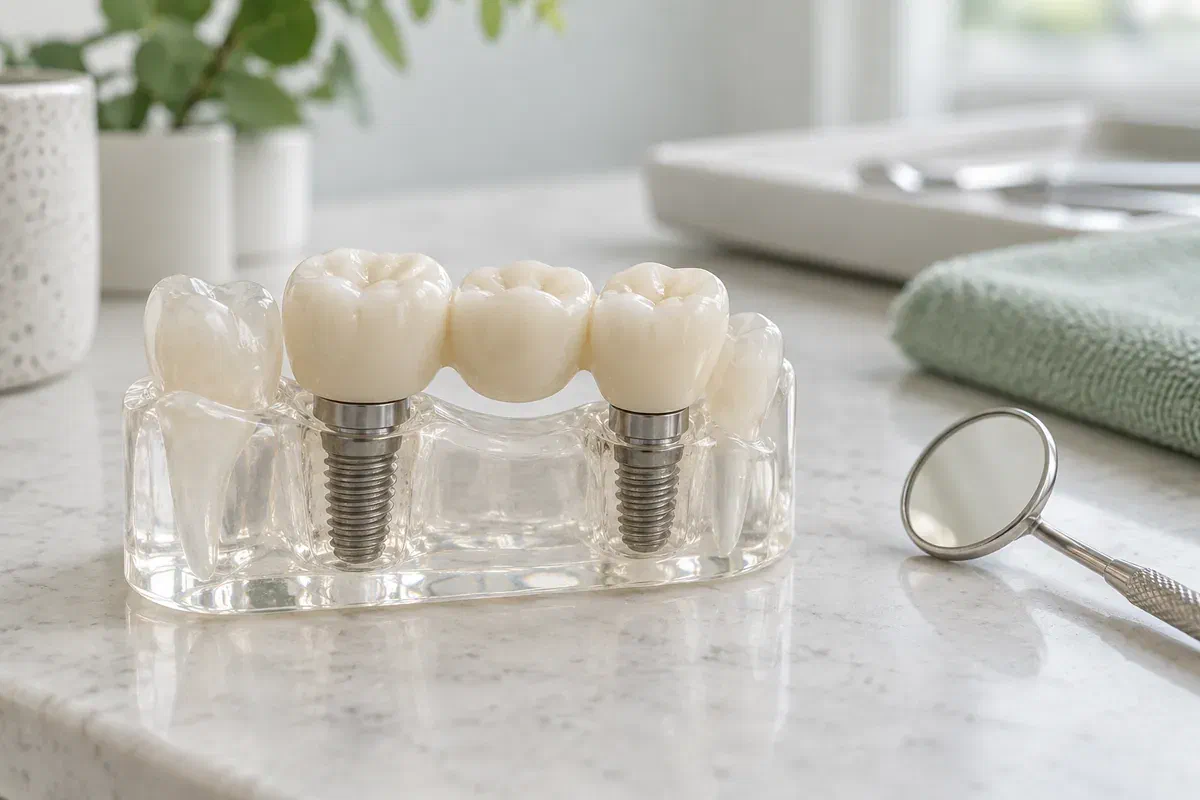
The visible fault is one factor. The health of the implants, the forces of your bite and whether every surface can be kept clean each push the decision toward repair, remake or a different kind of care.
A small, first-time chip may be repairable. Repeated breakage, or damage across several teeth, makes a replacement more likely to be discussed. Tell us the history so we can see the pattern.
Movement means the bridge, its connecting parts and the implants all need checking before any decision. Until then, avoid pressing on it, chew elsewhere and call for advice on what to eat.
Food that packs in, gums that bleed or tenderness that lingers all matter. A different design could improve access, yet the tissue concern needs its own diagnosis rather than being folded into the bridge question.
Sudden movement, pain or a piece that has broken away should be mentioned when you book. Do not attempt to secure, cement or detach an implant bridge on your own.
If the exam shows the bridge has reached the end of its useful life, replacing it can respond directly to those findings. The remake is also a moment to revisit arrangement, material, contacts and the space left for brushes and floss, always within what the remaining implants allow.
Just as useful is knowing what a new bridge will not do. It does not on its own settle every implant or gum concern, and the location of the implants you keep may narrow the design options. Ask us to list what the replacement should improve and what will still need separate care.
Patient information: Cambridge University Hospitals — implant restorations and long-term care
The teeth, the retaining hardware and the implants are separate pieces of one system. Identifying the one at fault is what justifies a repair, a connection fix, a remake or something else.
Tell us what has been comfortable and what has not, from chewing to speech to how it looks. That shapes the plan, though some changes you might like may not be clinically possible.
Before deciding, find out how the proposed bridge would be cleaned at home, how often it would be checked and how repairs would work. Upkeep is part of judging whether a design is right.
The order of steps varies with the implant system, the way the bridge is fastened and its condition. We will flag early if removal, further records, laboratory time or referral is likely to be part of the plan.
Implant details, earlier treatment notes and any part that came loose all help. So does a short account of when the problem began and what repairs, if any, were tried.
Dr. Anjum looks at the restoration, its connections, the surrounding gums and your bite, and may suggest X-rays. The aim is to tell a bridge-level fault apart from a support issue.
You see what can be kept and what would change, along with material, design, fees, the likely number of visits, any temporary teeth and how confident we are that the old bridge will come off cleanly.
Whatever is decided, the result is checked for fit, contacts, comfort and cleaning access. You leave with home-care steps and a review plan that includes the implants and gums.
A repaired bridge may feel familiar; a new one may feel quite different. Either way, ask for instructions that fit what was done, and tell us about anything unusual.
Ask the team to walk you through the tools that reach under and around the bridge. If anything is awkward, or food collects in a new spot, let us know so we can adjust technique or design.
A click, an uneven bite or a sense of shifting should be reported promptly. These are not normal after a repair or remake, and an area that feels unstable should not take heavy chewing.
The gums and bone around the implants need regular attention alongside the visible bridge. Keep recommended checks and ask who will coordinate if another office was involved.
These answers can support your decision. The right choice for your bridge depends on its design, the parts involved and the condition of the implants and gums.
Book a visit at our Bronte Street practice for an implant bridge that is worn, broken or difficult to manage. Once we have examined it, we will set out whether repairing it, replacing it or investigating further is the better choice for you.
Implant records, notes on any earlier fixes and a safely kept loose part all help us give you a clearer answer.
