

Illustrative consultation reviewing an existing implant-supported bridge
Restorative Dentistry

Implant Bridge Replacement in Milton

A chip you feel at dinner, a bridge that suddenly clicks, or a gap where food keeps catching can mean an implant bridge needs attention. In Milton, we start by checking the bridge, its connections, the implants beneath and how you clean around it.

When a Milton implant bridge starts to change

The first sign is often small.

Most people notice something during an ordinary meal: a rough edge, a faint click, or a corner that no longer feels smooth. An implant bridge is a row of replacement teeth held up by implants, and any part of it can be behind the change. Replacing the bridge is a separate question from whether the implants stay.

The cause shapes the answer. Fractured porcelain, a cracked framework, screws that keep loosening, or a shape that makes cleaning awkward can each point to different care. Movement has more than one explanation, so a full remake should not be assumed before a close look.

Being close by makes it easy to come in while the change is still minor. Tell us when the bridge was placed, who did the work and what you have noticed. We will explain which parts still serve you well, whether a referral makes sense and how the space will be handled during treatment in Milton.

Book a bridge check in Milton
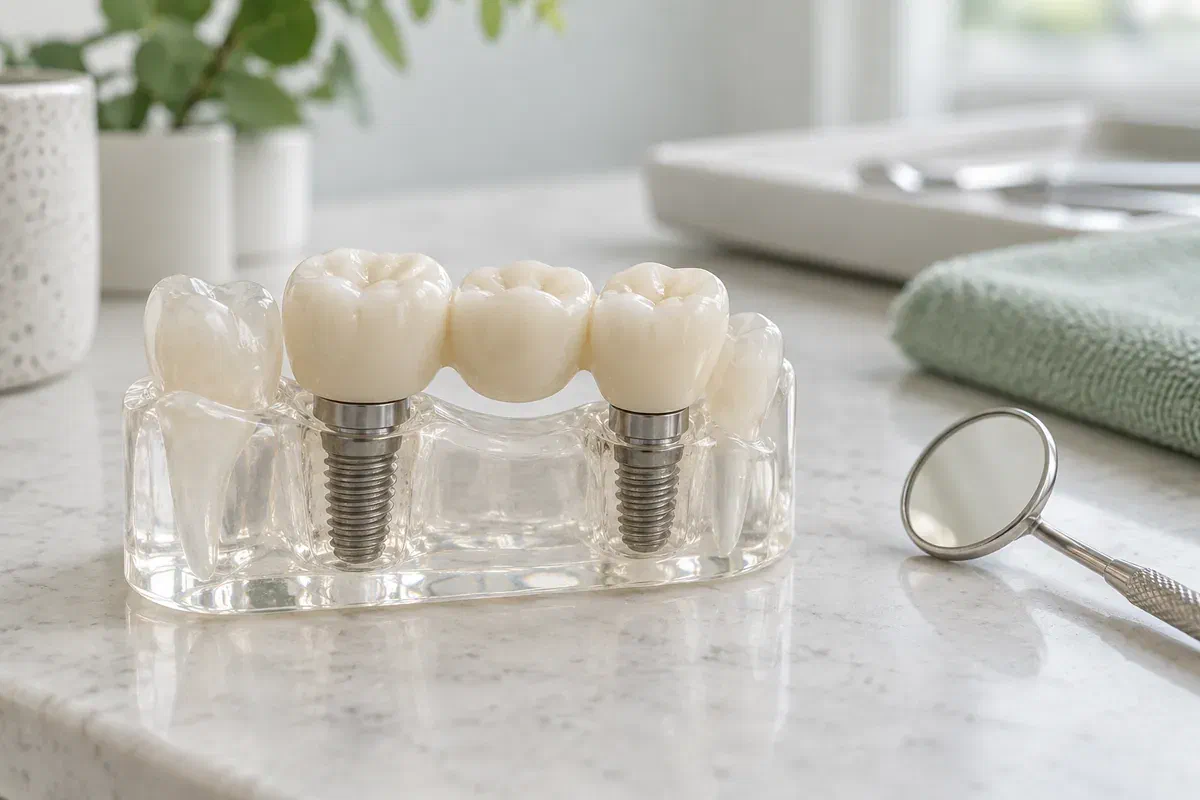
Teaching model of a short dental bridge supported by two implants
What people tend to notice first

Three changes worth mentioning when you call.

A chip or a wobble is only what you can see or feel. The supporting implants, how your teeth come together and how easily you clean the area all matter when deciding what comes next.

A rough edge, chip or crack has appeared

Let us know whether this is new or has happened before. How much material is lost, and the state of the rest of the bridge, help us judge whether a small repair is reasonable or a new bridge deserves discussion.

A click, wobble or different bite

Any movement calls for a look at the bridge, its connecting parts and the implants. Try not to keep pushing on it with your tongue or chewing hard on that side, and phone us for advice on eating until your visit.

Food catches or the gums feel tender

Trapped food, awkward access for floss, and gums that stay sore are worth raising. A new design might improve access, but irritated tissue needs its own diagnosis rather than being treated as a bridge issue alone.

If the bridge moves suddenly, hurts, or a piece comes off, tell us when you book. Please do not try to glue, tighten or pull out an implant bridge at home.

Why the whole restoration gets reviewed

Change only what has stopped working.

A well-planned replacement can correct a bridge that no longer does its job, based on what the examination finds. It is also a chance to revisit tooth shape, material, contacts with neighbouring teeth and how you reach underneath to clean, within what the existing implants allow.

It helps to be honest about the boundaries. A new bridge will not fix every implant or gum problem, and where the implants sit can limit the design. Ask which concerns the remake should solve and which will need separate treatment or monitoring.

Patient information: Cambridge University Hospitals — implant restorations and long-term care

Find which part is actually failing

The visible teeth, the screws or abutments holding them and the implants in the bone are linked but separate. Knowing which is at fault explains why we might suggest a repair, connection work, a remake or something else.

Bring what you learned from the old bridge

Tell us what you liked and what frustrated you. Years of meals, conversation and cleaning give useful guidance, even though not every change you would like will be clinically possible.

Settle the upkeep plan first

Before anything is made, ask how the new bridge will be cleaned, checked and fixed if needed. Maintenance is part of choosing the design, particularly if the current bridge has been hard to keep clean.

How a replacement is planned

Records first, then the exam, then a plan for the gap.

Implant systems and attachment styles differ, so the order of steps varies. We will tell you early if removal, new records, lab time or a referral is likely before a new bridge can be made.

  1. Gather what is known about the bridge

    Bring implant cards, treatment notes or a part that came loose, if you kept it safely. Describe when the problem began and any earlier fixes, so we can picture your system and how it has behaved.

  2. Examine the bridge and the mouth around it

    Dr. Anjum checks the restoration, its connections, the gums and your bite. X-rays or other tests may be suggested. The results separate a bridge problem from one involving the implants beneath.

  3. Weigh a repair against a remake

    We go through what can stay, what should change and how you will manage while work is underway, including materials, design, fees, likely visits, temporary teeth and any uncertainty about removing the old bridge.

  4. Fit the new bridge and book follow-up

    The finished bridge is checked for fit, bite, comfort and cleaning access. You leave with care instructions and a review plan that covers the implants and gums, not only the teeth you see.

Living with the new bridge

A familiar space with a new shape to learn.

Even in the same spot, a replacement may sit and feel a little different. Ask for care steps that suit its design, and tell us about anything odd you notice in daily use.

Rehearse your cleaning routine with us

Ask the team to show you which brushes or floss reach under the bridge. If a spot is hard to get to, or food starts collecting somewhere new, tell us so we can review your technique and the design.

Pay attention to the bite and any movement

An uneven bite, a clicking sound or a sense that the bridge shifts should be reported. Newness does not make these normal, and it is wise to avoid heavy chewing on a section that feels unstable.

Keep bridge and implant checks together

The teeth you see and the gums and bone beneath both need regular review. Keep your recommended visits, and ask who will handle maintenance if the implants or new bridge came from another office.

How much needs to change

Sometimes a repair, sometimes a remake, sometimes more.

The right scope depends on which part is damaged and how healthy the support is. Ask Dr. Anjum to link every suggested step back to what the exam showed.

Bridge otherwise sound

Fix one area or one connection

Not every problem calls for a whole new bridge. A single defect or a loosening connection is assessed on its own, along with whether the rest of the restoration is in good enough shape to keep.

Bridge is the main problem

Make a new bridge on the same implants

A remake may suit you when the bridge is no longer adequate but the implants and their parts can stay. We will discuss what the design can and cannot change and what the new bridge should improve.

Implants or gums need care

Step back and review the implant plan

Concerns with implant health, position or components may need extra treatment or a specialist opinion. A new bridge should not skip past those findings or keep a poor setup in place without a clear conversation.

Common questions

What people ask before replacing an implant bridge.

These answers can help you prepare for a visit about an older or damaged bridge. What applies to you depends on your bridge’s design and the condition of the implants and gums.

(905) 876-4488
My bridge chipped while eating. Should I stop using that side?
Chewing carefully on the other side is sensible until the bridge is checked, especially with hard or sticky foods. Keep any piece that broke off, and call us for advice on timing and what to avoid.
How do you tell whether the bridge or an implant is the problem?
We look at the bridge, connecting parts, gums and bite, and X-rays may be suggested. Together these show whether the trouble sits in the visible teeth, the screws or abutments, or the implant and surrounding bone.
Can my new bridge use a different material from the old one?
Possibly. Material choice depends on the space, your bite, the connections and how the old bridge wore. Ask why a material is recommended and what it would change for strength, appearance and repairs.
Is it possible to keep wearing my old bridge while the new one is made?
That depends on how the old bridge is attached and whether it can come off without damage. Ask which temporary option suits you and whether there may be a short time without teeth there.
Will the new bridge feel the same as the one I have now?
It may feel slightly different because its shape, contacts and cleaning access can change. Most people adjust fairly quickly, but tell us if anything feels high, rough or unstable.
How soon should I call about a bridge that clicks?
Call when you first notice it, even without pain. A click can come from a loosening connection or something more, and early advice helps avoid extra strain. Please do not tighten or glue anything yourself.
Implant bridge care close to home

Come in and let us look at the whole restoration.

Book a visit at our Bronte Street practice to talk about an implant bridge that is worn, damaged or giving you trouble. We will check where things stand and explain whether repair, replacement or more investigation makes sense.

If you have implant records, notes about past repairs or a part that came loose, please bring them along.

Visit Milton Dental Clinic
Unit 1, 342 Bronte St. S, Milton, ON L9T 5B7
Get directions Clinic hours
Monday–Thursday
11am–7pm
Friday–Sunday
By appointment only

Areas we serve

  • Milton
  • Oakville
  • Mississauga
  • Georgetown
  • Halton Hills
  • Acton
  • Campbellville
  • Brampton
  • Burlington
  • Puslinch
  • Rockwood
  • Erin
  • Caledon
  • Etobicoke
  • Old Milton
  • Bronte Meadows
  • Timberlea
  • Dorset Park
  • Dempsey
  • Clarke
  • Beaty
  • Coates
  • Harrison
  • Scott
  • Willmott
  • Ford
  • Bowes
  • Cobden
  • Walker
  • Mountain View
  • Milton Heights
  • Hawthorne Village
  • Valley View
  • Fallingbrook
  • Nassagaweya
  • Trafalgar
  • Esquesing
  • Nelson
  • Brookville
  • Moffat
  • Glen Williams
  • Norval
  • Limehouse
  • Stewarttown
  • Ashgrove
  • Hornby
  • Silver Creek
  • Speyside
  • Scotch Block
  • North Oakville
  • River Oaks
  • Glen Abbey
  • West Oak Trails
  • Palermo
  • Bronte Creek
  • College Park
  • Joshua Creek
  • Uptown Core
  • Preserve
  • Iroquois Ridge
  • Lisgar
  • Meadowvale
  • Meadowvale Village
  • Churchill Meadows
  • Erin Mills
  • Central Erin Mills
  • Streetsville
  • East Credit
  • Creditview
  • Heartland
  • Sheridan
  • Mount Pleasant
  • Credit Valley
  • Huttonville
  • Churchville
  • Springbrook
  • Northwest Brampton
  • Bram West
  • Fletcher's Meadow
  • Fletcher's Creek South
  • Alton Village
  • Orchard
  • Millcroft
  • Headon Forest
  • Tansley
  • Brant Hills
  • Tyandaga
  • Kilbride
  • Lowville
  • Aberfoyle
  • Morriston
  • Arkell
  • Hillsburgh
  • Freelton
  • Carlisle
  • Waterdown
  • Flamborough
  • Mountsberg

How can we help?

Milton Dental Clinic

Have a question about your smile? Choose the option that works best for you.

For urgent dental concerns, please call.
Messages are reviewed during clinic hours.