The healing period has ended
Ask what the team needs to see to call the site ready. A summary from the surgical clinician can be part of that, and some findings may mean waiting a little longer.


Healing time has passed, but is the implant actually ready for its tooth? From Acton, you can have our team confirm readiness, gather the right records and then plan a crown whose shape, shade, bite and attachment suit your mouth.
Someone circles a date on the calendar, the healing period ends, and the natural question is whether the tooth can go on now. Possibly. But the crown, the visible restoration that attaches to the implant in your jaw, only goes ahead when an examination shows the site can support the specific tooth planned.
This makes the crown stage its own phase of care, separate from surgery. Its first job is confirming readiness. After that come records, design and fitting. Some plans involve a provisional crown along the way, while others reach the definitive tooth more directly.
For anyone coming from Acton, bringing complete information helps us answer the readiness question at the first visit. Tell us who placed the implant and bring any system details. Once readiness is established, we will explain how the crown will look and attach, what we check at fitting, and how to clean it.
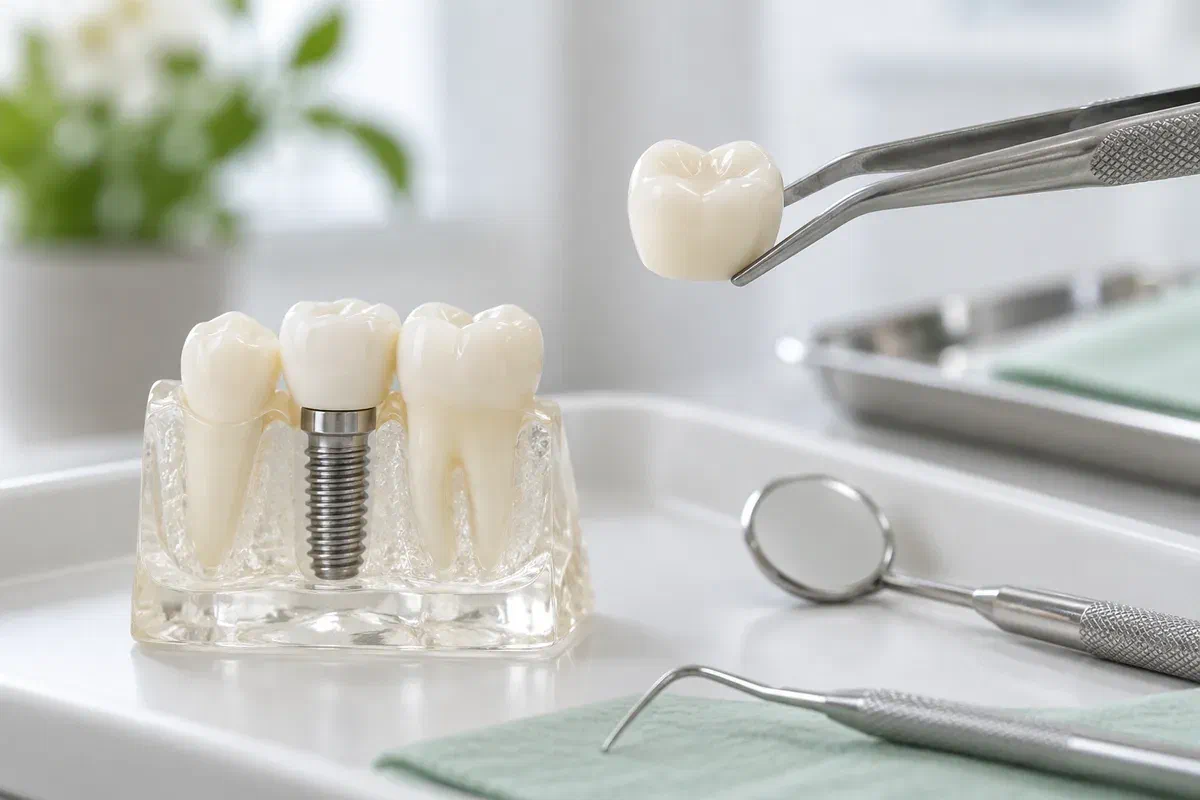
A crown should be made for a site that is ready and a mouth it suits. Raise these points early so the plan rests on solid information.
Ask what the team needs to see to call the site ready. A summary from the surgical clinician can be part of that, and some findings may mean waiting a little longer.
Shape, shade, position and gum appearance can all be discussed. The implant’s angle and your neighbouring teeth set some limits, so it is sensible to agree on expectations before anything is made.
System information and records tell us what support is in place. Settle who is coordinating the remaining steps and which clinic oversees which reviews.
Tell the treating team promptly if a healing cap or temporary tooth loosens while you wait. Avoid tightening it, and don’t hold off until the planned crown visit.
Placing a crown on a confirmed-ready site lets its design do its job: restore the tooth form, meet the neighbouring teeth properly, sit well against the gum and leave room for cleaning, all on the correct connection for your implant.
Even then, the crown has limits. It is a manufactured restoration whose material or components may need attention over the years. Ask how the result will be judged after fitting and which signs at home should prompt an earlier visit.
Patient information: Canadian Dental Association — implant restoration stages
When the site is confirmed, talk about what matters to you in the visible tooth. Some aspects are choices; others are shaped by the site and where the implant sits.
The crown must work with the teeth opposite and line up beside its neighbours. If it feels like the first point of contact, or closing feels new, say so.
The final contour determines your home routine. A demonstration on your own crown makes it clear and helps you recognise when a change needs a professional look.
The sequence depends on your implant system, the tissue and the crown design. Once readiness is settled, you will hear which records come next, whether a temporary tooth is planned, how many fittings to expect and how we will keep the placing clinic informed.
We examine the site and review records from the placing office. Identifying the system helps us select compatible parts. If healing or support raises questions, those are worked through before the crown stage proceeds.
Once the site is ready, impressions or a scan record its position. Shade, form, contacts and the attachment method are planned with the rest of your mouth in mind.
At fitting we check how the crown relates to the implant components, nearby tissue, neighbouring teeth and bite, then attach it by its planned method and explain any adjustment.
You will learn when to resume normal eating and how to clean around the crown. A review lets us look at function and gum health after everyday use.
The crown isn’t a natural tooth, but the implant and the gum around it still depend on good care. Ask for instructions that match this crown’s contour, attachment and your stage of treatment.
Work along the margin and between the crown and its neighbours with suitable tools. If access is difficult, it is better to be shown again than to force an instrument that doesn’t fit.
Let the team know about looseness, a clicking sensation, chipped material or a contact that feels different when chewing. Don’t test it repeatedly or try any adjustment at home.
Implant check-ups assess the gum, contacts, cleaning and the crown. Confirm the interval and which office takes on which parts of ongoing care.
Questions about when an implant can receive its crown, and what happens if it isn’t ready yet.
At our Bronte Street clinic, the first step is a clear answer on readiness. If the site is ready, we move on to planning the tooth: which records are needed, what you can decide about its look, how the fit is checked, and the upkeep it will ask of you. If it isn’t, you will know why and what comes next.
Bring notes from the clinic that placed your implant and any system details, which help us answer the readiness question sooner.
