The healing period is over
Readiness depends on examination findings rather than elapsed weeks. Ask what the team needs to confirm, and whether information from the surgical clinician is part of that.


Between healing and the finished tooth there can be a stretch of waiting, a temporary crown and a few appointments to fit around work and family. For households in Brampton, we lay out the crown stage clearly so you know what each visit is for.
School runs, shift work, a parent’s appointments: life doesn’t pause while an implant heals. When the time comes for the crown, many people mainly want to know how many visits it will take and what each one involves. A fair question, and the answer starts with what the crown is: the visible tooth that attaches to the implant anchored in your jaw.
Placing that crown is a restorative step, separate from the implant surgery, and it begins only when the site is confirmed ready for the planned tooth. Some plans include a temporary crown for a period; others move to the final crown more directly. The number and spacing of visits follow from that.
From Brampton, it helps to come to the first visit prepared. Tell us if the implant was placed at a different clinic and bring any system information. We will explain the look of the finished tooth, how it attaches, what gets checked when it is fitted and how to clean it, and we can talk through how the appointments might be spaced.
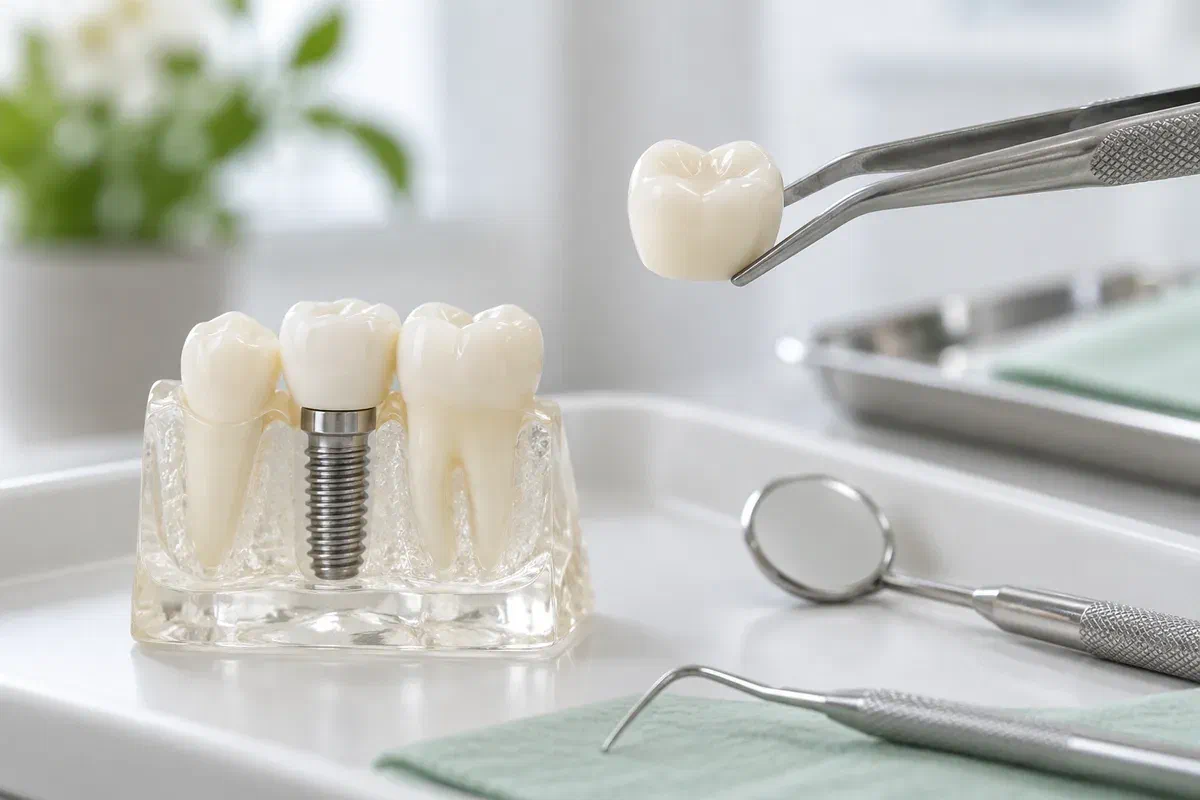
The crown is designed for your mouth specifically. Having these conversations early avoids surprises later and keeps the number of return trips sensible.
Readiness depends on examination findings rather than elapsed weeks. Ask what the team needs to confirm, and whether information from the surgical clinician is part of that.
Discuss shade, form, position and the gum around the tooth. The implant’s placement and nearby teeth set some boundaries, so it is worth agreeing on them before anything is made.
Implant details and previous records help the restoring dentist see what support exists. Be clear about who is coordinating and which office is responsible for each review.
A temporary tooth or healing cap that loosens between visits is a reason to phone the treating team. Leave it as it is rather than tightening it, and don’t just wait until the next booking.
An implant without its crown is unfinished. The crown provides the tooth form you see and chew with, and its design weighs appearance, contact with the neighbouring teeth, its relationship with the gum and room to clean. That design is matched to the proper connection for your implant.
There are limits to keep in mind. The crown is an artificial tooth, and its surface or underlying parts may need attention over time. You can ask how the design will be evaluated and what signs at home would mean booking a check.
Patient information: Canadian Dental Association — implant restoration stages
Raise what matters to you about the visible tooth, especially if it is near the front. You will learn which details you can choose and which depend on the site and the implant’s position.
The crown needs to sit evenly beside its neighbours and meet the opposing teeth properly. If it seems to touch first, or your bite feels different, tell the clinician.
How you clean depends on the crown’s final shape. A demonstration on your own tooth makes the routine easier to keep up on busy days and helps you notice when something has changed.
The details depend on your implant system, the gum and the crown planned. We will tell you which records are needed, whether a temporary tooth is involved, how many fitting visits to expect and how clinicians will communicate.
We examine the implant site and look at available records. Identifying the implant system helps us order compatible parts. Any uncertainty about healing or support is addressed before moving on.
Impressions or a digital scan record the position for the lab. We agree on shade, shape, contacts and how the crown will attach, considering the rest of your mouth.
We check how the crown relates to the implant parts, the gum, the nearby teeth and your bite, then attach it according to its design. If an adjustment or extra step is needed, we explain why.
You will be told when to return to normal chewing and how to clean the new tooth. A later check lets us assess how it is working and how the gum is responding.
An implant crown still needs looking after even though it is not a natural tooth. Ask for instructions that suit its shape, how it is attached and where you are in treatment.
Use tools suited to the crown’s contour at the gum line and between it and its neighbours. If something is hard to reach, ask for another demonstration instead of forcing a tool in.
Let the team know if the crown feels loose, clicks, chips or starts to hit first when you chew. Don’t keep testing it, and never attempt to adjust the surface or connection yourself.
Regular reviews look at the gum, contacts, your cleaning and the crown. Put the next one in the family calendar, and check which clinic you will be seeing for which kind of review.
Questions about scheduling, temporary teeth and day-to-day life during the crown stage.
Start with a consultation at our Bronte Street clinic. We will go over what you know about your implant, then sketch out a likely appointment plan covering records, the look of the tooth, the fitting and the care that follows.
If your implant was placed elsewhere, bring the system details and the placing clinic’s name so we can confirm components early.
