“Has it healed enough?”
The answer comes from examination and records rather than a fixed number of weeks. Information from the surgical clinician may be needed before we can say yes.


Once the lab starts, changing course gets harder. From Caledon, Bolton or the villages around them, you can sit down with our team before your implant crown is made and work through the questions that decide how it looks, attaches, fits and is cared for.
Write a short list before your crown consultation, and you will probably find the same handful of questions on it: Is my implant ready? What will the tooth look like? How is it held on? How do I clean it? Those questions map neatly onto what the crown is, namely the custom tooth that attaches to the implant anchored in your jaw.
The crown is a restorative stage of its own, coming after implant surgery. Nothing is made until the site is confirmed ready for the planned tooth. You may wear a provisional crown for a while, or move to the final one more directly; the plan is chosen for your case.
Many people in Caledon plan dental trips with care, so we try to answer the big questions at the first visit. Tell us if another clinic placed your implant and bring its system details. You will leave understanding the proposed look and attachment, the fitting checks, and the home care involved.
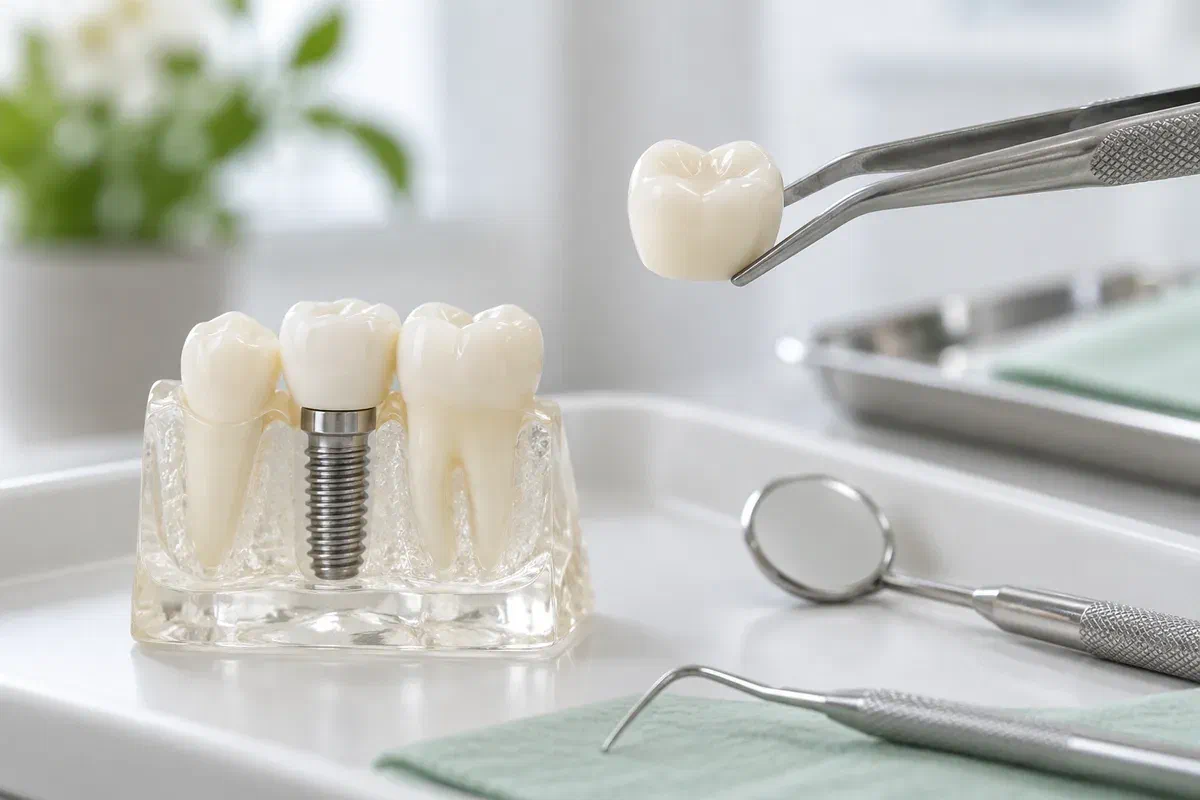
Your crown is made for one site in one mouth. Getting answers to these three questions before fabrication helps the finished tooth match your expectations.
The answer comes from examination and records rather than a fixed number of weeks. Information from the surgical clinician may be needed before we can say yes.
We can discuss shade, outline, position and gum appearance. The implant’s angle and neighbouring teeth narrow some options, so we talk openly about what is realistic before anything is ordered.
System details and treatment notes let the restoring dentist see what support exists. Confirm who coordinates the remaining steps and which clinic handles each follow-up.
Before your crown visit, a loosening healing cap or provisional tooth warrants a call to your treating clinic. It shouldn’t be tightened at home or ignored until the appointment.
When those questions are worked through, the crown can be designed to do its job: give the implant its tooth, look right beside its neighbours, meet the gum cleanly and leave room for cleaning, all on a connection suited to your implant system.
Good answers don’t remove every limit. An implant crown is artificial, and wear, chipping or a component needing attention can happen with time. It is fair to ask what the team will look for once it is fitted, and which signs between visits mean you should get in touch.
Patient information: Canadian Dental Association — implant restoration stages
Listing what matters to you, such as colour, length or gum line, makes the conversation easier. The team will explain which features are flexible and which follow from the site.
The crown must work with the teeth that close against it and sit in line with those beside it. At fitting, mention if it feels like the first contact or if closing seems different.
Its finished contour determines how you clean it. Seeing the technique on your own crown makes home care clear and helps you recognise changes that need a review.
The details vary with the implant system, the tissue and the crown design. You should know in advance which records are needed, whether temporary parts are involved, what happens at fitting and how clinicians will communicate.
We look at the implant area and the records you bring. Identifying the system lets us confirm compatible components. Any question about healing or support is settled before the crown stage moves forward.
A scan or impressions capture the implant position. We agree on shade, form and contacts, and confirm how the crown will attach, while looking at the whole mouth.
We assess the crown on the implant components, against the tissue and neighbouring teeth, and in your bite. It is then attached by the planned method, with any adjustment explained.
We cover when the tooth can take full chewing and which cleaning tools suit it. A review appointment lets us check comfort, function and gum health after everyday use.
Implant crowns need consistent care even though they aren’t natural teeth. Ask for instructions that fit this crown’s shape, its attachment and your stage of treatment.
Focus on the gum margin and the spaces on each side, using tools that suit the contour. If one doesn’t fit, it is better to ask for a different option than to push it into place.
A click, looseness, chipped material or an odd contact when chewing are reasons to call. Don’t keep testing a crown that moves, and leave every adjustment to the clinic.
Reviews assess the gum, contacts, the crown and your cleaning. Ask how often to return and which office looks after each part of ongoing care.
Six things to raise before your implant crown goes to the lab, and a few for after.
Sit down with our Bronte Street team, go through your implant information together, and get answers about readiness, design, attachment, fitting and care, one question at a time.
Bring your written questions, any implant system details and the placing clinic’s name; together they make the first visit much more productive.
