Healing is done, or seems to be
The team confirms readiness through examination and records, not by counting weeks. Input from the clinician who placed the implant may be part of the picture.


A healing cap that shifts, a temporary tooth that pops off, a new crown that clicks: knowing when to call makes the crown stage easier. From Campbellville, our team plans your implant crown and tells you plainly what to do if something feels wrong.
The call often starts the same way: “Something feels loose, and I’m not sure if I should come in.” During the crown stage, that kind of uncertainty is common. It helps to know what you are dealing with. The implant is the support anchored in your jaw; the crown is the visible tooth fixed to it, joined by small connecting parts that can be felt if something shifts.
Placing the crown is a restorative step, done after the implant surgery and only once the site has been confirmed ready. You might wear a temporary crown first, or the final one may follow more directly. Each arrangement has its own things to watch for.
For households in Campbellville, phoning before you set out saves guesswork. Let us know if another clinic placed the implant and keep the system details handy. You will hear about the tooth’s appearance and attachment, the fitting checks, home cleaning, and the specific changes that warrant a call.
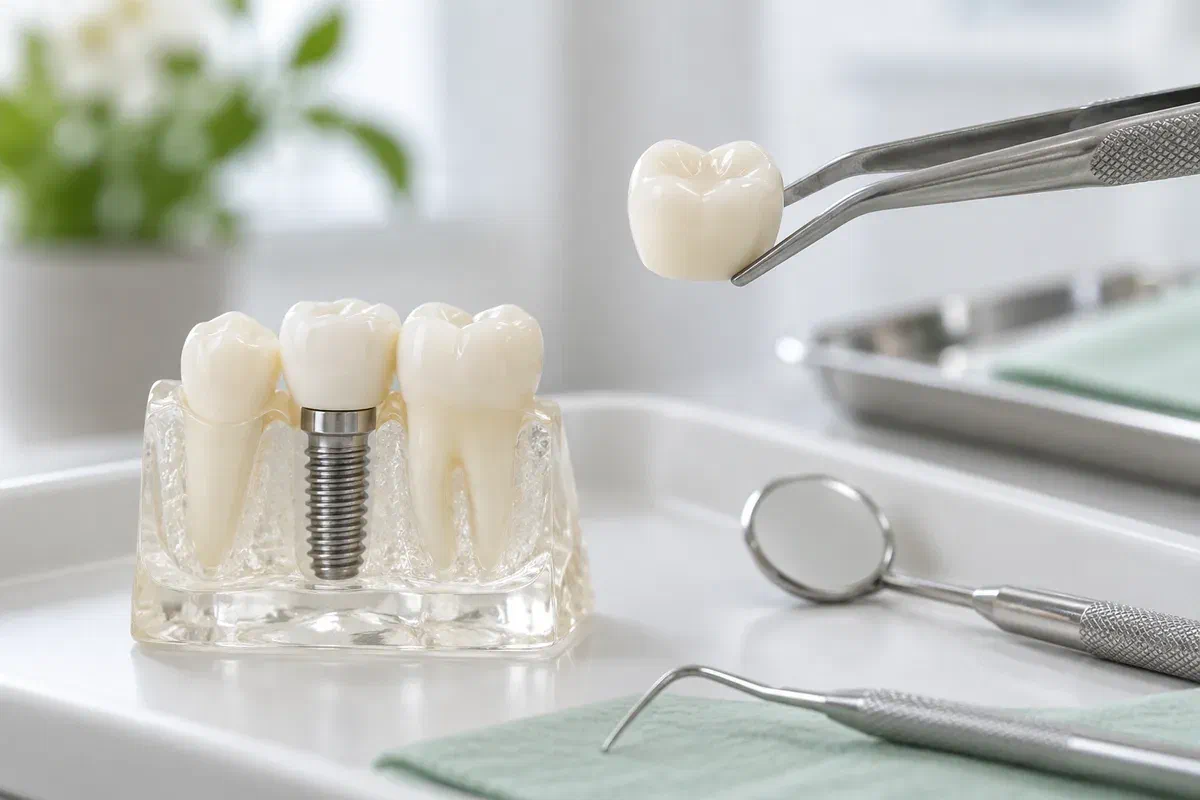
Your crown is designed for your mouth, not pulled from a shelf. Talking through these concerns early also makes it clear who to contact if something changes.
The team confirms readiness through examination and records, not by counting weeks. Input from the clinician who placed the implant may be part of the picture.
Talk about shade, outline, position and the gum line. Your implant’s angle and neighbouring teeth set some limits, so it is worth agreeing on goals before the lab starts work.
System information and notes help us understand the support in place. Ask plainly who to phone for which kind of problem, and who handles each follow-up.
Any loosening of a healing cap or temporary crown before your fitting is a reason to phone the treating team, not to wait. Don’t try to tighten or reseat it yourself.
A crown planned with care restores the tooth the implant was placed for. Its design weighs appearance, contacts with the teeth beside it, its fit against the gum and room to clean, together with a suitable connection for your implant parts. Good planning tends to mean fewer unexpected calls later.
No crown is free of maintenance. It is an artificial restoration, and its material or small components may need attention over time. Ask how the result will be judged and which warning signs at home should prompt a phone call.
Patient information: Canadian Dental Association — implant restoration stages
Share your priorities for the visible tooth, especially if it is near the front. You will learn which features you can choose and which follow from the site and implant position.
The crown must meet the opposing teeth comfortably and sit evenly with its neighbours. Mention it straight away if something lands first or feels unfamiliar.
The crown’s contour shapes how you clean it. A demonstration in the chair, along with a short list of changes that need a call, makes life at home simpler.
Your timeline depends on the implant system, the tissue and the planned crown. We will explain records, temporary parts, fitting visits and communication between clinicians, along with who to call in between.
We examine the site and review the information available. Identifying the system lets us choose compatible parts. Any concern about healing or support is addressed before restorative work begins.
A scan or impressions give the lab what it needs. Together we settle shade, shape, contacts and the attachment method in the context of the rest of your mouth.
We check the crown against the implant components, the tissue, its neighbours and your bite, then attach it by the planned method. Any adjustment or extra step is explained.
You will hear when to return to normal chewing, how to clean the tooth and what to phone about. A review appointment checks function and gum health after some regular use.
Implant crowns still need daily care. Your instructions should match this crown’s shape and attachment, and include clear guidance on which changes need attention.
Clean the gum margin and between the crown and its neighbours with tools that suit its contour. If one won’t reach comfortably, ask to be shown again rather than pressing it into place.
A click, a wobble, a chip, or a bite that suddenly feels high are all reasons to call before driving in. Describe what you notice. Don’t keep testing it or try to fix it yourself.
Check-ups look at the gum, contacts, the crown and your cleaning. Confirm how often to come in and which office handles each part of ongoing care.
Questions about loose parts, temporary teeth and what to do when something changes during the crown stage.
At our Bronte Street clinic we will go over what is known about your implant, then explain the design, the fitting checks, daily care and the changes worth a phone call.
Store your implant system details and the placing clinic’s phone number together; both help if something comes up between visits.
