You are told healing went well
Confirming readiness takes an examination and sometimes records from the surgical clinician. The number of weeks since surgery doesn’t settle the question on its own.


How you will brush and floss around an implant crown is decided partly by its design. From Georgetown, you can plan the crown stage with our team so the finished tooth looks natural, fits your bite and is something you can actually keep clean.
Standing at the sink with floss in hand, plenty of people wonder how they are supposed to clean a tooth that is attached to a metal post. The answer depends on the crown. It is the visible, tooth-shaped part fixed to your implant, and its outline at the gum, its contacts and its attachment all affect how easily you can reach every surface.
That design happens during the crown stage, which is distinct from implant surgery. Work starts only once the site is confirmed ready. A provisional tooth might be used for a period; in other cases the definitive crown follows sooner. The approach is chosen for your situation.
Coming from Georgetown, you are welcome to bring questions about home care to the very first visit. Let us know if another office placed the implant and bring any system details. We will explain how the crown will look, how it will be held, what is checked on fitting day and exactly how to clean it.
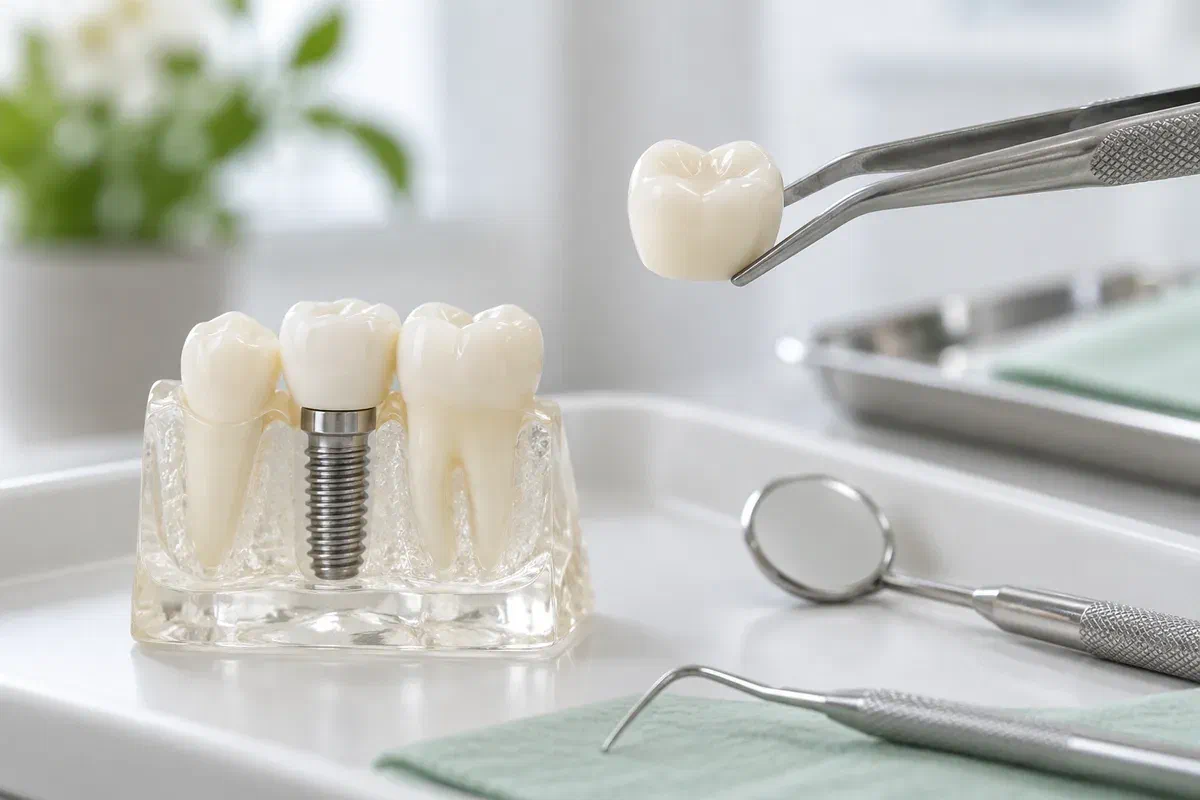
Appearance gets most of the attention, but a crown that is hard to clean causes its own problems. These points shape the design.
Confirming readiness takes an examination and sometimes records from the surgical clinician. The number of weeks since surgery doesn’t settle the question on its own.
Raise shade, outline, position and gum appearance. The implant’s placement and your other teeth set some boundaries, and the shape that looks best should also be one you can clean.
Implant details and previous notes help us understand the support you have. Agree on who is coordinating, and which office will see you for each kind of check.
Please call the treating team if a healing cap or temporary crown loosens before the crown is fitted. It is better not to tighten it yourself or to let it ride until the appointment.
The crown supplies the tooth the implant was meant to hold. A careful design balances appearance, contacts with neighbouring teeth, the way the crown leaves the gum and access for brushes and floss, alongside a suitable connection for your implant system.
Implant crowns are manufactured, so they have limits. Over the years the material or small components may need maintenance. Ask how the design will be checked once it is in and what changes at home would suggest a visit.
Patient information: Canadian Dental Association — implant restoration stages
Tell us what you care about most in the visible tooth. Some features can be chosen freely; others depend on the site, the implant position and the need to leave room for cleaning.
The crown should meet its opposing teeth comfortably and touch its neighbours in a way that resists food trapping. Let us know if it seems to land first.
We show you which tools suit the finished contour, whether floss, a small brush or something else. Practising in the chair makes the home routine stick and helps you spot early changes.
Timing depends on your implant system, the gum and the planned crown. We explain records, temporary parts, fitting visits and how clinicians will share information before you begin.
We examine the implant area and any records you bring. The system type guides which parts are compatible, and any uncertainty about healing is looked at before restorative work begins.
Digital or physical impressions give the lab what it needs. We agree on shade and shape and plan contacts and contours with cleaning access in view, as well as the attachment method.
We check its seat on the implant components, the tissue around it, its neighbours and your bite, then secure it as designed. Any change or extra step is explained.
Before you leave, we show you how to clean the new tooth and tell you when normal chewing can resume. A follow-up checks gum health and how well the routine is working.
An implant crown won’t get a cavity like a natural tooth, but the gum and bone around the implant still need attention. Your instructions should be specific to this crown.
Clean the gum margin and the spaces beside the crown with whatever suits its contour. If a tool keeps slipping or won’t fit, mention it at your next visit; there is usually a better option than pushing harder.
Bleeding that keeps returning, a click, looseness, a chip or a contact that suddenly feels different are worth reporting. Avoid repeatedly testing a crown that moves, and don’t adjust it yourself.
Implant reviews look at the gum, contacts, the crown and how your routine is going. Confirm how often to come in, and which office manages particular parts of ongoing care.
Practical questions about home care, gum health and the crown stage.
Visit our Bronte Street practice to discuss the crown stage. We will review the information about your implant and explain the design, fitting checks and the cleaning routine that suits it.
Bring the implant system details if you have them, and the cleaning tools you use now so we can check how they suit the new crown.
