You are eager to get chewing back
Readiness rests on what the examination and records show, not simply on how long it has been. The team may need confirmation from the surgical clinician before starting the crown.


Maybe you have been chewing on one side for months. A back-tooth implant crown is about getting that side working again, with contacts and bite planned carefully. From Halton Hills, our team can guide you through the crown stage and its care.
With a molar missing, most people quietly shift their chewing to the other side. The implant crown is what changes that. It is the tooth-shaped restoration attached to the implant in your jaw, and on a back tooth the priorities are how it meets the opposing teeth, how it touches its neighbours and whether food gets trapped around it.
Crown placement is a restorative step that follows the implant surgery, and it starts only when the site is shown to be ready. A temporary crown may play a part for a while, or the final crown may follow more directly, depending on the plan for your case.
Across Halton Hills, from Georgetown to Acton to the smaller hamlets, people often arrive with records from more than one clinic. Bring what you have, including the implant system if known. We will explain how the crown will look and be held, what we check at fitting, and how to clean a back tooth that can be hard to reach.
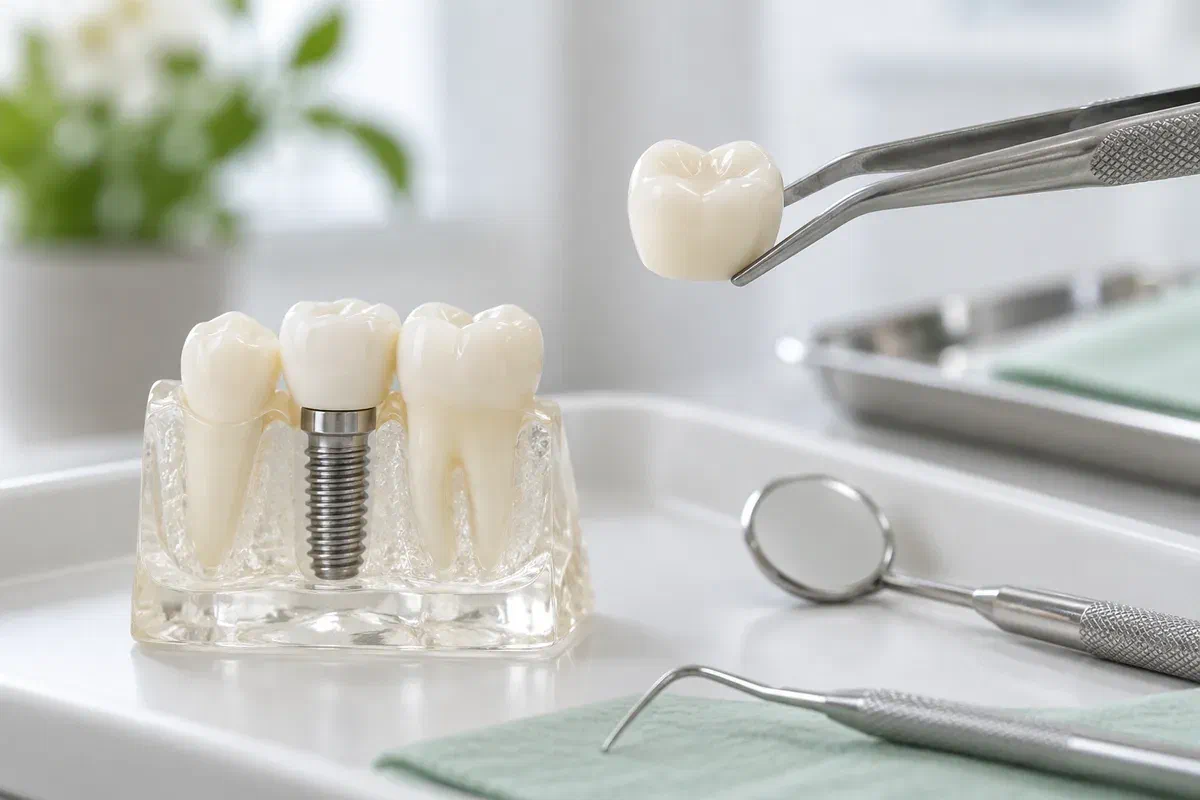
A chewing tooth works hard, so its design deserves as much thought as a front tooth’s appearance. These are the points to raise before anything is fabricated.
Readiness rests on what the examination and records show, not simply on how long it has been. The team may need confirmation from the surgical clinician before starting the crown.
Contacts with the neighbouring teeth, the crown’s outline and the gum shape all affect food trapping and cleaning. The implant’s position limits some choices, so agree on priorities before the lab starts.
System details and notes help the restoring dentist understand the support beneath. Be clear on who is coordinating and which clinic is responsible for each follow-up.
A healing cap or temporary crown that wobbles before the crown appointment needs a call to the treating team. Don’t chew on it, tighten it, or simply wait for the visit date.
The crown restores the tooth form the implant was placed for. On a molar or premolar, its design centres on how it meets the opposite teeth, the tightness of its contacts, its emergence from the tissue and room for a brush or floss beneath its edges. All of this is matched with the correct connection to the implant.
Even a well-designed crown is an artificial tooth. Chewing forces, and habits such as clenching, can affect its material or small parts over time. Ask how the result will be assessed and what signs, like a new click or rough edge, should prompt a call.
Patient information: Canadian Dental Association — implant restoration stages
Mention if you clench, grind or favour one side. These habits affect how the crown should be designed and checked, and the team may discuss protective options.
The crown has to share the load with the teeth around it. Speak up if it feels like the first thing to touch, or if your bite feels different on that side.
Back crowns can be tricky to clean beneath. A demonstration with tools that suit your crown’s contour makes the daily routine realistic and helps you notice early changes.
Timing depends on the implant system, the surrounding gum and the planned crown. We will explain the records, any temporary components, fitting appointments and how clinicians will communicate.
We examine the implant area and go through records from previous offices. Knowing the system lets us select compatible parts, and any concern about healing is dealt with before moving ahead.
Impressions or a scan capture the implant, its neighbours and the teeth that bite against it. Shape, contacts, shade and the attachment method are planned with your chewing in mind.
We test the seat on the implant, the tissue around it, both neighbouring contacts and your bite, including side-to-side movements. It is then secured as designed, and any adjustment is explained.
You will be told when to resume normal eating and how to clean the area. A review visit checks function, contacts and gum health once you have used the crown.
Implant crowns don’t decay like natural teeth, yet the gum around them still needs care. Your routine should suit this crown’s shape, its attachment and where you are in treatment.
Food can collect where the crown meets the gum, especially on back teeth. Use the tools you were shown, and ask for another demonstration if they don’t reach rather than forcing them.
A new high spot, rocking, clicking, a chip or food suddenly packing in are all worth a call. Don’t keep checking a moving crown, and never adjust it yourself.
Check-ups assess the gum, contacts, cleaning and the crown. Confirm how often you should come in and which clinic handles particular aspects of long-term care.
Questions about getting a molar or premolar implant crown working well.
Book a consultation at our Bronte Street clinic to discuss the crown stage. We will go over your implant information and explain the records, bite checks, attachment choices and care involved.
Bring the implant system details and any notes from the placing clinic, and mention any grinding or clenching habits.
