Healing has wrapped up and you want to move on
Find out which findings the team needs before restorative work begins. A certain number of weeks passing is not enough on its own, and a note from whoever placed the implant may be part of the picture.


After months of healing, the gap still needs its tooth. Our Bronte Street team in Milton plans the crown that sits on your implant, from readiness and shade to the way it meets your bite and how you will keep it clean.
Many people look in the mirror partway through implant treatment and see only a small metal cap where a tooth should be. That cap marks the stage that comes next. The implant sits in the jaw as support; the crown is the tooth-shaped piece that will be attached to it, and it has to suit the gum, the teeth on either side and the way your jaws close.
Fitting that crown is separate from the surgery that placed the implant. Someone first has to confirm the site is ready for the restoration being planned. Depending on your case, the order of appointments may differ, and a temporary crown is sometimes worn for a while before the permanent one.
Our Milton clinic can walk you through this stage and the decisions in it. Let us know if your implant was placed at another practice, and bring any system details you have. By the end of planning you should know what the tooth will look like, how it will be held in place, what gets checked on fitting day and how to look after it.
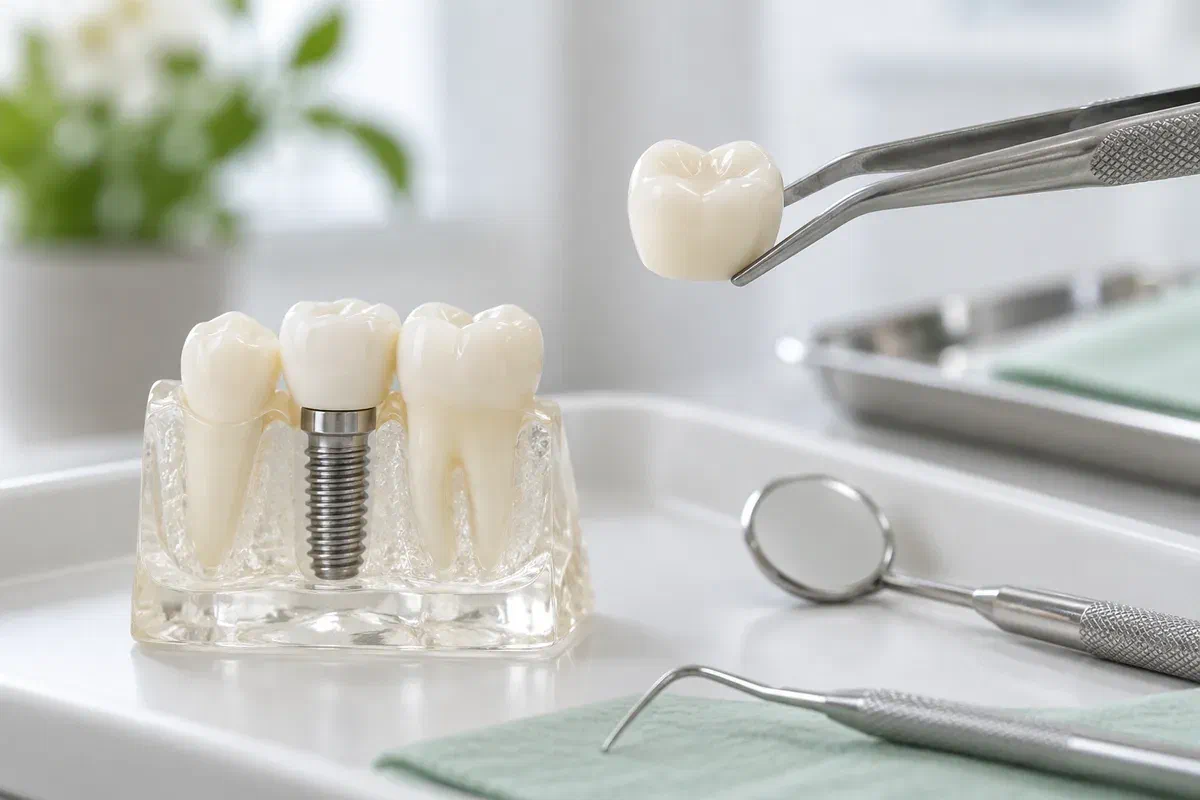
A good implant crown is designed for your mouth in particular. It is not a stock cap. Come with questions about how it will look and work, not only about when it will be ready.
Find out which findings the team needs before restorative work begins. A certain number of weeks passing is not enough on its own, and a note from whoever placed the implant may be part of the picture.
Talk through shape, colour, position and how the gum around it is likely to look. The implant’s angle and the teeth nearby shape what is possible, so it helps to agree on expectations before the lab begins.
System information and past records tell the restoring dentist what support is already in place. Settle who is coordinating from here and which office handles which follow-up checks.
Call the treating team if a healing cap or temporary tooth starts to feel loose before your crown visit. Leave it alone rather than trying to tighten it, and don’t simply wait for the booked appointment.
The crown gives the implant the tooth it was placed to carry. Getting it right means thinking about how it looks, where it touches the neighbouring teeth, how it meets the gum and whether you can clean around it. All of that is weighed together with the right way to join it to the implant parts.
There are limits worth knowing. An implant crown is a manufactured restoration, and over the years its material or small components may need attention. It is reasonable to ask how the design will be checked and which signs at home would tell you something needs a look.
Patient information: Canadian Dental Association — implant restoration stages
Tell the team which details of the visible tooth matter most to you, especially near the front. Some features are yours to choose, while others depend on the site and where the implant ended up.
The new tooth has to work against the teeth that close onto it and sit evenly beside its neighbours. Mention it if the crown seems to touch first or if closing your mouth feels unfamiliar.
Its final contour decides how you clean around it. Seeing the method shown on your own crown makes daily care clearer and helps you notice changes that should be checked.
Exact timing depends on your implant system, the gum tissue and the plan for the crown. You can expect to hear about records, any temporary pieces, the fitting visit and how the clinicians involved will keep in touch.
We look at the site, the available records and the plan on the table. Knowing which implant system you have helps match the right parts, and any doubt about healing or support is looked into before going further.
Impressions or a digital scan give the lab what it needs. Together we discuss colour, form, contact with nearby teeth and how the crown will be attached, keeping the rest of your mouth in view.
On fitting day we check how the crown meets the implant parts, your other teeth, the gum and your bite. It is then attached according to its design, and we explain any adjustment or extra step that comes up.
You will hear when normal chewing can resume and how to clean the new tooth. A follow-up lets us see how it works and how the gum looks.
Even though it isn’t a natural tooth, the implant and crown still need regular care. Instructions should suit the crown’s shape, its access points and where you are in treatment.
Learn to clean at the gum edge and in the spaces beside it with tools that suit the shape. If something won’t reach comfortably, ask to be shown again instead of pushing a tool where it doesn’t fit.
Let the team know about looseness, a clicking feel, a chip or a contact that suddenly seems off while chewing. Avoid wiggling a crown that moves, and never try to file or tighten it yourself.
Regular visits look at the gum, your cleaning, the contacts and the crown itself. Find out how often to come in and whether the surgical or restorative office will look after specific parts of long-term care.
What people in Milton tend to ask about where crown placement fits and what the finished tooth involves.
Book a visit at our Bronte Street practice to talk about the crown stage. We will go over what we know about your implant and explain the records, look, fitting checks and upkeep involved.
If another office placed your implant, bring the system information and any notes from that clinician.
