You think the implant has healed
Healing is confirmed by examination and records, not by a set number of weeks. The team may also want input from whoever performed the surgery.


Screwed in or cemented? Porcelain or another material? A provisional first? For people coming from Mississauga, our team explains how implant crowns are held, timed and shaped, so the decision makes sense before your tooth is made.
One of the first things people want to know about an implant crown is what actually keeps it there. The implant is a post anchored in bone. Above it, small components link that post to the crown, which is the tooth you see. Some crowns are held by a screw, others by cement, and the choice ripples into appearance, cleaning and future maintenance.
That choice belongs to the restorative stage, which is separate from the implant surgery. It only goes ahead once the site has been confirmed as ready for the planned tooth. Along the way, a temporary crown may be used, or the final crown may follow sooner. Your plan will reflect your implant and your mouth.
Coming in from Mississauga, you can expect a plain explanation of these options. Mention if the implant was placed somewhere else and bring the system information if you have it. We will cover what the crown will look like, how it attaches, what gets checked on fitting day and how to clean it afterwards.
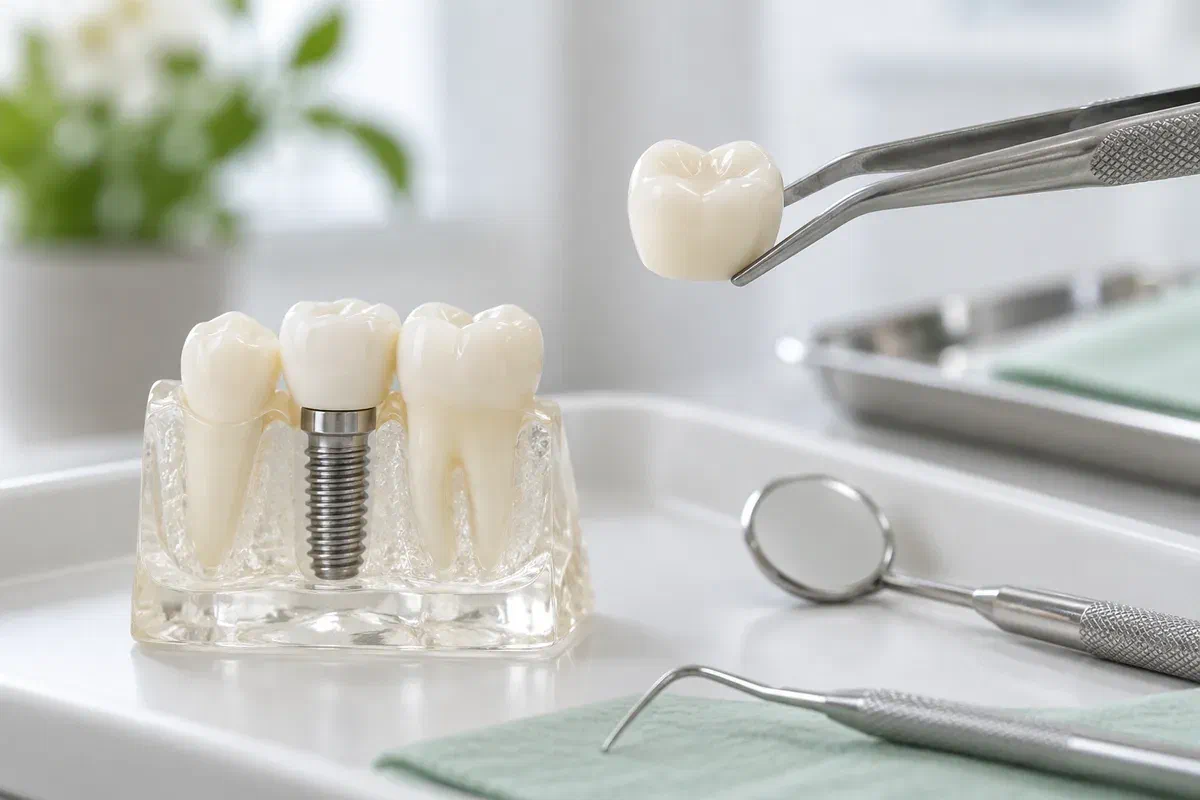
An implant crown is built for one particular site. Before the lab starts, it helps to talk about readiness, the finished look and who is overseeing each step.
Healing is confirmed by examination and records, not by a set number of weeks. The team may also want input from whoever performed the surgery.
Shape, colour, position and gum appearance all deserve discussion. Your implant’s angle and the teeth around it influence the possibilities, so agree on goals before fabrication.
System details and treatment notes clarify what support exists. Decide together who coordinates the next steps and who takes on which reviews.
Something loose before the crown visit, such as a healing cap or provisional tooth, needs a call to the treating team. Please don’t tighten it yourself or wait until the scheduled appointment.
The crown turns the implant into a working tooth. Its design has to account for how it looks, where it touches the teeth beside it, how it rises from the gum and whether you can keep it clean. The attachment method is chosen in step with all of that.
It is a manufactured restoration with real limits. Over time, the crown material or small parts beneath it may need care. Ask how the result will be checked and which signs at home should bring you back sooner.
Patient information: Canadian Dental Association — implant restoration stages
If the tooth is visible, raise what matters most to you. Some features are a choice, while others are shaped by the site, the implant position and where any screw access would fall.
The crown should work with the opposing teeth and line up beside its neighbours. Speak up if it seems to touch first or if your usual bite feels changed.
Screw-retained and cemented crowns can differ in the details of cleaning and review. Ask to be shown the routine that suits yours, and which changes would need attention.
Your timeline depends on the implant system, gum tissue and chosen design. We will explain any records, temporary pieces, fitting appointments and communication between clinicians that apply to you.
We assess the site and any records available. Knowing the system matters here, because the connecting parts must be compatible. Any concern about support or healing is reviewed before we continue.
A digital scan or impressions capture the implant position for the lab. Shade, form, contacts and the attachment method are agreed with you.
We check the crown against the implant parts, the gum, the neighbouring teeth and your bite. It is then secured using the planned method, whether screw, cement or another arrangement, and any adjustment is explained.
You will be told when ordinary chewing can resume and how to clean the new tooth. A review visit lets us assess function and gum health after some day-to-day use.
Implant crowns are not natural teeth, but they still need consistent care. The routine you are given should match the crown’s shape, its attachment and your stage of treatment.
Use suitable tools at the gum edge and between the crown and its neighbours. If access is awkward, request another demonstration rather than forcing a tool into place.
A screw can occasionally loosen, and material can chip. Let the team know about clicking, movement, chips or a new contact when chewing, and avoid testing or adjusting it at home.
Check-ups examine the gum, your cleaning, contacts and the crown. Confirm how often to return and which office handles specific parts of ongoing care.
Questions about how implant crowns are held, and what that means for you once the tooth is in.
Our Bronte Street team can sit down with you and the records you have, then walk through the options for attachment and appearance, the checks made at fitting, and the daily care your finished crown will need.
Bring your implant system details or the placing clinic’s contact information so the right components can be confirmed.
