Illustrative consultation about the shape and shade of an implant crown
Restorative Dentistry

Implant Crown Placement in Oakville

Your surgeon has finished, and the implant needs a tooth. If you’re coming from Oakville, we can pick up the restorative stage, gather the right implant details, and plan a crown that suits your bite, your gum line and the teeth beside it.

After the surgical office signs off

Who builds the tooth?

It is common for one office to place an implant and another to restore it. That hand-off leaves many people unsure what happens next. The answer is the crown stage: a restorative dentist designs and attaches the visible tooth to the implant that now sits in the jaw.

Think of it as a separate project with its own checks. Before anything is fabricated, the restoring team confirms the site is ready and learns exactly which implant system is involved. Sometimes a temporary crown comes first. Sometimes the final tooth can follow more directly. The plan depends on your situation.

For people travelling from Oakville, the most helpful thing to bring is information: the name of the placing clinic, any implant card or system details, and recent notes or images if you have them. With that, we can explain how the crown will look, how it will be held on, what we will check at fitting and how you will clean it.

Bring your implant to the crown stage
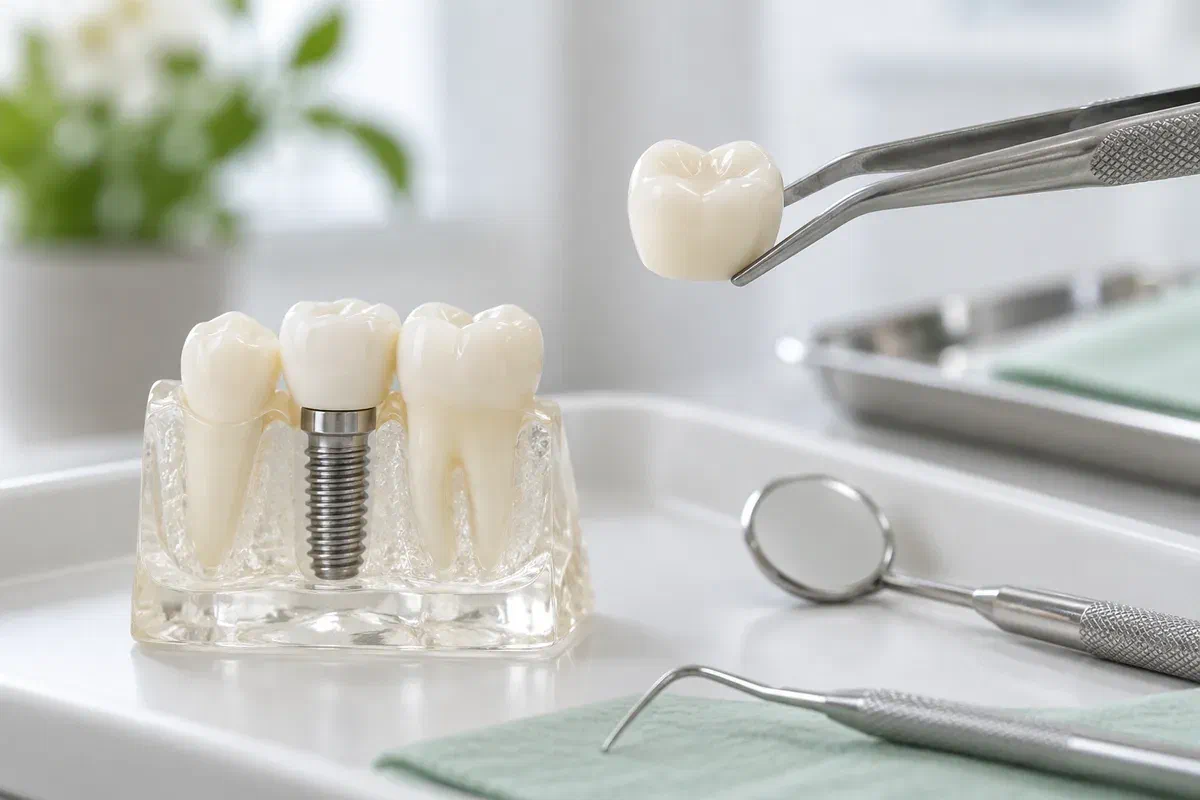
Ceramic replacement crown held beside an implant teaching model
Common hand-off worries

Readiness, appearance and who is in charge

When care changes hands, details can slip. These three topics are worth settling before the crown is designed, so the finished tooth suits your mouth rather than a generic template.

The surgical side seems finished

Find out which findings the restoring dentist needs before going ahead. Time since surgery is only part of it; a note from the placing clinician can confirm healing and support.


You have firm ideas about how it should look

Bring up colour, outline, position and the gum around the tooth. The implant’s placement and your neighbouring teeth narrow some choices, so it pays to talk through expectations before the lab starts.

Two offices, one tooth

Records and system details let us see what support is already there. Agree on who coordinates the remaining steps and which clinic is responsible for which follow-up appointments.

If a healing cap or provisional crown loosens while you wait, call the office treating you. Don’t try to tighten it, and don’t simply hold out until the crown appointment.

What a well-planned crown does

It finishes the job the implant started

An implant on its own is support without a tooth. The crown supplies the shape you see and chew with. Its design considers looks, the way it meets neighbouring teeth, how it meets the gum and whether you can clean around it, all matched to the proper connection for your implant.

No restoration is permanent in every respect. Implant crowns are manufactured, and their surfaces or small parts may need attention in later years. You can ask how the design will be evaluated and which early signs at home deserve a call.

Patient information: Canadian Dental Association — implant restoration stages

Agree on appearance first

Share what matters to you about the tooth people will see, especially if it is near the front. Some features are a matter of preference; others depend on the site and the implant’s position.

Check it against your bite

The crown must work with the teeth that close onto it and sit in line with those beside it. Say so if it seems to touch before the others or if your bite suddenly feels different.

Practise its cleaning routine

The final contour shapes how you clean it. Being shown the method on your own crown makes the routine easier and helps you notice changes that need professional attention.

Picking up where surgery left off

Records first, then the tooth

The steps vary with the implant system, the tissue and the restorative plan. You should hear about any records needed, temporary parts, fitting visits and how the two clinics will stay in touch.

  1. Collect implant details and confirm healing

    We review the site and any records from the placing office. System information helps us source matching parts. If anything about healing or support is unclear, it is assessed before restorative work begins.

  2. Record the site and design the crown

    Impressions or a digital scan give the lab an accurate model. We discuss shade, form, contacts and the attachment method in relation to the rest of your mouth.

  3. Seat the crown and confirm the fit

    On fitting day we look at how the crown meets the implant parts, the gum, the teeth beside it and your bite. It is then attached according to its design, and any adjustment is explained.

  4. Explain care and schedule a check

    You will learn when to return to normal chewing and how to clean around the new tooth. A follow-up appointment lets us review comfort, function and the gum once you have been using it.

Once the crown is in

Daily cleaning and a watchful eye

An implant crown still needs regular attention, even though it is not a natural tooth. Instructions should be tailored to its shape, its access and where you are in treatment.

Clean the margins this crown has

Learn to reach the gum edge and the gaps beside it with suitable tools. If a tool won’t fit comfortably, ask to see the technique again rather than forcing it.

Report movement or a change in bite

Let us know about clicking, looseness, a chip or an unexpected contact when you chew. Don’t keep testing a moving crown, and never try to file or tighten it at home.

Return for implant reviews

Regular visits assess the gum, your cleaning, the contacts and the crown. Clarify how often to come back and whether the surgical or restorative office handles particular reviews.

Crown designs and timing

Options shaped by the implant beneath

Material, attachment and timing affect one another. The clinician should explain which apply to you and how each influences appearance, upkeep and future access.

When one more step makes sense first

A temporary crown or another tissue check

A provisional tooth or a further review of the gum may come before the final crown. Ask what it is meant to achieve and what needs to be confirmed before the permanent crown is made.

When the implant angle allows access

A screw-retained design

Here the crown is held by a screw reached through the tooth. Suitability depends on the implant position, the access point and the restorative needs; you should hear how this choice affects looks and maintenance.

When another method suits the case

A cemented or alternative design

A cement-retained crown or a different set of components may be proposed. Ask why, and how fitting, cleaning, reviews and any future removal would be handled.

Questions from Oakville

Sorting out the crown after surgery

Practical questions about moving from implant surgery to the finished tooth, particularly when two clinics are involved.

(905) 876-4488
Does the surgeon who placed my implant need to be involved in the crown?
Often there is some communication between offices. The restoring dentist may need system details or confirmation that healing is complete. We can explain what information would help and whether any shared follow-up is planned.
What should I ask the surgical office for before my first crown visit?
Useful items include the implant system and size if recorded, recent notes or images, and any instructions they gave you. If you are unsure what exists, we can help you work out what to request.
Is there usually a gap in time between surgery and the crown?
In many cases there is a healing period, though arrangements differ. Some plans involve a temporary tooth sooner. The timeline for you depends on the site and on what your clinicians have planned together.
Can I choose a shade that is brighter than my other teeth?
You can discuss your preferences, but a crown that differs a lot from its neighbours may stand out. If you plan to whiten your natural teeth, mention it during planning, since the crown itself won’t change colour with whitening.
How do I know whether my crown will be screwed or cemented?
The choice depends on the implant position, access and restorative needs. Your clinician should explain which design is proposed and how it affects appearance, cleaning and future maintenance.
What if the crown feels high after the freezing wears off?
Get in touch so the contact can be checked rather than waiting for it to settle. Describe when you notice it and whether there is discomfort, and avoid grinding or adjusting the crown yourself.
Implant crown placement for Oakville

Your implant is in. Let’s plan its tooth.

Book a visit at our Bronte Street practice to talk through the crown stage. We will review the records you bring and explain the design choices, fitting checks and maintenance involved.

Ask your surgical office for the implant system details before your visit if you can; it makes the first appointment more productive.

Visit Milton Dental Clinic
Unit 1, 342 Bronte St. S, Milton, ON L9T 5B7
Get directions Clinic hours
Monday–Thursday
11am–7pm
Friday–Sunday
By appointment only

Areas we serve

  • Milton
  • Oakville
  • Mississauga
  • Georgetown
  • Halton Hills
  • Acton
  • Campbellville
  • Brampton
  • Burlington
  • Puslinch
  • Rockwood
  • Erin
  • Caledon
  • Etobicoke
  • Old Milton
  • Bronte Meadows
  • Timberlea
  • Dorset Park
  • Dempsey
  • Clarke
  • Beaty
  • Coates
  • Harrison
  • Scott
  • Willmott
  • Ford
  • Bowes
  • Cobden
  • Walker
  • Mountain View
  • Milton Heights
  • Hawthorne Village
  • Valley View
  • Fallingbrook
  • Nassagaweya
  • Trafalgar
  • Esquesing
  • Nelson
  • Brookville
  • Moffat
  • Glen Williams
  • Norval
  • Limehouse
  • Stewarttown
  • Ashgrove
  • Hornby
  • Silver Creek
  • Speyside
  • Scotch Block
  • North Oakville
  • River Oaks
  • Glen Abbey
  • West Oak Trails
  • Palermo
  • Bronte Creek
  • College Park
  • Joshua Creek
  • Uptown Core
  • Preserve
  • Iroquois Ridge
  • Lisgar
  • Meadowvale
  • Meadowvale Village
  • Churchill Meadows
  • Erin Mills
  • Central Erin Mills
  • Streetsville
  • East Credit
  • Creditview
  • Heartland
  • Sheridan
  • Mount Pleasant
  • Credit Valley
  • Huttonville
  • Churchville
  • Springbrook
  • Northwest Brampton
  • Bram West
  • Fletcher's Meadow
  • Fletcher's Creek South
  • Alton Village
  • Orchard
  • Millcroft
  • Headon Forest
  • Tansley
  • Brant Hills
  • Tyandaga
  • Kilbride
  • Lowville
  • Aberfoyle
  • Morriston
  • Arkell
  • Hillsburgh
  • Freelton
  • Carlisle
  • Waterdown
  • Flamborough
  • Mountsberg

How can we help?

Milton Dental Clinic

Have a question about your smile? Choose the option that works best for you.

For urgent dental concerns, please call.
Messages are reviewed during clinic hours.