The implant has had time to heal, and you’re wondering what’s next
Readiness is judged on findings, not on the calendar alone. We may need to see records or hear from the clinician who did the surgery before restorative work starts.


A new tooth has to settle in beside teeth that have decades of history: fillings, older crowns, natural wear. For Old Milton households, we plan implant crowns that respect those neighbours as well as the implant underneath.
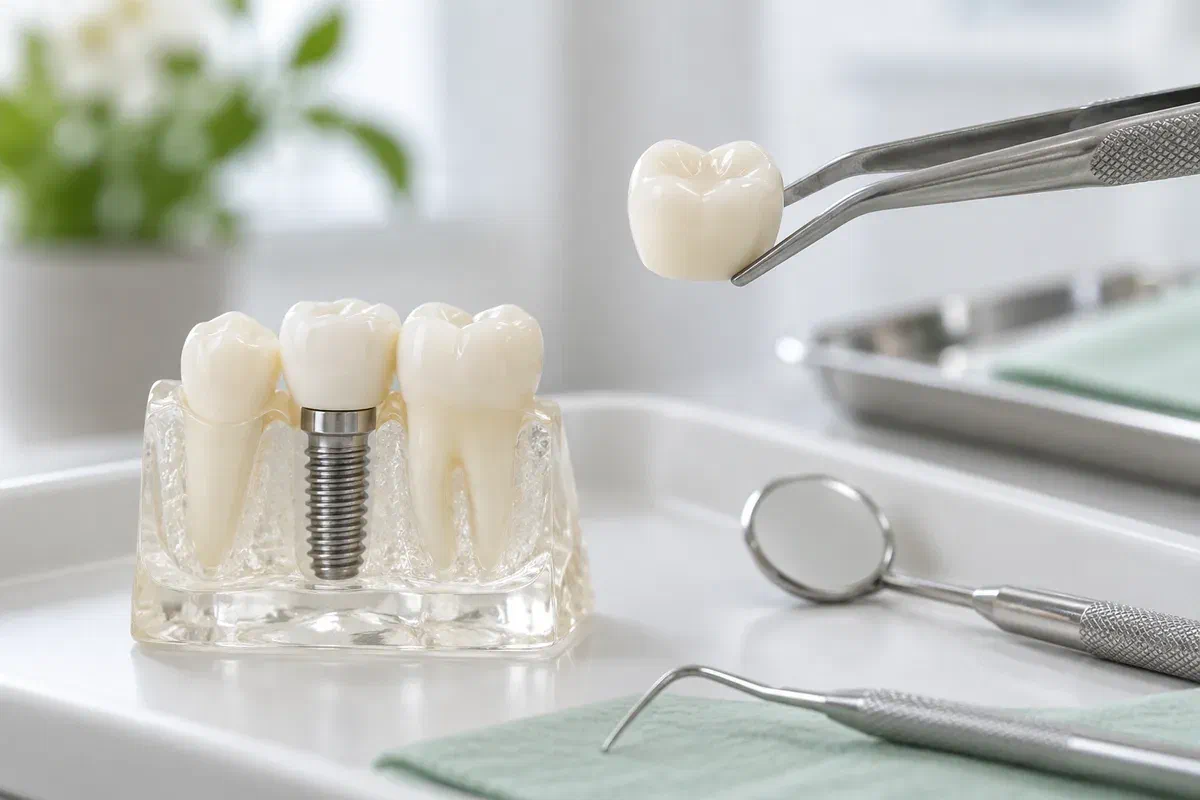
Teeth that have served you for a long time rarely look factory-new. They carry gentle wear at the edges, a lived-in colour, perhaps a filling or an older crown. An implant crown is the manufactured tooth that attaches to the implant post in your jaw, and it is planned so that it sits comfortably among those neighbours rather than standing out from them.
This step comes after the implant itself is placed, and it is its own piece of treatment. The site has to be confirmed as ready for the specific restoration in mind. Some people wear a provisional tooth first; others move more directly to the final crown. Your sequence depends on the case.
Plenty of people in Old Milton, Milton’s historic downtown, have dental records that stretch across several offices and many years. That is useful here. Tell us where your implant was placed, bring whatever system details you have, and we will explain the appearance, the attachment method, the checks at fitting and the cleaning the finished tooth will need.
A crown that looks right in isolation can look wrong in your mouth. These are the concerns we hear most when an implant is ready for its tooth, and each deserves a conversation before anything goes to the lab.
Readiness is judged on findings, not on the calendar alone. We may need to see records or hear from the clinician who did the surgery before restorative work starts.
Colour, edge shape and gum appearance all need to relate to what is already there. The implant’s position and the condition of nearby teeth set some limits, so it is worth agreeing on realistic goals early.
Implant system information and past treatment notes help the restoring dentist understand the support in place. Agree on who leads from here and which office keeps track of which reviews.
A healing cap or temporary tooth that loosens before your crown appointment should be reported to the treating team. Avoid tightening it yourself, and don’t sit on the problem until the visit date.
The implant was placed to hold a tooth, and the crown is that tooth. It is shaped with appearance, contact with neighbouring teeth, the meeting point with the gum and room for cleaning all in mind. Those choices are made alongside the correct connection to your particular implant parts.
Honest expectations help. The crown is an artificial restoration, and in time its surface or small components may need maintenance or repair. Ask how the design will be judged once it is in, and which changes at home would be a reason to come back.
Patient information: Canadian Dental Association — implant restoration stages
If your other teeth have natural character, say so. Front teeth in particular deserve this discussion. Some features can be adjusted to taste, while others follow from the site and the implant’s position.
Your bite has developed over years, and the crown must work within it, beside its neighbours and against the opposing teeth. Mention any sense that it lands first or that closing feels different.
The crown’s finished outline decides which tools and angles work. A hands-on demonstration makes the routine clear and helps you recognise when something needs a professional look.
Every case runs a little differently, shaped by the implant system, the gum tissue and the plan for the crown. You should hear clearly about records, any temporary parts, the fitting appointments and how clinicians will share information.
We examine the implant area and review any notes and images available. Knowing the system lets us source compatible parts. Questions about healing or support are settled before the crown work begins.
Physical impressions or a digital scan record what the lab needs. We talk through shade, form and contacts with your existing teeth, including any older crowns or fillings nearby, and how the crown will attach.
At the fitting we look at how the crown meets the implant parts, the gum, the teeth beside it and your bite. It is attached according to its design, and any adjustment or further step is explained as we go.
You will hear when regular chewing can resume and how to clean around the new tooth. A later visit lets us assess comfort, function and gum health once you have used it for a while.
An implant crown cannot decay like a natural tooth, but the gum and connection around it still need steady attention. The instructions you receive should match its shape, its access and your stage of care.
Practise reaching the gum line and the spaces beside the crown with suitable tools. If a brush or floss won’t get there comfortably, ask for another demonstration rather than forcing it.
Looseness, a clicking sensation, chipped material or an unfamiliar contact while eating should all be reported. Resist the urge to test a moving crown or adjust anything yourself.
Check-ups look at the gum, your cleaning, the contacts and the crown. Confirm how often to return, and whether the surgical or restorative office handles particular parts of ongoing care.
Questions about older records, matching established teeth, and the practical side of the crown stage.
Visit our Bronte Street practice to talk through the crown stage. We will review what is known about your implant and explain the records, appearance choices, fitting checks and care that come with it.
Bring old treatment records or the implant card if you have them; they help when care has moved between clinics over the years.
