Wear or chips that catch the light
Damage can dull a crown or leave a visible notch. Its size and location help determine whether polishing or repair would be enough, and the dentist will ask about your bite to understand why it happened.


A grey shadow at the gumline, a crown that looks bulkier than its neighbours or a shade that stands out in photos can make an implant tooth hard to ignore. Coming from Burlington, you can have the crown, its parts, the implant and the gum examined to see what a remake could change.
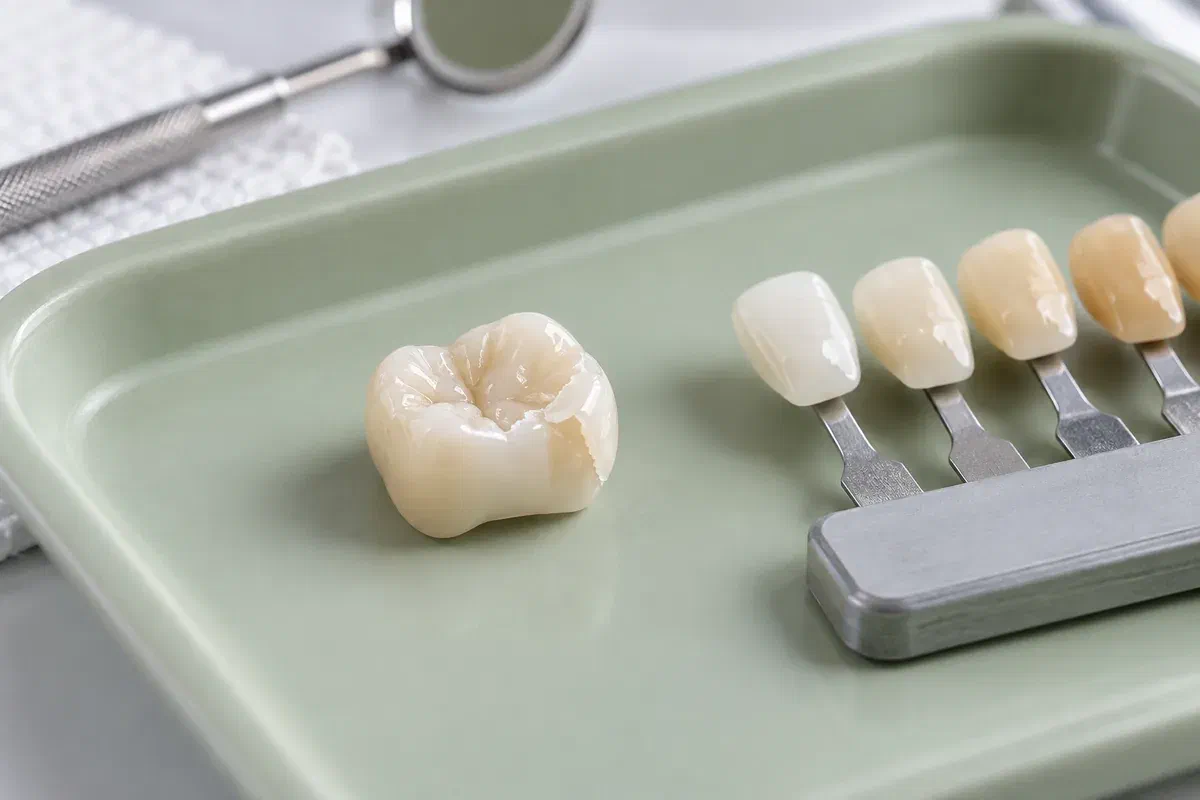
Some people are perfectly comfortable with their implant tooth and still wince at it in a mirror or a family photo. A dark band near the gum, a shade that no longer blends in, or an outline that looks too long or too square are common complaints. Because the crown is a separate piece attached to the implant system, it can often be remade while the implant stays put.
What a new crown can fix depends on the cause. Colour and shape are mostly crown features. A dark line may come from the crown material, the component underneath, thin gum tissue or where the implant sits, and only some of those respond to a remake. Knowing which is at play keeps expectations realistic.
Before your visit, think about exactly what you would like to see differently and bring any older photos that show the crown when it was new. We will explain what replacement would involve, what would stay and where the limits lie.
A specific description helps far more than a general sense that the tooth looks wrong. If someone else placed the implant, details of the system and parts used are very helpful.
Damage can dull a crown or leave a visible notch. Its size and location help determine whether polishing or repair would be enough, and the dentist will ask about your bite to understand why it happened.
Looseness changes the conversation. The connection and its components need to be examined first, and a more attractive crown would not resolve a fault beneath it.
Tell us whether it is the colour, the length, a hint of metal or food trapping that concerns you. Implant position and gum shape can restrict how much a remake alone can change.
If the crown loosens or comes off, call before eating on it. Keep the piece somewhere safe and avoid gluing it back in, however tempting before an event.
A well-chosen remake can bring a closer colour match, a more natural outline, better contacts with the teeth beside it or a material that hides the component better. Each of these is worth discussing with your own smile in mind.
Some appearance issues come from beneath the crown. If the gum is thin or the implant sits in a position that limits the design, a new crown may improve the look without fully solving it. Ask which concerns the remake is expected to help and which would need other treatment.
Patient information: Cambridge University Hospitals — maintenance of implant restorations
A crown can look poor and still be sound, or look fine while a part underneath is failing. Establishing which applies sets the right scope of work.
Share what you liked about the original crown and what you wish were different. Photos of your smile before the implant can also help guide shape and shade.
A beautiful contour still has to be easy to clean and possible to maintain. Ask how a given material or attachment style would affect checks and repairs later.
The implant system and the way the existing crown is fixed affect how the work unfolds. You can ask how removal is done, how the gap will look meanwhile and whether tests are needed before the lab makes the crown.
Tell us when the crown was placed and repaired, and bring any records. We discuss what you want to change and ask about health, habits and recent dental work nearby.
The dentist assesses shade, outline, contacts, connection and tissue. Imaging may help show whether a dark area or other concern relates to the crown or to what lies beneath.
We set out which parts would be replaced and which kept, the material and shade options, fees, the number of visits, how the old crown comes off and how the space is covered in between.
The new crown is assessed with the implant system, adjacent teeth, gum and bite. You receive care instructions and a review date, and we explain what to report if the concern reappears.
Your replacement may look and feel different even though the implant is unchanged. Follow the fitting instructions and watch how the bite and cleaning feel through normal days.
Have it checked if it feels high or catches when you chew. It should not be left to wear down or adjusted at home.
A reshaped crown may change where floss and brushes need to reach. We can show you suitable tools and talk about any spot that still collects food.
Good looks depend on healthy tissue. Tell us early about movement, chipping, bleeding that continues or any change that resembles the original concern.
These questions focus on what people want to know when an implant tooth no longer looks right. The answer depends on the cause, and not every concern needs a new crown.
Sit down with us at our Bronte Street practice to discuss the appearance of an implant crown. We will tell you honestly whether a repair, a remake or further assessment would serve you best.
Bring older photos of your smile if you have them, along with implant records and any loose piece.
