Whether the crown is chipped or cracked
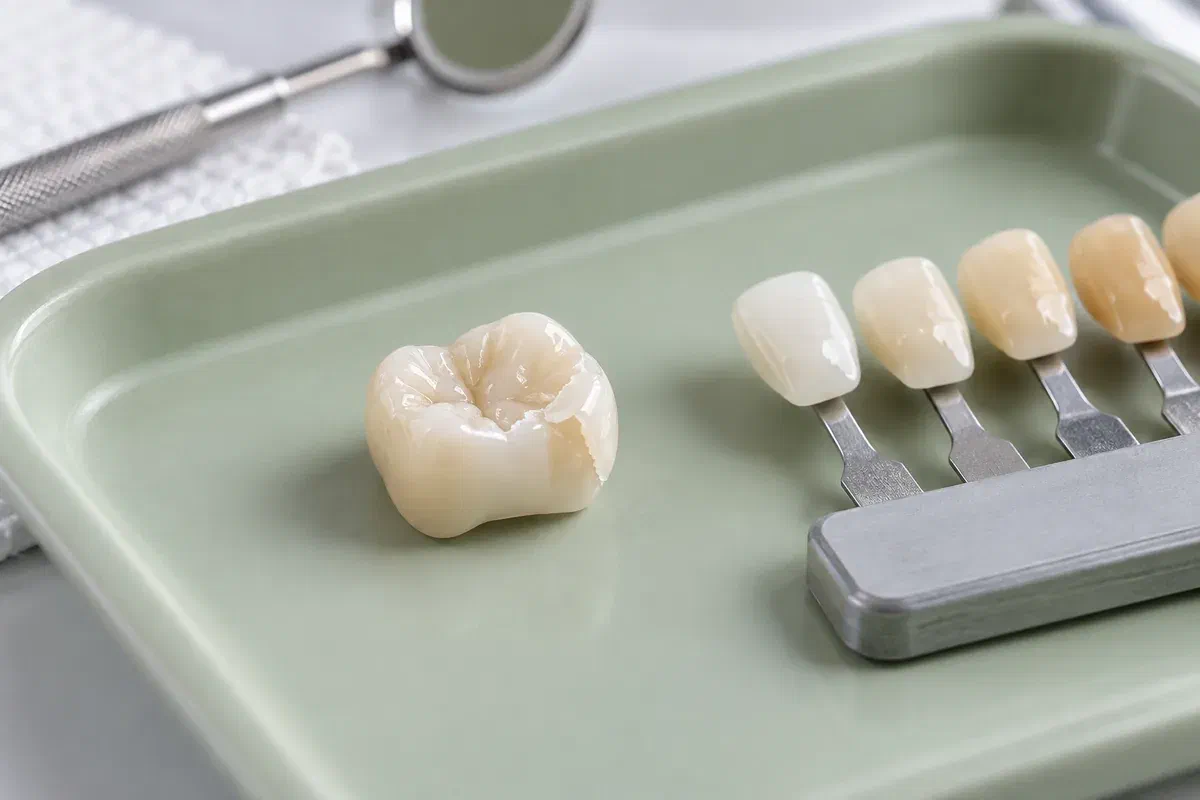
Look at it closely, or take a photo. A damaged crown may not be reusable, and earlier chips or changes in your bite help explain why it failed.


The implant crown came off in your hand, or it is hanging on by a thread. For households around Campbellville, here is how to protect the piece, when to call, and how we work out whether it can go back on or a new crown is the better choice.
Few things are as startling as finding your implant tooth sitting on your tongue. Take a breath: the crown is only the top piece of the implant system, and when it detaches the implant in the bone is often still in place. Rinse gently, put the crown in a clean container, and call us before you try to eat on that side.
What happens next depends on why it came off. A crown may be refitted if it and the connection are in good shape. If a screw or other component has loosened or broken, that part may need attention first. If the crown is cracked, worn or has come off before, a remake may make more sense. Occasionally the gum or implant needs a closer look.
On the day, have the crown and any loose bits with you, along with any records and a note of earlier repairs. We will explain what can be reused, what would be replaced and what your implant’s setup allows, and we can try to group visits so you are not making extra trips in from Campbellville.
Knowing what happened lets us book the right length of appointment. If the implant was placed elsewhere, the brand or office name is useful.
Look at it closely, or take a photo. A damaged crown may not be reusable, and earlier chips or changes in your bite help explain why it failed.
A crown that has detached more than once suggests the connection or its parts need checking. Simply putting it back may not last, and the implant itself may need assessment.
Food trapping, a dark area at the gum or an outline you disliked are worth mentioning now. The implant position and gum shape affect what any new crown could improve.
Please do not glue the crown back or push it into place. Keep it dry and safe in a container. If you have swelling, severe pain or bleeding that does not settle, call promptly rather than waiting.
If the crown is damaged or has a design flaw, a remake can change the material, the contour, the contacts with nearby teeth, the shade or the way it attaches. That is a chance to correct anything that was never quite right.
Yet putting a new crown on a faulty connection just sets up the next detachment. The implant, the components and the gum need to be suitable, and the reason the crown came off should be understood. Ask which concerns a new crown would solve and which would need their own care.
Patient information: Cambridge University Hospitals — maintenance of implant restorations
A worn component, a cracked crown and a heavy bite lead to different solutions. The dentist should explain whether the crown or a part underneath was responsible.
Your memory of food packing, slight movement or how the bite felt is valuable evidence. Mention the good points of the old crown as well as the bad.
Some crowns can be removed and refitted more easily than others. For a rural household, ask how checks and future component work could be planned efficiently.
Your implant system and how the crown was attached shape the process. Ask about refitting, temporary cover for the space, the records needed and any tests before a new crown is made.
Describe what happened on the phone so we can plan the visit. Bring the crown, any loose pieces and implant records. We also ask about health changes, clenching and nearby work.
The dentist examines the crown, the connection, the contacts and the gum. X-rays may help confirm the implant and bone are not involved.
We explain what can be reused and what would change, plus material, shade, fees, visits and how the gap will be managed. Where sensible, steps can be combined to reduce trips.
Whether refitted or newly made, the crown is checked for a secure seat, comfortable contacts, healthy gum margins and an even bite. You leave with care advice and a clear list of things worth reporting.
A replacement may feel unfamiliar even though the implant is the same. Follow the instructions given at fitting and notice how chewing and cleaning feel over the next few weeks.
An uneven contact can stress the connection and lead to loosening. Book a quick check, and resist any urge to reshape the crown at home.
A new shape may change how you reach the gumline. Ask us to show you suitable brushes or floss, and mention any spot that still traps food.
Ongoing reviews of the implant and gum help catch problems early. Tell us soon about movement, chips, persistent bleeding or anything that feels like the earlier issue.
These answers cover the practical worries after an implant crown comes off or loosens. The right step depends on the cause, and not every case needs a new crown.
Contact our Bronte Street practice if an implant crown has come off or is loose. We will look at the crown and the implant, then explain whether refitting, a new crown or further care is the best path.
Pack the crown and any small pieces in a container, plus implant records and repair history if you have them.
