Chipping or wear on the crown
If the damage is stable, the old crown may stay on while the new one is made. The size and site of the chip, and any history of a changed bite, help confirm that.


Between taking off an old implant crown and fitting a new one, there is often a stretch of days or weeks to plan for. For people in Erin and Hillsburgh, we explain the whole sequence up front, from assessing the crown and its support to how the space is handled while you wait.
A common question about remaking an implant crown is not about the final result at all. It is: what will I look like, and how will I eat, while the new one is being made? The answer depends on the tooth’s position, how the old crown is attached and whether it can be kept in use until the replacement is ready.
Before that planning starts, the dentist confirms what actually needs doing. The crown is the separate top piece of the implant system and can be renewed while the implant remains. Damage, recurring looseness, appearance or cleaning problems may each come from a different part, and some can be handled by a smaller repair with no gap at all.
Tell us about any events coming up, how far you are travelling and any earlier repairs or changes you noticed. A sound plan should explain what would be renewed, what stays, what the interim arrangement looks like and what the implant site allows.
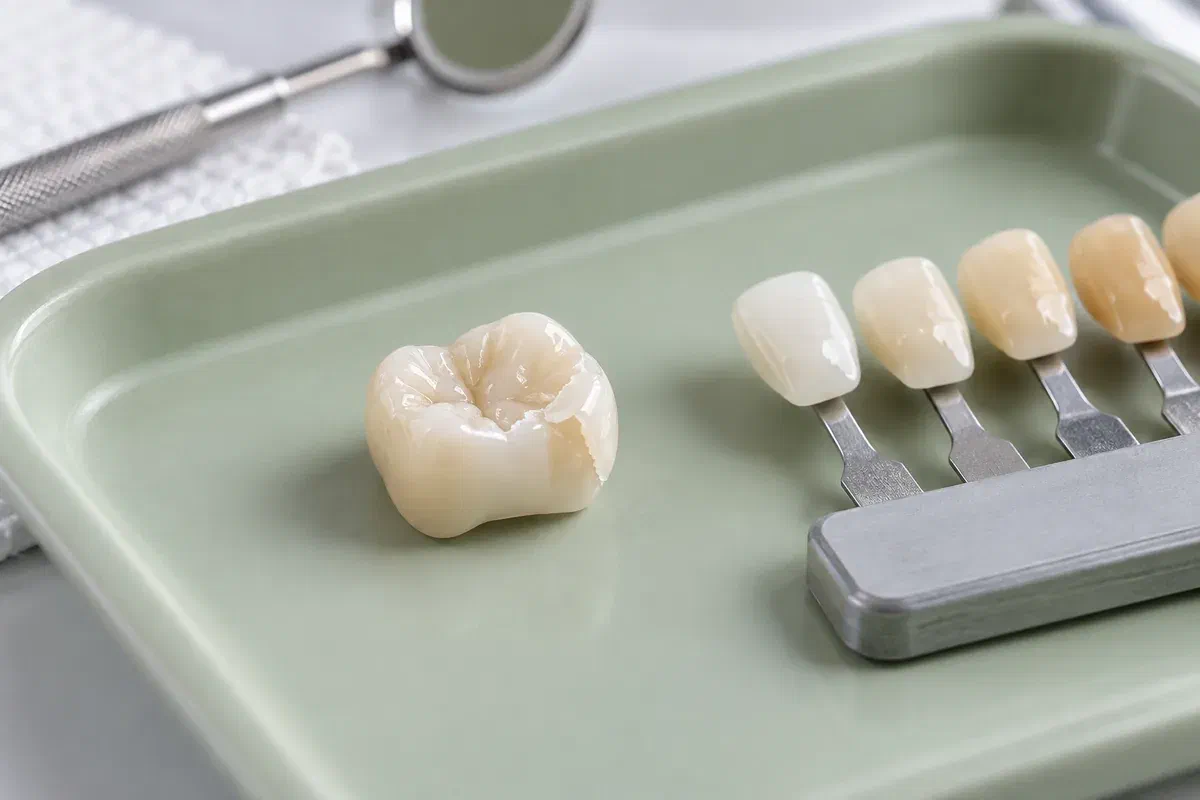
Some problems allow the old crown to stay in use until the new one is ready, while others do not. Records from another office help us judge this early.
If the damage is stable, the old crown may stay on while the new one is made. The size and site of the chip, and any history of a changed bite, help confirm that.
A crown that keeps moving may need the connection addressed before anything else. That can affect the order of visits, and the implant may need assessment too.
Food trapping, a dark margin or an unwanted shape can usually wait for planned work. Implant position and gum shape still limit what a remake can change.
If the crown comes off unexpectedly, call before eating on it. Keep it in a container and do not glue it, since it may be useful during the interim.
A new crown can correct features the old one cannot be adjusted to fix: material, shape, contacts, shade and retention. Planning the interim well means you get those benefits without an awkward few weeks.
The remake still has to sit on a suitable foundation. The implant, connection and gum need to be ready, and any cause of repeat trouble should be dealt with. Ask which concerns the replacement is meant to solve and which may need separate care before or after.
Patient information: Cambridge University Hospitals — maintenance of implant restorations
If a component is the real issue, the timeline and interim plan may differ. Ask the dentist which is responsible before the old crown is removed.
Work, family events and travel all affect the best timing. Also mention features of the old crown you would like the new one to keep.
Ask how the new design will be checked and maintained, and whether its attachment makes future servicing simpler for someone travelling in.
The implant system and how the existing crown is fixed determine the sequence. Ask how removal is done, what temporary cover is planned, which records are taken and whether any tests are needed.
Bring any implant documents and describe past repairs and retightening. We discuss your symptoms, health, habits and upcoming commitments so the plan fits around them.
The dentist examines the crown, contacts, connection and gum. Imaging may be needed to rule out implant or bone concerns before work begins.
You hear what changes and what stays, the material and shade choices, fees and number of visits, and exactly how the space will be covered between appointments.
The replacement is checked against the implant parts, neighbouring teeth, gum and bite. You leave with instructions, a review date and guidance on what to report.
While you wait, follow any advice about eating and cleaning around the space or temporary. Once the new crown is in, it may feel different even though the implant is unchanged.
If you have an interim crown or cover, avoid very hard or sticky foods on that side. Call if it loosens or breaks rather than trying to fix it.
If the final crown feels high or catches, book an adjustment. It should not be left to wear in, and should never be filed at home.
Ask how to clean the new contour, and keep regular checks of the implant and gum. Report movement, chips, persistent bleeding or a familiar problem.
These answers cover what people want to know about the period between removing an old implant crown and fitting a new one. Not every case involves a gap.
Arrange a visit at our Bronte Street practice to assess a worn, damaged or loose implant crown. We will set out the options, the timing and the interim arrangements clearly before anything starts.
Bring implant records, repair history, any detached piece and a note of dates you would like to work around.
