Damage to the crown surface
Describe or photograph the chip or worn area if you can. Its size and position help decide whether a repair is feasible, and any history of earlier chips or a changed bite helps explain the cause.


Replacing an implant crown usually takes more than one appointment, so the trip from Etobicoke is worth planning well. We assess the crown, its connection, the implant and the gum, then map out a sequence of visits that keeps travel sensible and explains when to seek help closer to home.
Coming from the west end of Toronto, you want each appointment to move things forward. That starts with a thorough first assessment. An implant tooth has a visible crown fastened to the implant through a connection, and the crown can wear out, crack or come loose while the implant stays healthy. Sorting out which piece is involved early prevents wasted trips later.
Different findings lead to different schedules. A small repair might be done in one sitting. Work on the connection, or a full remake, usually means at least a records visit and a fitting visit, sometimes with tests in between. If the problem turns out to involve the implant or gum, the plan can change again, and we would rather tell you that up front.
Send or bring any implant records before your first visit, and let us know about previous repairs and what changed before the current issue. We will set out which parts would be renewed, which could stay, how many visits to expect and what limits your situation brings.
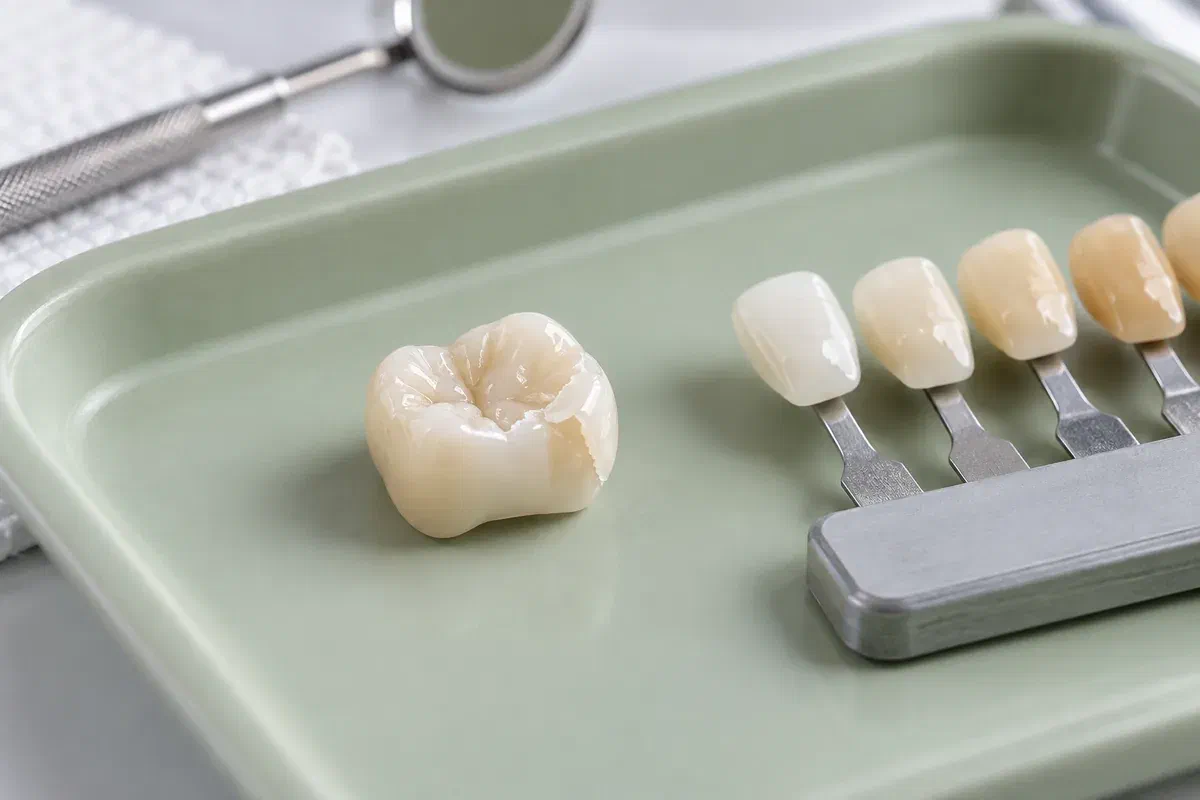
Information sent ahead helps us prepare the right time and materials. Records from the office that placed the implant are especially valuable if the work was done elsewhere.
Describe or photograph the chip or worn area if you can. Its size and position help decide whether a repair is feasible, and any history of earlier chips or a changed bite helps explain the cause.
Recurring movement points to the connection and related parts. Simply making a new crown may not solve it, and the implant itself may need to be assessed during the same visit.
Let us know about food trapping, visible metal or a shape you dislike. What a remake can change depends on where the implant sits and the condition of the gum.
If your crown comes off or moves, call us before chewing on it. Store the piece in a small container and do not glue it. If you have swelling, significant pain or bleeding that will not stop, seek care nearer home rather than waiting for the drive.
If a new crown is the right answer, it can address things the old one cannot be adjusted to fix, such as its material, contour, contacts, colour or how it is retained.
But remaking a crown over an unsolved problem tends to bring you back sooner. The implant, connection and gum have to be suitable for new work, and anything causing repeat trouble should be found first. It is reasonable to ask which of your concerns a new crown would help and which need other care.
Patient information: Cambridge University Hospitals — maintenance of implant restorations
Identifying the source early sets the number of visits and the scope of work. Ask whether the crown is beyond use or a part underneath should be dealt with first.
Notes on food trapping, bite feel, appearance and cleaning are just as useful as records. Share what you liked about the old crown, too.
Some materials and attachment methods are simpler to check and service. Ask how future maintenance could be planned around your travel and your regular dentist.
How your current crown is attached and which system you have will shape the steps. Ask how removal works, what covers the space between visits and whether any tests can be combined with other appointments.
Share implant documents and describe when the crown was placed, fixed or retightened. We also go over symptoms, priorities and recent changes in health, habits or nearby dental work.
The dentist checks the crown, contacts, connection and gum, often with imaging. Where possible, the needed records are taken in the same sitting to save you another trip.
You learn what would change and what stays, plus material, shade, fees, the number of visits and how the gap is covered. We can group steps where it is clinically sensible.
The new crown is checked with the implant system, neighbouring teeth, gum and bite. You get care instructions and a review plan, including which concerns need a call and which can wait.
Your replacement may feel different even though the implant has stayed the same. Follow the instructions from fitting and pay attention to the bite and cleaning in the days that follow.
Catching or hitting early means the bite needs adjusting. Call to describe it so we can decide together how soon to see you, and avoid trying to grind it down yourself.
Ask us to show you the right brushes or floss for the new shape while you are in the chair, and point out any area where food still collects.
The implant and gum still need regular reviews, which may be shared with your usual dentist. Report movement, chips, persistent bleeding or anything that resembles the original issue.
These cover the questions people ask when they are travelling a distance for implant crown work. The treatment depends on what is found, since not every concern needs a new crown.
Arrange a first visit at our Bronte Street practice for a worn, damaged or loose implant crown. You will leave knowing what the problem is, what the options are and roughly how many trips each one involves.
Send implant records ahead if you can, and bring repair history plus any piece that has come off.
