Illustrative patient and dentist reviewing an existing implant crown
Restorative Dentistry

Implant Crown Replacement in Mississauga

Your implant was placed by another dentist, maybe years ago, and now the crown on it needs attention. From Mississauga, you can bring whatever records you have, and we will identify the system and check every part of the tooth, from crown to gum, before any renewal is planned.

Picking up where another office left off

Someone else placed it. We can still take a look.

People move, dentists retire and practices change hands, so it is common to need work on an implant you did not get from us. The crown is the visible part, joined to the implant through a connection, and it can chip, loosen or wear while the implant underneath remains healthy. Our first job is to understand the system you have.

That matters because implant brands and components differ. Knowing what is in your mouth helps the dentist judge whether a damaged crown can be repaired, whether a connection part needs attention, or whether a remake on the existing implant is realistic. Sometimes the records make this simple; sometimes some detective work is needed.

Gather what you can before your visit: an implant card, a treatment summary, invoices, even the name of the office that did the work. We will explain what would be replaced, what could stay and what limits the existing setup brings.

Book an assessment of an implant done elsewhere
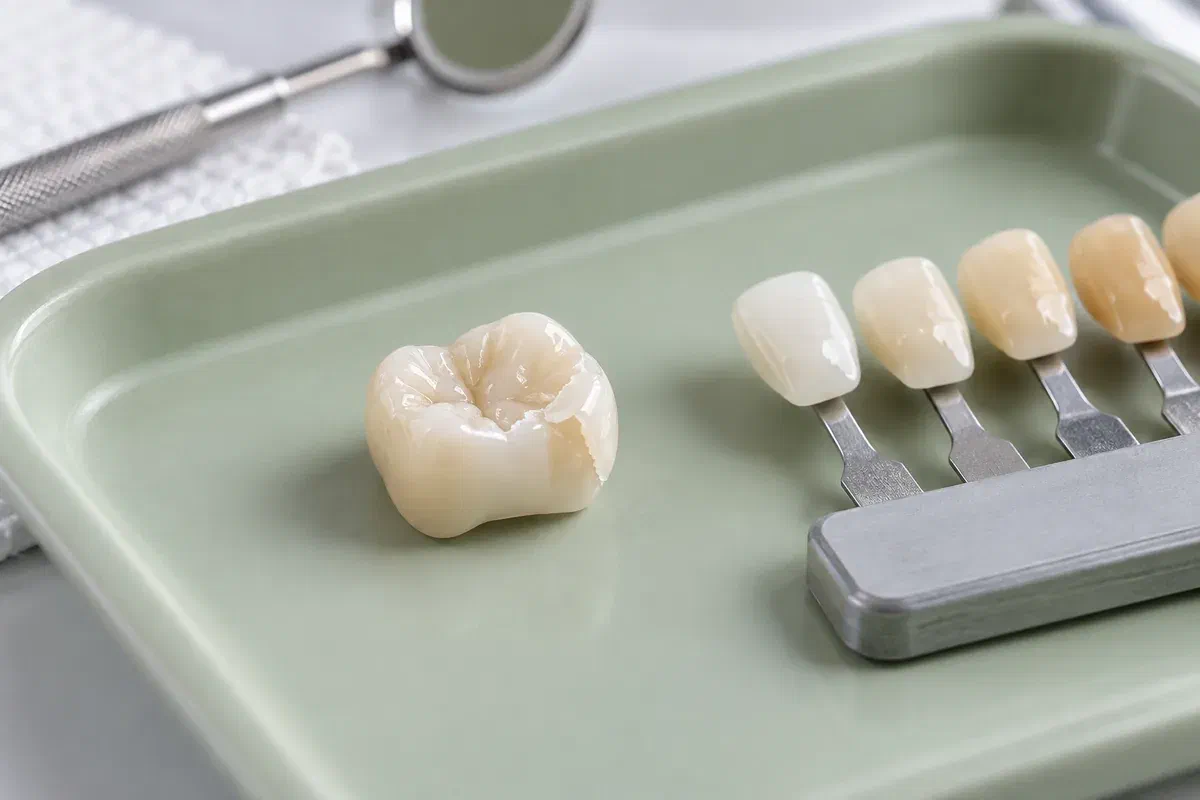
Ceramic implant crown with a small damaged edge beside a shade guide
What to bring and mention

Records help. So does your memory.

Even partial information can narrow down the parts involved. Your account of how the crown has felt since it was placed fills in what the paperwork leaves out.

Chips, cracks or a worn surface

The extent and position of the damage guide whether a repair is sensible. Mention any earlier fixes by the previous office and any change in your bite that might explain the wear.


Looseness that has come and gone

If the crown was tightened before and has moved again, the connection needs careful review. A new crown alone may not stop it, and the implant may need assessment too.

Trouble cleaning or a look you dislike

Tell us about food packing, visible metal or the shape of the tooth. The implant’s position and the gum may limit how much a remade crown can change.

A loose or detached crown should be reported before you chew on it. Keep any piece in a container, and do not reattach it with glue while you wait to be seen.

Why we start with identification

Clear findings lead to a sensible plan.

When a remake is justified, it can correct a design that never quite worked: a shape that traps food, contacts that let things through, a shade that does not blend or a material that wears poorly against your bite.

A new crown also has to fit the parts already there. If the implant, connection or gum is not suitable, or if something keeps causing the problem, that must be dealt with first. Ask which issues a new crown should solve and which belong to separate care.

Patient information: Cambridge University Hospitals — maintenance of implant restorations

Work out whether the crown or a part is at fault

Pinpointing the source defines what needs doing. The dentist should say whether the crown is unusable or a retained component needs work before any remake.

Add what you know to the records

Your experience with flossing, food trapping and how the bite feels gives context the paperwork cannot. Say what worked about the old crown as well.

Ask about servicing the new design

Choices in material and attachment influence later access and repairs. Find out how future checks would be handled, especially if parts come from a less common system.

How we handle another office’s implant

Identify first, then plan

The connection type and component details shape what follows. Ask how the crown will be removed, how the space is managed and what records or tests are needed before anything is made.

  1. Collect records and history

    Share any documents and tell us when the crown was fitted, repaired or retightened. We ask about your symptoms and priorities, plus changes in health, habits or nearby teeth.

  2. Examine and image the site

    The dentist checks the crown, contacts, connection and gum. X-rays or other assessment can help identify the system and tell a crown problem from one involving the implant.

  3. Discuss the options openly

    We explain what would be replaced and what would stay, whether parts can be sourced, material and shade choices, fees, number of visits and how the gap is covered.

  4. Fit the crown and arrange review

    The new crown is checked with the implant system, neighbouring teeth, gum and bite. You leave with instructions, a review date and clear signs to report.

Afterward

A new start on an old implant

Your replacement may feel unfamiliar even though the implant has not changed. Follow the fitting advice and keep an eye on contacts and cleaning as you return to normal eating.

Book a check for a high or catching bite

Hitting early or snagging on food means it needs adjusting. It should not be left to wear in, and it should never be reshaped at home.

Practise cleaning the new contour

A changed shape can alter how you reach the gumline. We can show you which tools work best and look at any place food still gathers.

Keep your implant on a review schedule

The implant and gum need ongoing checks with us or your regular dentist. Report movement, chips, lasting bleeding or anything that resembles the earlier problem.

Options once the system is known

From a small fix to a fuller plan

A thorough assessment compares a limited repair with a new crown and any wider care the findings require. Ask why the suggested option makes sense for your particular situation.

If the current crown is still usable

Repair or component service

A small defect or connection issue may be handled without a remake. Material, the extent of the problem and whether compatible parts are available all affect this choice.

If the visible tooth has to be redone

A replacement crown on the same implant

A remake may be suitable when the crown is no longer serviceable but the implant and supporting parts can stay. Ask what will improve and what the existing site limits.

If the problem lies deeper

Further assessment of implant or gum

Concerns involving the implant, connection or tissue may need extra treatment or specialist input. A new crown would then be designed around those findings.

Questions we hear from Mississauga

Working on an implant you got elsewhere

These answers cover common worries when the original implant dentist is no longer involved. The approach depends on what the assessment finds and what parts can be identified.

(905) 876-4488
What if I have no records for my implant at all?
It is still possible to begin. Examination and imaging may help identify the system, though some cases take longer. The dentist will explain how missing information affects the options.
Can you contact my previous dentist for the implant details?
With your permission, records can be requested from the office that did the work. Starting that request early can save time before treatment is planned.
Are parts available for every implant system?
Not always easily. Some older or less common systems are harder to source parts for. The dentist will tell you if that affects a repair or remake and what alternatives exist.
Can my existing implant be kept if the crown is redone here?
If the implant and its support are suitable, it can often remain. The connection and gum still need checking, so ask which components the plan keeps and why.
Does a crown that keeps unscrewing need replacing?
Not necessarily. Recurring movement can stem from the connection or other parts of the assembly. Call for an assessment and avoid tightening or gluing it yourself.
Will my regular dentist in Mississauga be kept informed?
If you would like your usual dentist updated, let us know. Sharing findings, images and treatment notes can help keep your future care coordinated, especially if routine implant checks will continue closer to home.
Coming from Mississauga

Bring the paperwork. We’ll bring the questions.

Visit our Bronte Street practice for a review of an implant crown placed elsewhere. We will explain whether a repair, a new crown or a closer look at the implant is the right next move.

Bring your implant card, any treatment summary from the previous office and any part that has come off.

Visit Milton Dental Clinic
Unit 1, 342 Bronte St. S, Milton, ON L9T 5B7
Get directions Clinic hours
Monday–Thursday
11am–7pm
Friday–Sunday
By appointment only

Areas we serve

  • Milton
  • Oakville
  • Mississauga
  • Georgetown
  • Halton Hills
  • Acton
  • Campbellville
  • Brampton
  • Burlington
  • Puslinch
  • Rockwood
  • Erin
  • Caledon
  • Etobicoke
  • Old Milton
  • Bronte Meadows
  • Timberlea
  • Dorset Park
  • Dempsey
  • Clarke
  • Beaty
  • Coates
  • Harrison
  • Scott
  • Willmott
  • Ford
  • Bowes
  • Cobden
  • Walker
  • Mountain View
  • Milton Heights
  • Hawthorne Village
  • Valley View
  • Fallingbrook
  • Nassagaweya
  • Trafalgar
  • Esquesing
  • Nelson
  • Brookville
  • Moffat
  • Glen Williams
  • Norval
  • Limehouse
  • Stewarttown
  • Ashgrove
  • Hornby
  • Silver Creek
  • Speyside
  • Scotch Block
  • North Oakville
  • River Oaks
  • Glen Abbey
  • West Oak Trails
  • Palermo
  • Bronte Creek
  • College Park
  • Joshua Creek
  • Uptown Core
  • Preserve
  • Iroquois Ridge
  • Lisgar
  • Meadowvale
  • Meadowvale Village
  • Churchill Meadows
  • Erin Mills
  • Central Erin Mills
  • Streetsville
  • East Credit
  • Creditview
  • Heartland
  • Sheridan
  • Mount Pleasant
  • Credit Valley
  • Huttonville
  • Churchville
  • Springbrook
  • Northwest Brampton
  • Bram West
  • Fletcher's Meadow
  • Fletcher's Creek South
  • Alton Village
  • Orchard
  • Millcroft
  • Headon Forest
  • Tansley
  • Brant Hills
  • Tyandaga
  • Kilbride
  • Lowville
  • Aberfoyle
  • Morriston
  • Arkell
  • Hillsburgh
  • Freelton
  • Carlisle
  • Waterdown
  • Flamborough
  • Mountsberg

How can we help?

Milton Dental Clinic

Have a question about your smile? Choose the option that works best for you.

For urgent dental concerns, please call.
Messages are reviewed during clinic hours.