A chip, crack or worn-through area
Size and position guide whether a repair can hold. Mention earlier chips, clenching at night or any recent change in how your back teeth meet, because these point to why the material gave way.


A sharp edge that appeared mid-meal or a corner of porcelain gone missing raises one big question: patch it or start over? From Oakville, you can have the damaged implant crown, its connection, the implant and the surrounding gum assessed before choosing.
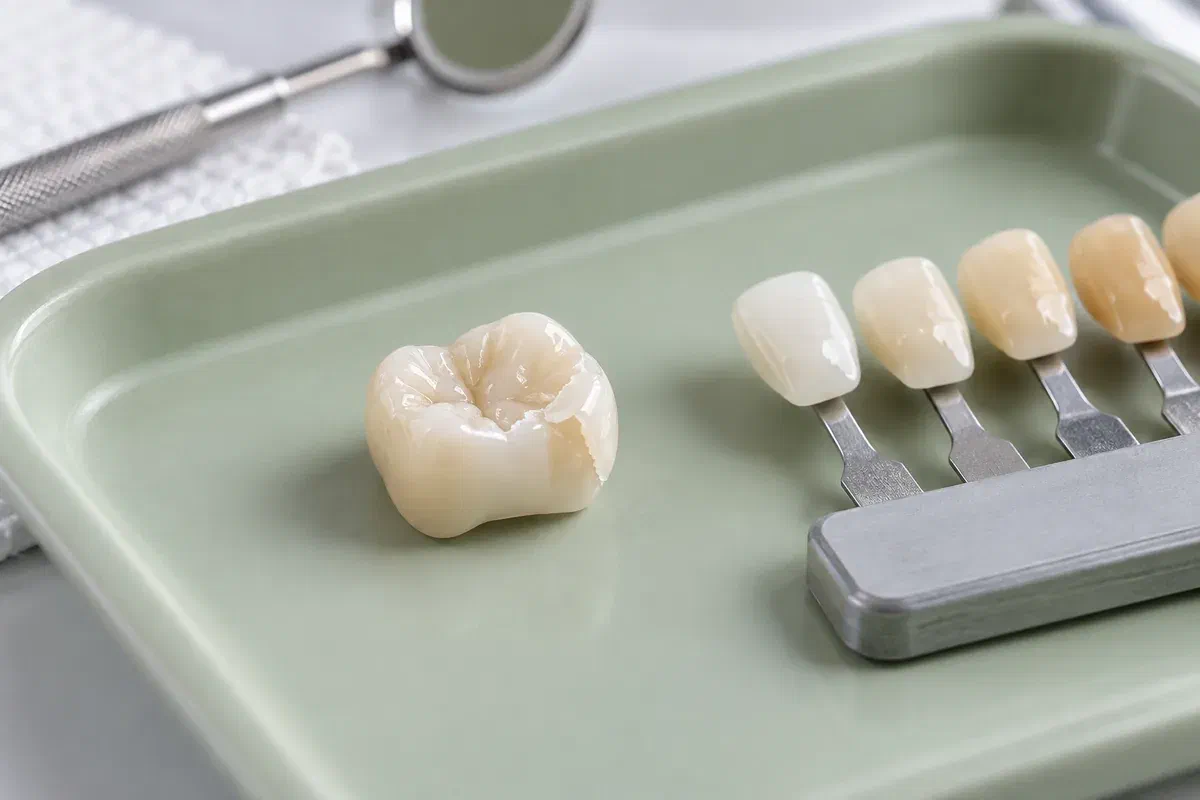
You bite into something firm and feel a tiny crunch that is not food. Afterward your tongue finds a rough patch on the implant tooth. That chip affects the crown, the tooth-shaped cap screwed or cemented onto the implant system, and the implant in the bone is often untouched. Still, the damage needs to be looked at before anyone decides how to deal with it.
Chips vary a great deal. One on a non-biting corner may be smoothed or bonded. A fracture through a load-bearing area, repeated chipping, or damage paired with looseness tells a different story. The question of why the material broke also matters, since grinding or a changed bite can wear down a new crown too.
When you book, tell us whether this is the first chip or one of several, and whether the crown has been repaired before. We will explain which parts would be redone, which could remain in place, and what the setting of your implant allows.
How and when the damage happened helps shape the plan. Treatment notes from the office that placed the implant are useful if you can get them.
Size and position guide whether a repair can hold. Mention earlier chips, clenching at night or any recent change in how your back teeth meet, because these point to why the material gave way.
If the crown also wiggles, the connection and supporting parts need examining. A fresh crown would not settle that on its own, and the implant may need assessment too.
Some people use a chip as the moment to fix an outline, a visible metal edge or a spot where food lodges. Say so, but know that implant position and gum shape can limit what a remake can do.
If a large piece breaks off or the crown loosens, call before carrying on with normal chewing. Save the fragment in a clean container if you can, and do not try to stick it back.
A new crown can solve problems a repair cannot: a structural weakness, a design that keeps trapping food, or a material that suits your bite poorly. Material, shape, contacts, colour and the way the crown is retained can all be reconsidered.
Yet a remake placed over an unresolved issue tends to repeat the story. The implant, the connection and the gum must be ready for new work, and the reason for the original chip should be part of the conversation. Ask plainly which concerns a new crown will improve and which will need different care.
Patient information: Cambridge University Hospitals — maintenance of implant restorations
Locating the fault defines the job. A good assessment says whether the crown itself is beyond repair or whether something underneath should be addressed first.
How the tooth catches, where food collects and how easy it is to floss all help shape the design. Mention what suited you about the original as well as its faults.
Some materials and attachment styles are easier to service later. Ask how future checks or component work would be handled before deciding on the most attractive option.
The method used to attach your crown and the parts in your system influence each stage. Ask about removal, temporary cover for the space, records and any tests before the new crown is ordered.
Describe the chip, earlier repairs and when the crown was first placed, and bring any implant documents. We also ask about grinding, health changes and recent work on nearby teeth.
The dentist looks at the fracture, contacts, connection and gum. Imaging may be used to rule out a problem with the implant or bone that the chip could be hiding.
You hear what a repair would involve and what a remake would change. Material and shade, cost, number of visits, the removal process and how the gap is managed are all discussed.
The new crown is checked with the implant system, nearby teeth, gum and your bite. You get instructions for the first weeks and a review date, plus signs to report early.
Even with the same implant, a remade crown can feel new. Follow the instructions you were given and notice how the contacts and cleaning feel as you return to your usual foods.
When the tooth hits first or snags on certain foods, book a quick check. It is not meant to wear into place, and home adjustments can damage it.
A different shape can change how you reach the gumline and the gaps on each side. Ask for a demonstration and flag any area where food still sticks.
Regular checks still matter for the implant and the tissue around it. Report movement, new chips, bleeding that persists or anything that reminds you of the original problem.
These answers address what people usually wonder after damaging an implant tooth. The right step depends on what the examination finds, since a chip does not automatically mean a new crown.
Visit our Bronte Street practice to have the damage examined. We will explain whether a repair, a new crown or further assessment of the implant is the sensible next step.
Bring the broken fragment if you saved it, along with any implant paperwork and notes on earlier repairs.
