Illustrative patient and dentist reviewing an existing implant crown
Restorative Dentistry

Implant Crown Replacement in Puslinch

Once a new implant crown is on the table, the design choices begin: material, shape, how it attaches and how easy it will be to keep clean. For households in Puslinch, we assess the existing crown and its support first, then help you weigh designs with long-term upkeep in mind.

Designing a replacement, Puslinch

Choose a crown you can look after

Most conversations about a new implant crown start with how it will look. A better question is how it will live in your mouth for years: how it handles your bite, how easily you can floss around it and whether it can be removed for a check without being destroyed. Those features matter just as much as the shade.

Before any design talk, though, the dentist has to confirm that a new crown is the right answer. The crown is a separate piece on the implant system and can be renewed while the implant stays put, but chips, looseness, cleaning trouble and appearance concerns may come from the crown, the connection, the gum or the implant’s position. Some can be handled with a smaller repair.

Share how the current crown has behaved, any repairs it has had and the things you would most like to change. If a remake is advised, we will outline what would be renewed, what would remain and how each design option fits your situation.

Talk through replacement crown options
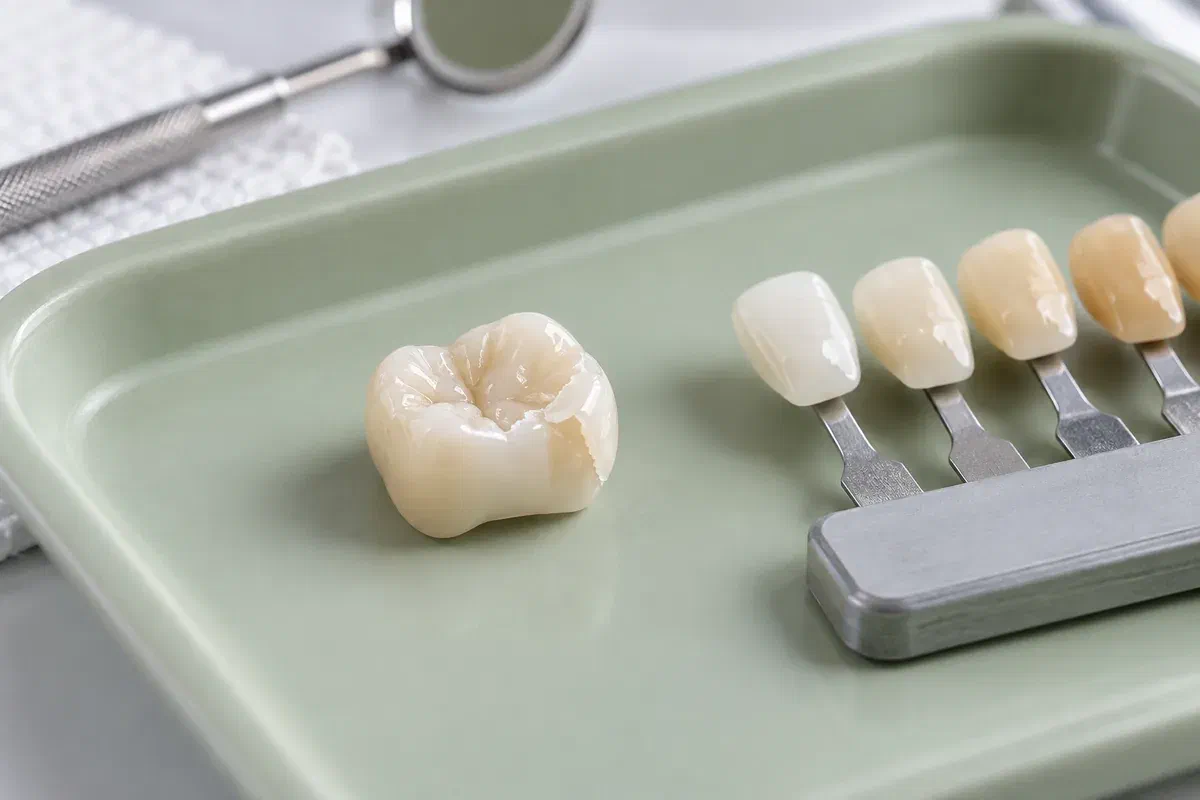
Ceramic implant crown with a small damaged edge beside a shade guide
What brought you here

Start with what the old crown taught you.

The faults of your existing crown are clues for designing a better one. If it was made at another office, any notes on the material and attachment method are helpful.

Chips or wear on the biting surface

Repeated damage may suggest the material or design does not suit your bite. The size and location of chips, and any history of clenching, guide what to try next.


A crown that loosens from time to time

Movement calls for a look at the connection first. Changing the crown alone may not solve it, and the implant beneath may also need assessing.

Hard to clean, or not quite right to look at

Food trapping and an awkward contour are common reasons for redesign. The implant position and gum can still limit what a new shape can do.

If the crown moves or comes off, phone before chewing on it. Keep any piece in a container, and avoid glue or home cement.

The value of planning the design

Built for your bite, your routine and future checks

A thoughtfully designed replacement can bring a material that suits your chewing forces, a contour that floss slips around easily, contacts that keep food out, a closer colour and an attachment method that allows later access.

Design cannot overcome an unsuitable foundation. The implant, connection and gum need to be in good condition for the new crown, and anything that wore out the old one should be understood. It is fair to ask which concerns the redesign will fix and which call for separate care.

Patient information: Cambridge University Hospitals — maintenance of implant restorations

Rule out a component problem first

There is little point redesigning a crown if a part underneath is the real issue. Ask whether the crown itself is unsuitable or a connection piece needs attention.

Turn your daily habits into design notes

Tell us how you clean, where food used to collect and how the bite felt. Note anything you would want kept from the old crown.

Prefer designs that can be serviced

Some attachment methods allow the crown to be removed for checks more easily. Ask how each option affects future maintenance and repair, especially if you want fewer trips.

Planning visits from Puslinch

Diagnose, design, make, fit

Your implant system and existing attachment shape the options available. Ask how removal will be done, how the gap is covered, what records are needed and whether any tests come first.

  1. Talk about the crown’s track record

    Bring any implant documents and describe the crown’s fitting date, repairs and retightening. We also discuss your health, habits and recent work on teeth nearby.

  2. Examine the site before designing

    The dentist looks at the crown, contacts, connection and gum. Imaging may be used to make sure the implant and bone are suitable for new work.

  3. Weigh materials and attachment

    We compare design options and explain what changes and what stays, along with shade, fees, the number of visits, removal and temporary arrangements.

  4. Fit the crown and confirm it is cleanable

    We test the fit on the components, the contacts with neighbouring teeth, the gum margin and your bite. You practise cleaning around it before leaving and receive a review plan.

Keeping it in good shape

A routine built around the new contour

Even on the same implant, a replacement can feel new. Follow your fitting instructions and pay close attention to how flossing and chewing feel over the first weeks.

Report a bite that feels off

Hitting first or snagging on food means an adjustment is due. It will not wear into place reliably, and filing at home can damage it.

Use the aids recommended for this shape

Your new crown may suit a particular floss, interdental brush or water flosser. Ask for a demonstration and mention any area that remains awkward.

Keep implant and gum reviews regular

Maintenance visits check the connection, implant and tissue. Report movement, chips, persistent bleeding or signs that echo the earlier problem.

Scope comes before style

Is a new design needed at all?

The assessment should compare a limited fix with a full remake and any wider care. Ask why the recommended option suits your concern before discussing design details.

If the current crown is still suitable

A limited repair or component work

Small defects or a connection problem can sometimes be managed without a remake. Material, extent of damage and the state of the retained parts decide whether this will hold.

If the old design has run its course

A redesigned crown on the same implant

When the crown no longer serves you but the implant and its components can stay, a new design may be offered. Ask what improvement to expect within the limits of the site.

If the foundation needs attention

Implant or gum care before any crown

A weak foundation, whether bone, gum or connecting part, may need treatment or a specialist opinion first. The crown design follows from those findings.

Puslinch questions

Materials, attachment and upkeep

These answers address the design decisions behind a replacement implant crown. The best option depends on your bite, the site and what the examination finds.

(905) 876-4488
What materials are used for replacement implant crowns?
Options commonly include various ceramics and metal-ceramic designs. Each has trade-offs in strength, appearance and repairability, and the dentist will explain which suit your bite and site.
What is the difference between a screw-retained and a cemented implant crown?
A screw-retained crown is held by a screw and can often be removed for checks. A cemented crown is bonded onto its connection. Both are used, and the choice depends on the situation.
Can a new crown be shaped to make flossing easier?
The contour can often be designed with cleaning in mind, within the limits set by the implant position and gum. Mention cleaning difficulties so they can be considered.
Will a stronger material stop my crown from chipping?
It may help, but chipping can also relate to bite forces, night-time grinding or the crown’s shape. Those factors are reviewed alongside material choice, and a protective guard is sometimes part of the discussion.
How often should a replacement implant crown be checked?
There is no single interval for everyone. The dentist will suggest a review schedule based on your gum health, bite, cleaning routine and the design chosen. Regular maintenance visits help catch connection or gum changes early, often before you notice anything yourself.
Can design choices reduce how many trips I make from Puslinch?
Some designs are simpler to service, and some steps can be combined. Mention travel when planning so the dentist can consider it alongside clinical needs.
Booking from Puslinch

Let’s plan a crown that suits the long run.

Visit our Bronte Street practice to have your existing implant crown assessed and, if a remake is right, to discuss the design. We will explain the options in plain terms and help you choose.

Bring any notes on your current crown’s material or attachment, implant records and repair history.

Visit Milton Dental Clinic
Unit 1, 342 Bronte St. S, Milton, ON L9T 5B7
Get directions Clinic hours
Monday–Thursday
11am–7pm
Friday–Sunday
By appointment only

Areas we serve

  • Milton
  • Oakville
  • Mississauga
  • Georgetown
  • Halton Hills
  • Acton
  • Campbellville
  • Brampton
  • Burlington
  • Puslinch
  • Rockwood
  • Erin
  • Caledon
  • Etobicoke
  • Old Milton
  • Bronte Meadows
  • Timberlea
  • Dorset Park
  • Dempsey
  • Clarke
  • Beaty
  • Coates
  • Harrison
  • Scott
  • Willmott
  • Ford
  • Bowes
  • Cobden
  • Walker
  • Mountain View
  • Milton Heights
  • Hawthorne Village
  • Valley View
  • Fallingbrook
  • Nassagaweya
  • Trafalgar
  • Esquesing
  • Nelson
  • Brookville
  • Moffat
  • Glen Williams
  • Norval
  • Limehouse
  • Stewarttown
  • Ashgrove
  • Hornby
  • Silver Creek
  • Speyside
  • Scotch Block
  • North Oakville
  • River Oaks
  • Glen Abbey
  • West Oak Trails
  • Palermo
  • Bronte Creek
  • College Park
  • Joshua Creek
  • Uptown Core
  • Preserve
  • Iroquois Ridge
  • Lisgar
  • Meadowvale
  • Meadowvale Village
  • Churchill Meadows
  • Erin Mills
  • Central Erin Mills
  • Streetsville
  • East Credit
  • Creditview
  • Heartland
  • Sheridan
  • Mount Pleasant
  • Credit Valley
  • Huttonville
  • Churchville
  • Springbrook
  • Northwest Brampton
  • Bram West
  • Fletcher's Meadow
  • Fletcher's Creek South
  • Alton Village
  • Orchard
  • Millcroft
  • Headon Forest
  • Tansley
  • Brant Hills
  • Tyandaga
  • Kilbride
  • Lowville
  • Aberfoyle
  • Morriston
  • Arkell
  • Hillsburgh
  • Freelton
  • Carlisle
  • Waterdown
  • Flamborough
  • Mountsberg

How can we help?

Milton Dental Clinic

Have a question about your smile? Choose the option that works best for you.

For urgent dental concerns, please call.
Messages are reviewed during clinic hours.