The grip changed straight after
A sudden loss of hold after an impact may involve a damaged retentive part, but other damage is possible. Note whether chewing, speech or removal is affected, and on which side.


A dropped denture, a hard knock or one unexpectedly tough bite can change how an implant overdenture holds overnight. From Bolton or elsewhere in Caledon, you can book an examination to check the attachments, housings and fit, and to find out whether a part change is what the appliance needs.
Gradual wear is the usual story with overdenture attachments. A sudden change is different. The denture slips from wet fingers onto the bathroom tiles, or you bite down hard on something unexpected, and afterwards it no longer feels the same. The hold depends on retentive parts, inserts, clips or a similar design, that grip the implants and release for cleaning. Those parts, and the housings that carry them, can be damaged by an impact.
After a drop or a knock, more than one thing may have changed. A part might have cracked or come loose, a housing could have shifted in the acrylic, the base itself may have flexed or chipped, or the bite may now meet unevenly. In the case of a blow to the face, the implants and surrounding tissue need checking too. The dentist therefore examines everything before deciding on a repair.
When you call, describe exactly what happened and when. Bring the denture, any pieces that broke off, even tiny ones, and implant or attachment records if you have them. Tell us whether the hold changed immediately or over the following days, and whether there is any pain, swelling or bleeding in your mouth.
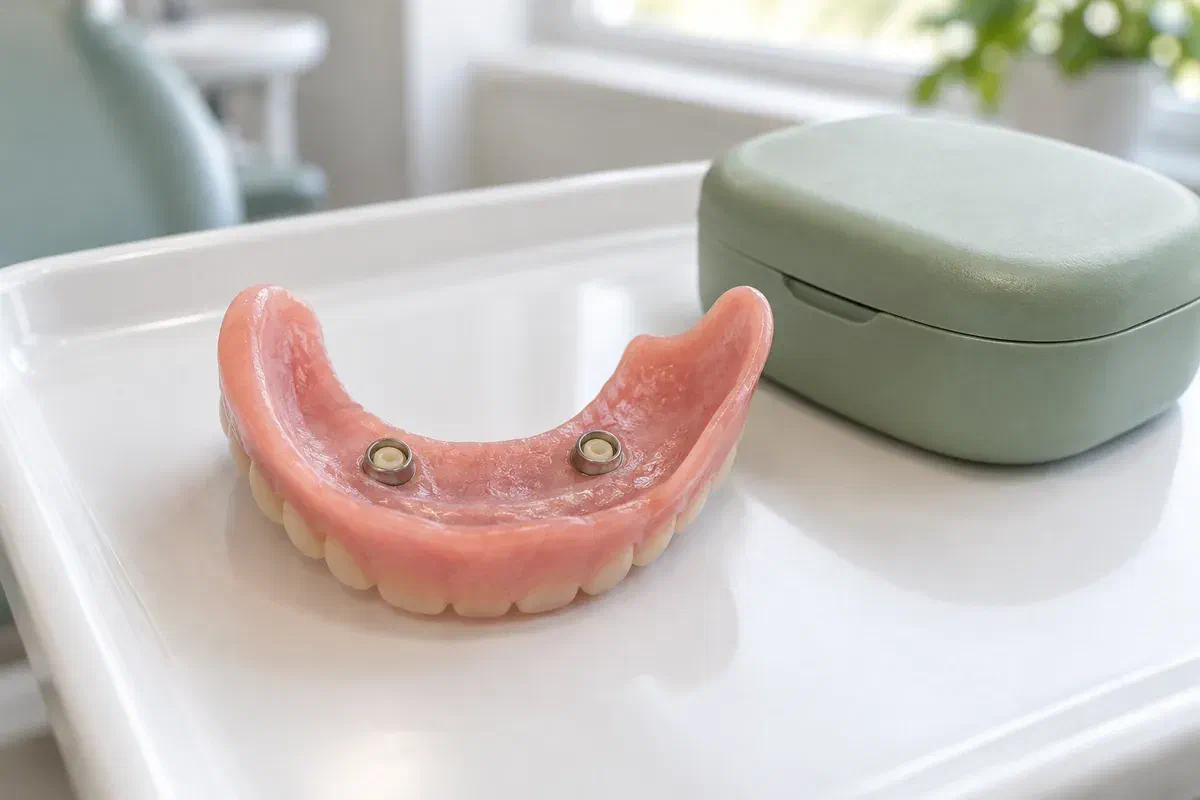
Your account of the incident helps the dentist know where to look. Explain when the denture lifts, whether both connections still engage, how removal feels and whether anything looks cracked or out of place.
A sudden loss of hold after an impact may involve a damaged retentive part, but other damage is possible. Note whether chewing, speech or removal is affected, and on which side.
If the denture now seats crookedly or one side will not engage, a housing or the base may have moved. Avoid biting it into place or pressing harder; call for advice if it will not settle.
Collect anything that broke away and keep it in a small closed container. Please do not glue pieces back or order replacements by appearance; the damage and parts need to be identified.
If the incident involved a fall or a blow to the face, or you have pain, swelling, bleeding or an implant that feels loose, seek prompt advice. Severe injuries may need urgent care before a dental visit.
If the examination finds that only a replaceable part was damaged and the base, housings and implants remain sound, renewing that part may bring back the hold you had before. The dentist should explain what was found, which component is involved, and what improvement to expect.
A repaired denture still needs to come out every day for cleaning. Rather than asking for the firmest grip possible, choose a hold you can manage. Mention hand strength, stiffness, discomfort, or whether a family member helps with removal, so the retention suits your routine.
Patient information: Health Research Authority — maintenance of implant overdentures
Impact damage is often limited to a part or housing. Ask which pieces of the appliance are still sound and what damage would make a new denture the better choice.
Understanding whether the insert or clip, the housing, the base or the implant took the damage makes the repair, any lab work, and the estimate easier to follow.
Before the appointment wraps up, handle the repaired appliance on your own, out and back in. If it feels wrong or difficult, say so while the team can still adjust it.
Some impacts damage only a replaceable part. Others affect a housing, the denture base or the bite, and may need a laboratory, extra records, or an assessment of the implants and tissue.
The dentist asks what happened, when, and what has changed since, along with the denture’s age, past attachment work and cleaning routine. Records confirm the system and earlier repairs.
The denture is checked for cracks, loose housings and damaged parts, and the implants, gums and bite are examined. This shows whether a single part explains the change or the damage goes further.
You discuss the proposed part or repair, compatibility, availability and cost. Damage to the base or a housing may involve a laboratory, which can mean an additional appointment.
Once the work is done, seating, removal and comfort are checked. You should know how to handle the repaired denture and which changes would be a reason to come back.
Ask for care instructions that suit your attachment system and denture materials. Simple habits can also lower the chance of another drop.
Fill the basin partly with water or lay a folded towel in it while you clean the denture, so a slip is less likely to cause damage. Seat it as you were shown, and call if it stops engaging properly.
Use the brushes and cleaners advised for your components, and confirm which soaking solution and time are safe. Leave abrasive pastes and household chemicals out of the routine.
Sometimes damage shows up gradually after an impact. Note any new rocking, soreness, looseness or cleaning difficulty, and book a review rather than waiting for it to settle.
Your examination and records settle the details for your appliance. These questions might help you prepare to talk about damage, compatibility, handling and follow-up.
Book an examination at our Bronte Street practice. The dentist will look at your removable implant denture, its attachments, the housings and the implants, then explain what was affected and how it can be repaired.
Bring the denture, every broken piece, and any implant or attachment records you can find.
