Meals feel a little less secure
A gradual change in how the denture behaves at the table is often the first sign of worn retentive parts. Note whether speech or removal has also changed, and whether one side seems weaker.


Between dental visits, you are the one who knows how your implant denture behaves day to day. Learning what to watch for helps you decide when worn attachments are worth a trip. From Erin or Hillsburgh, book an assessment when the hold changes, and leave with a clear home routine.
In a rural household, a dental appointment is something you plan rather than drop in for, so it helps to recognise the signs early. An overdenture stays in place through its attachment system: small inserts, clips or similar retentive parts that grip the implants and release when you remove the appliance. Those parts gradually wear and can be renewed, while the implants stay where they are.
The difficulty is that several different problems can feel alike at home. Worn parts reduce hold, but so can a housing that has loosened in the denture, a base that has drifted from the shape of your gums, or irritation around a support. You do not need to diagnose which one it is. Your job is to notice the change and describe it; the dentist then examines the complete appliance to find the cause.
Keeping a simple note on the fridge or in your phone can make a big difference: the date you first noticed looser hold, whether it was sudden or slow, and whether it followed a hard bite, a drop, or other dental work. Bring that note to the appointment, along with the denture, any loose piece, and records naming the implant or attachment system.
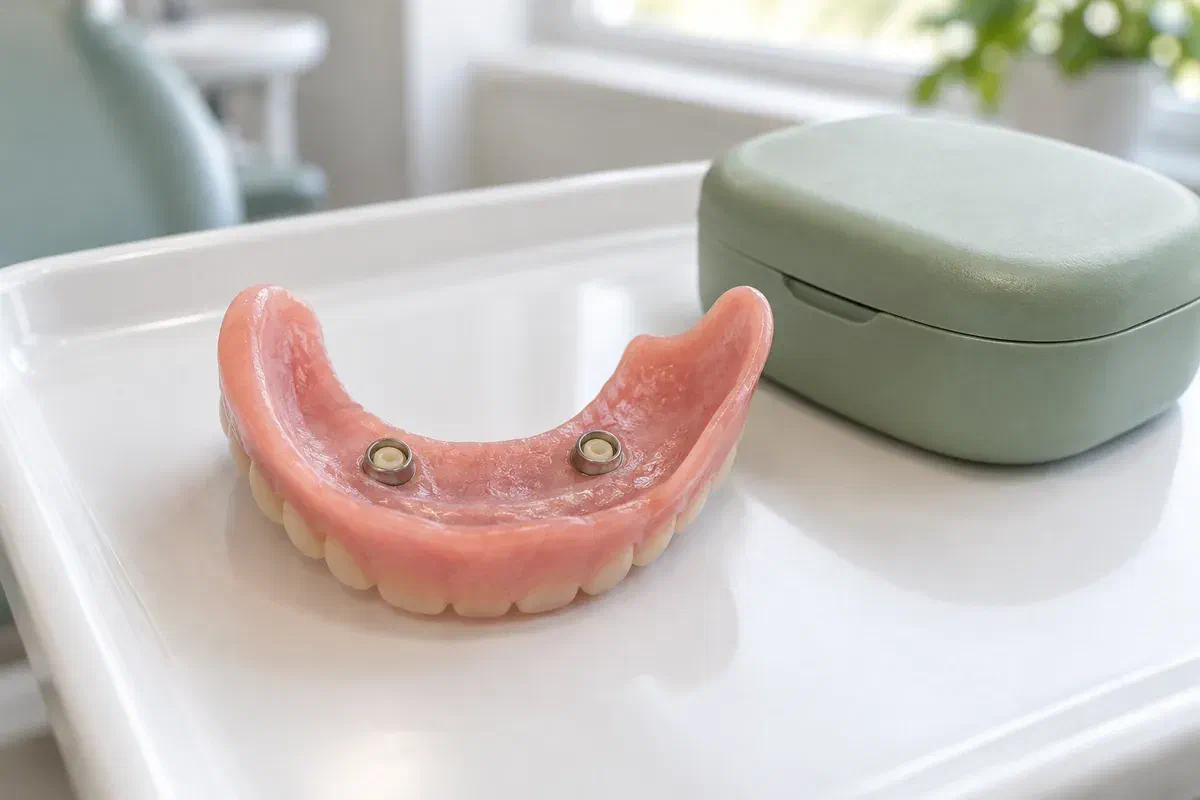
You see your denture every day, which makes your observations valuable. Note when it lifts, whether both connections still click into place, and how removal feels compared with a month ago.
A gradual change in how the denture behaves at the table is often the first sign of worn retentive parts. Note whether speech or removal has also changed, and whether one side seems weaker.
If one connection no longer gives its usual click, the denture and that implant need checking. Avoid biting down or pressing harder to make it engage; call if the appliance will not settle normally.
Keep any part that comes free in a small closed container, and bring it in. Please do not glue it back or reorder by appearance, since the exact component has to be identified.
Don’t hold off for a convenient trip if the gums hurt, swell or bleed, or if an implant feels as though it shifts. Phone promptly, because those signs need a broader assessment.
Sometimes the only real finding is a tired insert or clip, with the rest of the appliance in good order. Then a straightforward renewal may bring back reliable hold. Spotting the change early can keep the repair straightforward. The dentist should explain the finding, name the part involved and describe what improvement to expect.
The aim is a hold you can manage at home without help from the clinic. You will lift the denture out each day to clean it and the implant supports, so ask for retention that matches your hands. Mention stiffness, grip strength, discomfort, or anyone who helps you.
Patient information: Health Research Authority — maintenance of implant overdentures
Worn attachments seldom mean the whole appliance has to go. Ask which parts remain suitable and what findings would change the dentist’s advice.
Learning which part is the insert or clip, which is the housing and where the implant sits helps you describe future changes clearly, and makes the estimate easier to follow.
Run through your usual removal and reseating while the dentist is still there. If the new hold is hard to manage, say so, so fit and retention can be reassessed before you leave.
What happens depends on your system and what is found. A replaceable part may be all that is needed, while some findings call for records, laboratory help, or care of the denture or gums first.
Your notes come first. The dentist then fills in the gaps: how old the appliance is, which parts have been renewed before, and what you clean it with. Records help confirm the system and any past repairs.
Each attachment site, the gums around the implants, the base and your bite are looked at as one system, to see if worn parts account for what you noticed or a different issue should be dealt with first.
The suggested part is explained, along with how well it matches your system, whether it is in stock, and what it costs. Changes follow your system’s requirements, and if parts must be ordered, ask to arrange the follow-up before you go.
Once the parts are in, the dentist confirms that the denture seats, releases and feels comfortable. You should leave knowing how to handle the denture, which signs to watch, and when to book a review.
Instructions should be written for the attachments and materials in your own appliance. A routine passed on by a friend or relative may not suit the components in your appliance.
Position the denture first, then press as you were shown, paying attention to whether both sides engage. If it starts seating differently, call rather than forcing it or biting it home.
Use the recommended brushes and products on the denture and the implant supports. Confirm which soak is right and for how long, and keep scouring cleaners and household chemicals out of the bathroom routine.
Add the date whenever hold weakens, the denture rocks, a spot gets sore or cleaning becomes harder. That record helps the dentist find the cause instead of simply renewing parts again.
Your examination and records decide the details for your own appliance. These questions may help you think about what to watch, when to call and how to prepare.
Schedule a visit at our Bronte Street clinic to review your removable overdenture, its attachments and the implants. We will explain what has changed, discuss suitable maintenance and give you a home routine to keep an eye on things.
Bring the denture, any loose piece, your dated notes and implant records if you have them.
