One side lifts while you chew
If the denture tips upward on one side with firmer foods, the retentive part on that side may have worn. Mention whether the same side moves when you talk or remove the appliance.


An implant denture that clicks firmly onto one implant but only loosely onto the other is telling you something about its attachments, its fit, or the supports underneath. From Halton Hills, book an examination that finds the reason for the imbalance before any part is renewed.
Uneven hold is a common way for attachment trouble to announce itself. You press the denture home, feel a clear click on one side, and then nothing much on the other. Overdentures rely on retentive parts such as inserts or clips that grip each implant and let go when you lift the appliance out. Each of those parts wears on its own schedule, and they can be replaced without touching the implants.
Lopsided retention is still a symptom with several possible sources. The quiet side may have a worn or missing insert, but a housing might have loosened, the base may now rest unevenly on the gums, or the tissue around that implant could be inflamed. The dentist looks at how both sides seat and how the appliance moves before choosing between them.
Coming in from Georgetown, Acton, Glen Williams or a smaller hamlet, it helps to note which side feels weaker and since when. Bring the denture, any part that has worked loose, and records naming the implant or attachment system. Let us know if the imbalance crept in, began after a hard bite or a drop, or followed recent dental work.
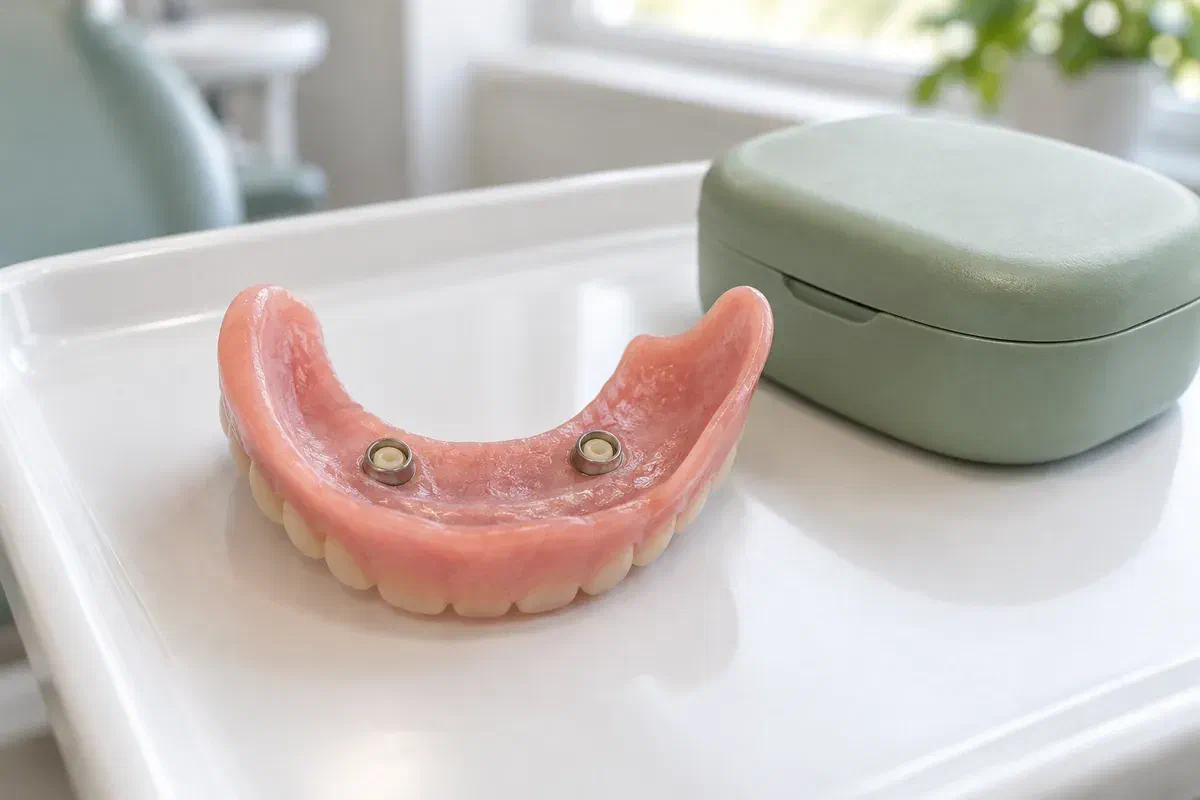
Specifics help. Tell the dentist which side lifts first, whether it happens during meals or speech, and what removal feels like, so a single worn part can be told apart from a fit or tissue problem.
If the denture tips upward on one side with firmer foods, the retentive part on that side may have worn. Mention whether the same side moves when you talk or remove the appliance.
A connection that does not engage needs the appliance and that implant examined. Avoid clenching or pressing hard to force it home; call for advice if it no longer seats in the normal way.
If you can see an empty space or find a loose piece, keep it safe in a closed container. Do not glue it or buy a replacement that simply looks right; the exact part must be identified.
If the weaker side is also painful, swollen or bleeding, or that implant seems to move, mention it when booking. Those signs need assessment beyond an insert change.
When the imbalance comes from a worn replaceable part and the base, housings and implants remain suitable, renewing the weak side, or both sides, may restore even hold. Before work begins, you should know what the dentist found, which part is involved and what change to anticipate.
Balance matters more than sheer strength. A denture gripped hard on both sides still has to come out each day for cleaning, and that takes steady hands. Mention stiffness, reduced grip, sore spots or any help you receive, so the chosen retention is manageable for you.
Patient information: Health Research Authority — maintenance of implant overdentures
Uneven grip alone rarely means a new denture is needed. Find out which parts of the appliance remain sound and what would have to change before a remake made sense.
Understanding whether the weak side involved the insert, its housing or the implant helps you follow the repair, any parts on order, and the estimate.
Seat and remove the denture yourself at the end of the visit. If one side still feels different, or removal is a struggle, say so while the team can reassess.
The work depends on the attachment design and what the examination shows. One worn component may be the whole story, or the denture, the gums or an implant may need attention first, sometimes with records or laboratory help.
You will be asked which side changed, when, and how, along with the denture’s age, past attachment work and your cleaning routine. Records help confirm the system and any repairs on one side.
The dentist examines both attachment sites, the gums around each implant, the base fit and your bite. That shows whether wear on one side explains the problem or something else is at work.
You will discuss which components to renew, compatibility, availability and cost. Work follows the system’s requirements, and a further visit may be needed if parts or lab support must be arranged.
After the work, the dentist checks that both sides engage, that removal is manageable and that nothing rubs. You should know what to monitor and when to return if the imbalance comes back.
Ask for care instructions specific to your attachment system and denture materials. Products and habits that suit someone else’s overdenture may not suit the parts in yours.
Line the denture up so both connections meet at once, then press as you were shown. If one side starts catching late again, call before forcing it or biting it down.
Brush both supports and both housings with the recommended tools. Ask which soak to use and how long to leave it, and keep harsh pastes and cleaning chemicals well away.
Note the date, and whether rocking, tenderness or trouble cleaning appears on that side. Repeated part changes on the same side without a fresh look may miss a fit or implant issue.
Your examination and records answer this for your own denture. These questions can help you prepare to discuss wear, compatibility, handling and follow-up care.
Schedule time at our Bronte Street clinic in Milton for an examination of your overdenture, both attachments and the implants beneath. We will explain the cause of the imbalance, discuss suitable maintenance and outline the next step.
Bring the appliance, any loose part, and records that name your implant or attachment system.
