Less grip than it used to have
A slow fade in retention often turns out to involve the gripping parts, but that has to be confirmed. Mention when it moves, at meals, mid-sentence or as you take it out, and which side is worse.


Implant dentures are sometimes made at one clinic and serviced years later at another. If you are in Mississauga and your overdenture has lost its hold, we can work to identify the attachment system, examine the fit, and explain which repair suits the cause.
People move, practitioners retire, and treatment histories end up split across several offices. None of that stops an implant denture from being maintained. What matters first is working out which attachment system you have. The inserts, clips or other retentive pieces that let the appliance lock onto its implants come in many designs, and they are serviceable parts, separate from the implants placed in the jaw.
Identifying the system is only half the job. A denture can lose its grip because those parts have worn, yet the same feeling can come from a housing that has shifted, a base that no longer matches the gums, or a problem in the tissue around a support. So before choosing any component, the dentist examines the whole appliance and how it behaves in your mouth.
To make that first visit productive, gather what you can: the denture, any piece that has come off, and records such as treatment summaries, implant cards or letters. If you remember where and roughly when the implants were placed, note it down. Describe as well whether the change was gradual, sudden after a knock, or linked to recent dental work.
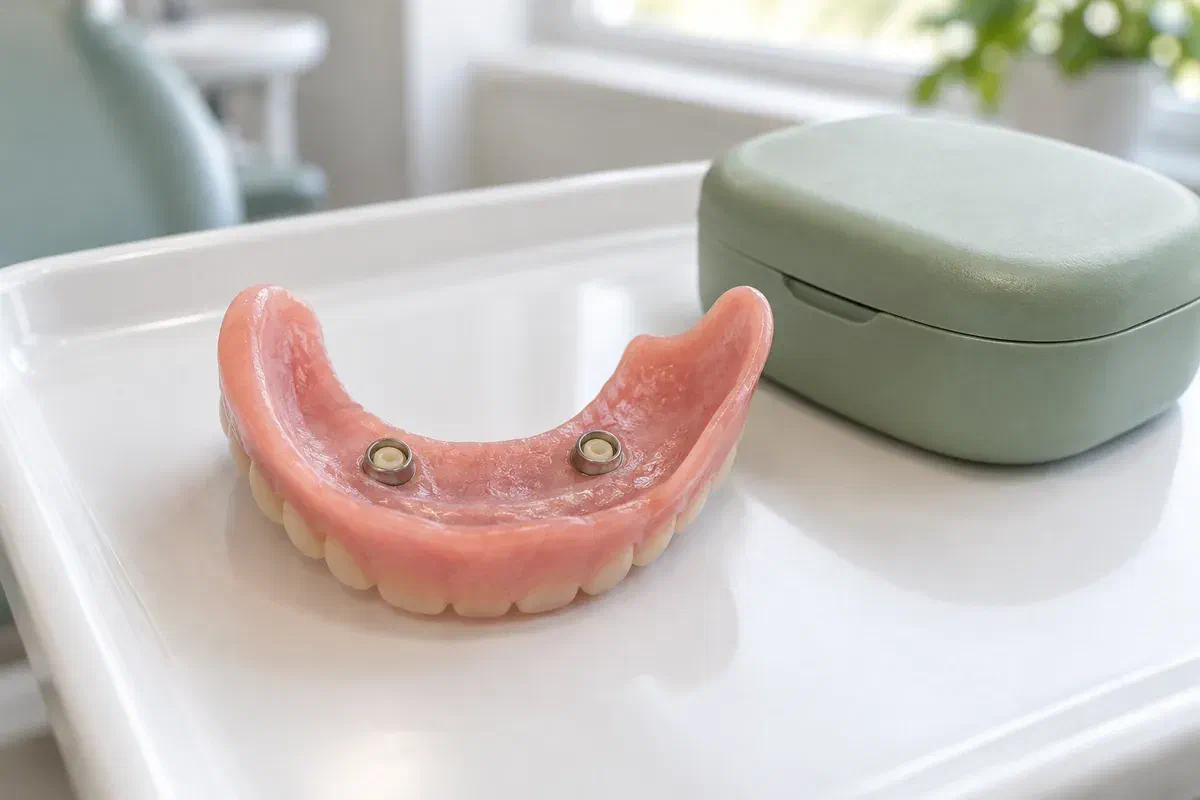
The way an appliance misbehaves offers clues. Say when it lifts, whether both connections still click into place, and what removal feels like, so the dentist can separate a worn-part problem from a fit or gum issue.
A slow fade in retention often turns out to involve the gripping parts, but that has to be confirmed. Mention when it moves, at meals, mid-sentence or as you take it out, and which side is worse.
If one attachment no longer engages, both the denture and its implant need to be checked. Avoid biting down hard or pressing with more force to make it lock; call first if it will not seat normally.
Keep any loose piece in a small closed box and bring it with you. Do not glue it or pick a replacement by its colour or shape, because the system and the exact component need confirming.
Pain, swelling, bleeding or movement in a support should be mentioned when booking. These go beyond attachment wear and need their own assessment.
Once the system is known, and if the examination shows a worn replaceable component with the rest of the arrangement still in good order, focused maintenance may restore a useful hold. The dentist should tell you what was found, which piece is involved, and what kind of improvement is realistic.
Retention also has to suit you. Each day the denture comes out for cleaning and goes back in, so a very strong grip can become its own problem. Share anything that affects your handling, such as arthritis, reduced grip strength, discomfort or help from a family member.
Patient information: Health Research Authority — maintenance of implant overdentures
A worn component does not automatically call for a new appliance, even one made at another clinic. Ask which parts of the denture can be kept, and what findings would point toward a remake instead.
Insert or clip, housing, implant: each plays a different role. Understanding which one needs attention helps you follow the repair, the parts that may need to be ordered, and the estimate you are given.
Practise removing and replacing the appliance while the team is with you. If the new hold is difficult, mention it during the appointment so fit and handling can be looked at again.
How much is involved depends on the system and the findings. Sometimes a replaceable part is all that is required; sometimes records must be requested, a laboratory involved, or the denture or gums treated first.
Expect questions about where the implants were placed, how old the denture is, any earlier attachment changes and your cleaning products. Records from the previous clinic, if available, help confirm the system.
The dentist assesses the denture, each attachment site, the gums around the implants and your bite. This shows whether worn components account for the change or whether another problem should be addressed beforehand.
You will discuss the proposed component, how it matches your system, how quickly it can be obtained and the cost. An unfamiliar design may need parts ordered or lab input, which can mean an extra appointment.
After the work, the dentist reviews seating, removal and comfort with you. You should leave knowing how to handle the denture, what to watch for, and when to return if the hold seems uneven.
Instructions you received from a previous clinic may still apply, but confirm them. Attachment systems and denture materials differ, and a routine meant for another appliance may not suit yours.
Ease the appliance into position before pressing it down as you were shown. If it starts seating differently, contact the team rather than forcing it, biting it into place, or altering a part.
Use the brushes and products recommended for your components. Ask about soaks and soaking times in particular, and avoid abrasive cleaners or household chemicals that have not been approved for the appliance.
Keep note of when looseness returns and whether rocking, soreness or cleaning problems come with it. Replacing parts again and again without a fresh assessment can leave a deeper fit or implant concern untreated.
Your examination and any records you bring will settle the details. These questions may help you prepare for a conversation about identifying parts, compatibility, handling, and ongoing care.
Book an assessment at our Bronte Street practice. We will examine your removable implant denture and its connections, work to identify the system, and explain what is causing the change and which maintenance suits it.
Bring the denture, any loose pieces, and records from the clinic that placed your implants.
