It shifts on certain words
When conversation is the first place you feel it, worn inserts are one likely suspect. Mention too whether chewing or removal feels looser than it did, and whether the movement starts from one side.


If your implant denture has begun to shift while you talk, laugh or take a phone call, the connection between appliance and implants deserves a look. From Oakville, you can book an assessment that sorts worn attachment parts from fit or gum concerns before any repair is chosen.
Conversation is where a weakening hold often becomes obvious. You start to press your tongue against the denture mid-sentence, or you notice it shift on certain sounds. In a removable implant denture, the hold comes from an attachment system, usually inserts or clips that snap onto the implants and release when you take the appliance out. These parts wear with use, and they are distinct from the implants themselves.
Movement during speech, though, can come from more than one place. A worn insert is common, but a housing that has loosened in the denture, a base that has drifted away from the gums, or irritation around a support can all produce a similar feeling. A useful assessment looks at how the entire appliance seats and moves before anyone decides that firmer retention is the fix.
When you book from Oakville, it helps to describe when the movement happens and how long it has been going on. Bring the denture, anything that has come away from it, and any records naming the implant or attachment system. Mention if the change was gradual, followed a knock or hard bite, or began after recent treatment.
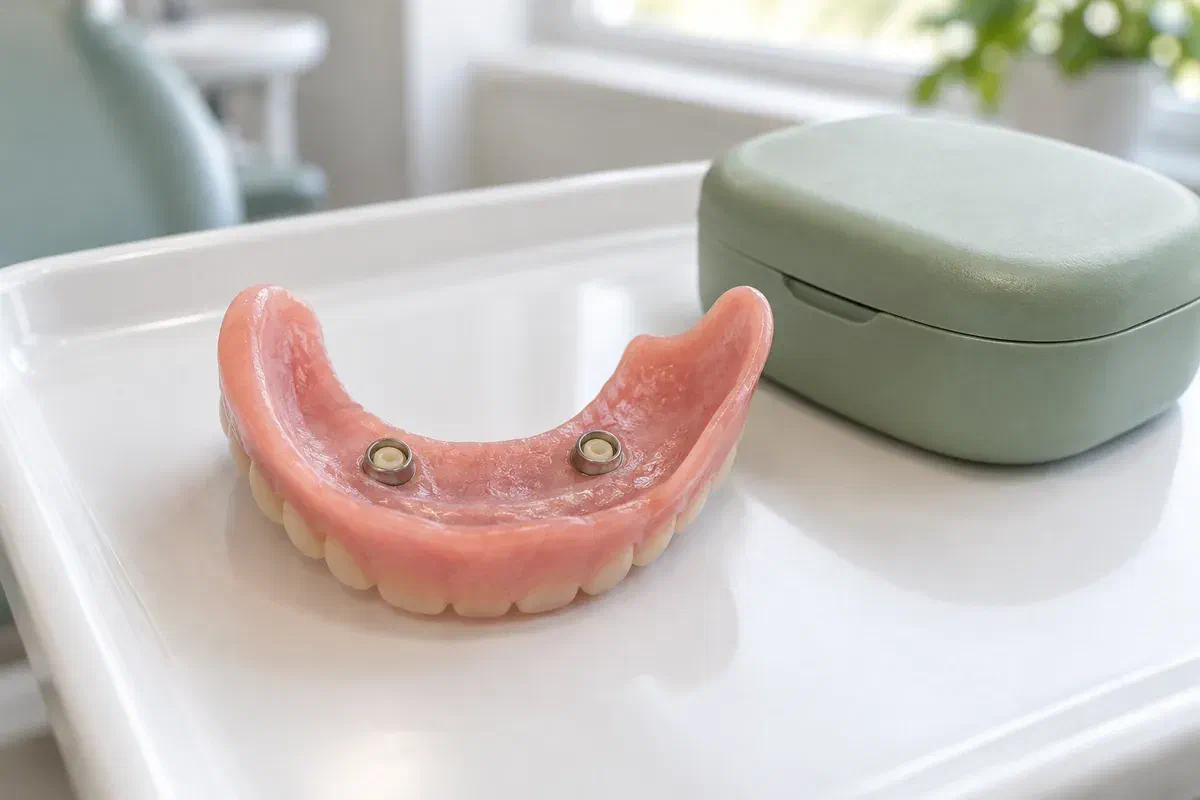
A hold can weaken in ways that feel quite different. Telling the dentist whether the denture moves during speech or meals, whether both attachments engage, and what removal is like helps separate a retention issue from a fit or tissue one.
When conversation is the first place you feel it, worn inserts are one likely suspect. Mention too whether chewing or removal feels looser than it did, and whether the movement starts from one side.
Uneven engagement calls for an examination of the appliance and the implants supporting it. Please avoid clenching or pushing harder to make it catch; if it will not sit properly, call before forcing it.
If you find the piece, keep it in a small lidded container and bring it in. If it is lost, tell us. Either way, avoid gluing or buying a look-alike, since the exact component must be identified.
Pain, swelling, bleeding, or a sense that an implant is moving should be mentioned when you book. Those signs need more than a new insert.
Suppose the examination finds a worn, replaceable part while the housings, base and implants all look sound. In that case, targeted maintenance may improve how well the denture stays in place. You should hear, in plain terms, what was found, which component is involved, and how much change to expect.
More grip is not automatically better. The appliance still has to come out every day so you can clean it and the supports. Talk to us about hand strength, joint stiffness, coordination, discomfort, or help you receive at home, so the retention suits the way you actually live with the denture.
Patient information: Health Research Authority — maintenance of implant overdentures
A worn component on its own does not mean replacing the whole appliance. Ask whether the base, teeth, housings and supports remain suitable, and what would lead the dentist to recommend something else.
Three layers are involved: the gripping insert or clip, the housing set into the denture, and the implant in your jaw. Knowing which layer is at fault makes the repair, any ordering and the estimate far easier to follow.
Before the appointment ends, take the denture out and reseat it yourself. If the new retention is hard to manage, say so right then so the dentist can reassess the fit and handling.
The work involved depends on your attachment design and the examination findings. Some concerns are solved with one replaceable part; others need records, a laboratory, or care for the denture or gums first.
You will be asked how old the denture is, whether attachments have been changed before, which cleaning products you use, and what you have felt. Paperwork from the original treatment can confirm the system and flag earlier repairs.
The dentist checks the denture, the attachment areas, the tissue around each support and your bite as a whole. Only then is it clear if the inserts are to blame or if a separate issue has to come first.
Together you review the proposed part, its compatibility, availability and cost. If replacement suits, it is carried out to the system’s requirements; another visit may be needed when parts or laboratory work have to be arranged.
After the work, seating, removal and comfort are checked again. You should know how to handle the denture, what to monitor, and when to return if retention is uneven or the appliance becomes hard to take out.
Ask for instructions that match your attachment system and the materials of your denture. A routine that suits another person’s appliance may be wrong for the components in yours.
Find the correct seat before applying the pressure you were taught. If it stops going in as expected, call rather than forcing it, biting it down, or trying to adjust a part at home.
Clean the denture and supports as advised, with appropriate brushes and products. Ask specifically which soak to use and for how long, and avoid abrasive cleaners or household chemicals not approved for the appliance.
If speech or meals start to feel unsteady again, jot down roughly when, and whether rocking, tenderness or trouble cleaning appeared alongside. Renewing inserts again and again without a fresh look may miss a fit or implant issue.
Your records and examination settle the answer for your own appliance. These questions can help you get ready to talk about wear, compatibility, handling, and ongoing care.
Make an appointment at our Bronte Street clinic in Milton and we will examine the appliance, its inserts and the implants beneath. You will hear what is behind the movement, which maintenance makes sense, and what the next step would involve.
Bring the denture, any part that has come off, and records naming your implant system.
