Looser than it was, but otherwise fine
If the teeth and base still seem in good shape and only the hold has faded, worn retentive parts are a reasonable first suspect. Note when the movement happens and whether one side is worse.


A loose implant denture often raises a bigger question: is it time for a new appliance, or will renewing the attachments be enough? Coming from Puslinch, you can book an examination that weighs repair against replacement and explains, part by part, what is worth keeping.
When an overdenture starts to feel insecure, many people assume the whole thing is failing. Quite often the trouble sits in a much smaller place. The appliance is held to its implants by retentive components, inserts, clips or similar fittings that are designed to be serviced. Renewing them does not involve the implants in your jaw, and it may leave a perfectly serviceable denture in use for longer.
That said, the right choice depends on what is actually wrong. Worn inserts are one explanation; a damaged housing, a base that has changed its fit, worn denture teeth, or a problem in the gums around a support are others. Each points toward a different decision, so the dentist examines the appliance as a whole before recommending repair, relining, a new denture or further implant care.
A little preparation makes the conversation clearer. Bring the denture, any loose fitting, and records from the clinic that placed the implants, including the original treatment date if you know it. It also helps to say what matters most to you, whether that is keeping a denture you like, comfort, appearance, or limiting the number of visits from a rural township.
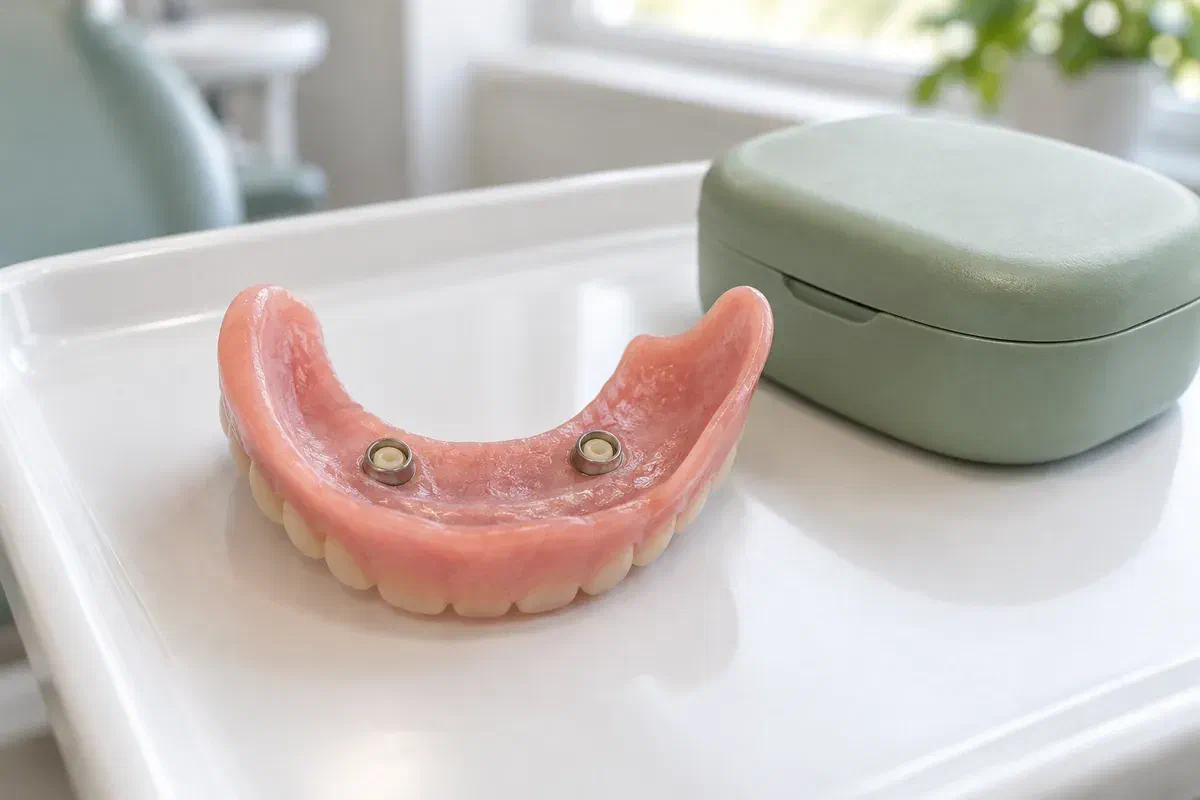
Clear descriptions help the dentist weigh the options. Mention when the appliance lifts, whether both connections still engage, how removal feels, and any other wear you have noticed in the denture.
If the teeth and base still seem in good shape and only the hold has faded, worn retentive parts are a reasonable first suspect. Note when the movement happens and whether one side is worse.
Rocking can point to the base fit or a housing as well as the parts. Avoid pressing it hard or biting it into position, and call for advice if it no longer seats properly.
Save any loose fitting in a lidded container. Do not glue it or buy a replacement by appearance, and mention visible wear on the denture teeth, since that also affects the decision.
Pain, swelling, bleeding, or an implant that feels mobile should be raised when you book. Those symptoms change the priorities and need their own assessment.
If the examination shows that the attachment components have worn while the base, teeth, housings and implants remain suitable, renewing those parts may restore useful hold without the time and cost of a new appliance. The dentist should explain the findings, the part involved and the improvement you can reasonably expect.
Whichever way you go, the denture has to be practical. You will remove it every day to clean it and the implants, so ask for a level of hold you can comfortably manage. Mention hand strength, stiffness, discomfort or help from family, which can shape the choice of parts.
Patient information: Health Research Authority — maintenance of implant overdentures
Renewing a worn component can let you continue with a familiar appliance. Ask which parts the dentist considers sound, and what signs would tip the advice toward a new denture.
You should hear the difference between repairing the insert or clip, fixing a housing, relining the base or replacing the denture, along with the estimate for each relevant option.
Before you leave, take the appliance out and reseat it on your own. If the renewed hold is hard to manage, mention it then so the plan can be adjusted.
Some concerns are settled with a replaceable part. Others reveal that the denture, its fit, or the implant support needs more attention, which may involve records, laboratory work or a referral.
The dentist asks when the appliance was made, how often attachments have been renewed, what you clean with, and what you have noticed. Records confirm the system and earlier repairs.
The base fit, teeth, housings, attachment sites, gums around each implant and your bite are all checked. That shows whether the parts explain the looseness or whether the denture itself is nearing the end of its useful life.
You discuss the realistic choices, the parts involved, compatibility, availability, timing and cost. If a component change suits, it follows the system’s requirements; laboratory stages can add appointments.
After any work, seating, removal and comfort are reviewed. You should know how to handle the appliance, what changes to look out for, and when it would be sensible to come back.
Ask for care instructions specific to your attachment system and denture materials. A routine designed for another appliance may not suit the components or base in yours.
Find the correct position before pressing down with the force you were shown. If it starts seating differently, call rather than forcing it, biting it home or modifying a part.
Clean the denture and the implant supports with recommended brushes and products. Ask about soaking solutions and timing, and avoid gritty pastes and household chemicals.
Watch for the hold fading again, rocking, sore spots, chipped teeth or cleaning difficulty, and note when they begin. Those signs feed into future repair-or-replace decisions.
Your examination and records give the answers for your own denture. Use the questions below as a starting point for talking through options, compatibility, handling and costs with the dentist.
Arrange an examination at our Bronte Street clinic. The dentist will review your removable implant denture, its attachments and the implant support, then explain whether repair, another approach, or further assessment fits what was found.
Bring the appliance, any loose fitting, and the date or records of your original implant treatment.
