It moves, and a spot is now tender
Extra movement from worn parts can rub the gums, but rubbing can also come from a changed fit. Note which side is sore, and whether chewing, speech or removal makes it worse.


Looseness that arrives together with tender gums, rubbing or bleeding around an implant may not be an attachment problem at all. For those coming from Rockwood, an examination can separate worn inserts from fit or tissue concerns, so each one is handled in the right order.
Plain looseness usually suggests worn retentive parts. Looseness with a sore spot, swelling or a little bleeding when you brush is a different message. Your overdenture is held by inserts, clips or a similar attachment design that grips the implants and lets go for cleaning. Those parts are serviceable, but they sit on top of living tissue, and the health of that tissue matters just as much.
A denture that has started to rub may have changed its fit against the gums. A housing might have shifted, or the tissue around one implant may be inflamed. Sometimes worn parts allow extra movement, and that movement itself irritates the gums. Untangling cause and effect is the dentist’s first job, which is why the whole appliance and the tissues around each support are examined before any part is renewed.
When you call, describe the discomfort as well as the looseness: where it is, when it started, and whether anything makes it better or worse. Bring the denture, any part that has come off, and records about your implants. If symptoms are getting worse quickly, say so, because the priority may be the tissue rather than the attachment.
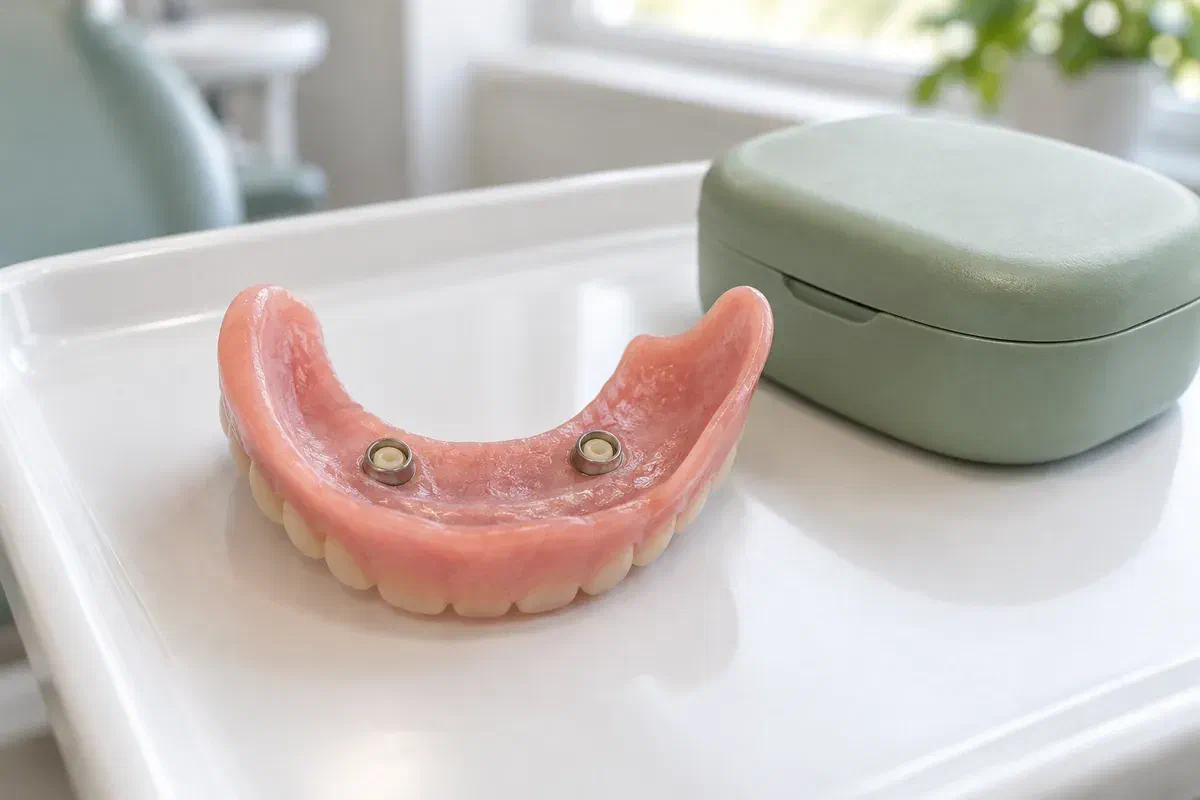
Linking the discomfort to the movement helps. Tell the dentist when the denture lifts, whether both connections still engage, how removal feels, and exactly where any tenderness or bleeding appears.
Extra movement from worn parts can rub the gums, but rubbing can also come from a changed fit. Note which side is sore, and whether chewing, speech or removal makes it worse.
Inflammation around a support needs examination before attachment work. Avoid pressing the denture down hard or wearing it through significant pain; call for advice instead.
Store any loose piece in a small lidded pot and bring it along. Do not glue it in or match it by eye, because the component and its system must be identified.
Significant pain, spreading swelling, bleeding that does not settle, or an implant that seems to move should be reported promptly, not saved for a routine visit.
Once any tissue concern has been diagnosed and managed, and if the base, housings and implants are suitable, renewing a worn retentive part may give back dependable hold. The dentist should explain the findings, the part involved and what change to expect, as well as how the gums are likely to respond.
A tight grip is not a cure for sore gums. The denture still has to come out daily so the tissues can be cleaned and rested, and that matters even more when they are tender. Tell us about grip strength, pain on removal or help at home, so the chosen retention supports good care.
Patient information: Health Research Authority — maintenance of implant overdentures
Fitting firmer parts over an irritated area can hide a problem rather than solve it. Ask what the dentist believes is causing the soreness, and how it will be addressed.
Understanding whether the issue lies with the insert or clip, the housing, the base fit or the implant helps you follow the plan, any parts on order and the estimate.
After any work, remove and reseat the denture yourself and say whether anything still rubs or presses. Comfort is part of the result, not an afterthought, and the team would rather adjust it now than have you put up with it at home.
The order of care depends on what is found. Some visits end with a simple part change; others begin with gum care, a denture adjustment, a laboratory stage or an implant referral.
The dentist asks about the soreness, the looseness, the denture’s age, earlier attachment changes and your cleaning routine. Records help identify the system and previous work.
The tissue around each implant, the attachment sites, the denture base and your bite are assessed together, to work out whether worn parts, fit, or a tissue problem is leading.
You discuss what should happen first, the parts involved, compatibility, availability and cost. Tissue care or denture adjustments may come before any component is renewed.
After the work, the dentist reviews seating, removal and comfort, and how the tissues look. You should know which signs to watch and when to come back.
Ask for cleaning and wearing advice suited to your attachment system, denture materials and current gum condition. General advice may not fit a mouth that is tender.
You may be asked to leave the denture out for set periods while tissue settles. If it stops seating as expected, call rather than forcing it or biting it into place.
Brush around the implants and housings with the soft tools recommended. Ask about soaking products and timing, and avoid harsh pastes or household chemicals on the denture.
Note when tenderness or looseness comes back and whether bleeding or rocking appears. Renewing parts without re-examining the tissue can leave the real problem behind.
Your examination and records settle the details for your own mouth. These questions are a way to get ready for a discussion about symptoms, wear, handling and care.
Book an examination at our Bronte Street practice. The dentist will review the tissues around your implants, the fit of your removable denture and its attachments, and explain the order of care that makes sense.
Bring the denture, any detached piece, implant records, and a note of when the soreness began.
