Cleaning takes more effort than before
Changes in hand strength or reach can make a familiar routine less thorough. Point out the steps that cause trouble and ask us to demonstrate options that fit what you can comfortably do.


Changing clinics should not mean starting your implant denture care from scratch. Bring what you know about your implants and attachments, and we will examine the appliance and the gum around it, then build continuing care from there.
People switch dental offices for all sorts of reasons: a move, a retirement, a change in schedule. Your implant denture carries its own history, though. The make of implant, the attachment system, past repairs and earlier findings all help a new team understand what they are looking at.
On your first visit we sort out the basics together. Is the denture one you remove yourself, or is it fixed so only a clinician takes it off? What holds it on? How is the gum around each support doing today? Those answers shape everything that follows, from cleaning tools to recall timing.
If you are coming from Burlington, it helps to gather paperwork before you book, even if it is incomplete. Then tell us honestly how the routine goes at home: what feels easy, what has become a chore and what has changed in your health since the restoration was made.
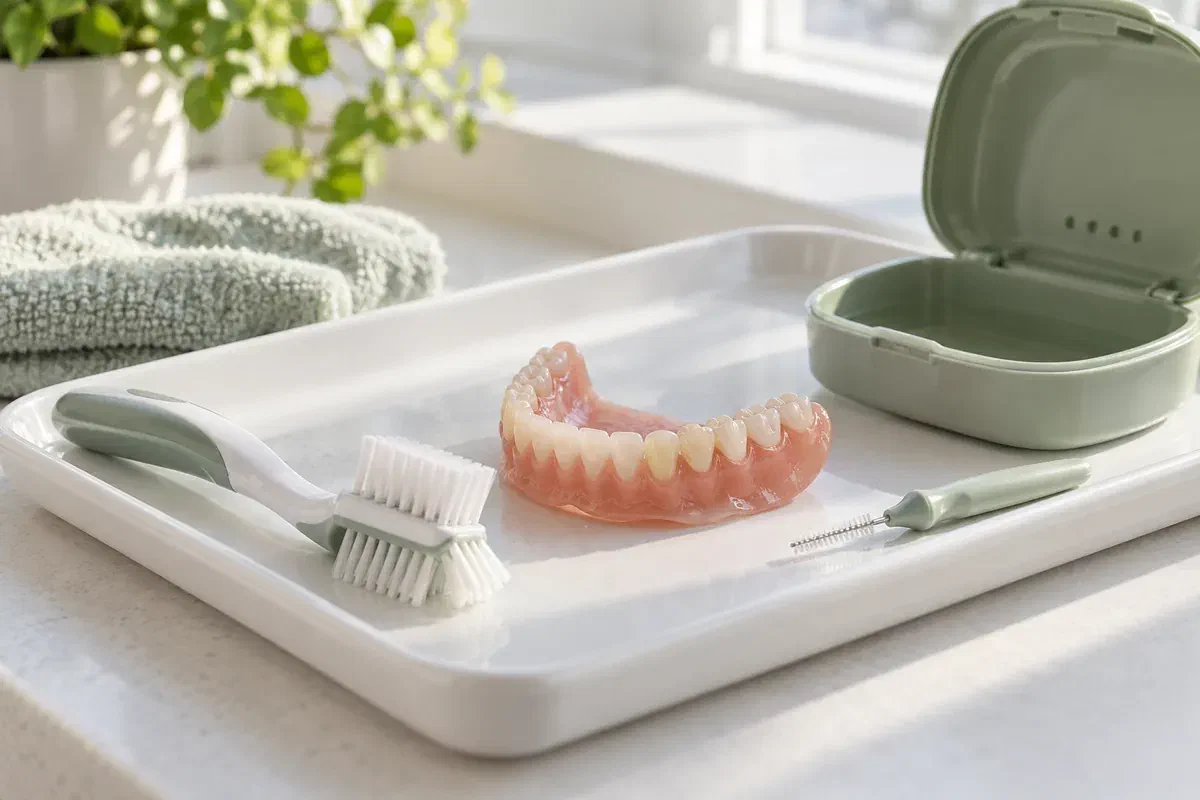
A first appointment is a natural moment to mention niggles you may have lived with for a while. Bring the brushes and cleaning products you currently use, or a note of their names, so we can assess them.
Changes in hand strength or reach can make a familiar routine less thorough. Point out the steps that cause trouble and ask us to demonstrate options that fit what you can comfortably do.
A spot that keeps collecting food may reflect your technique or the way the denture is shaped and fits. Tell us where it is, and whether soreness, bleeding or a different seat accompanies it.
Rocking, clicking, pressure points or a removable denture that is harder to take out should all be examined. Worn attachments, denture changes or another issue could be involved, so cleaning alone may not help.
Do not wait for your first scheduled visit if you develop new pain, swelling, discharge or a loose restoration. Phone the clinic so the problem can be assessed sooner.
The first review with a new clinic sets a reference point. We record how the denture, its connectors and the surrounding tissue look today, so later visits can compare against something concrete. Teeth made of acrylic or ceramic do not decay, but the gum around implants can still become inflamed.
Your situation also gets a fresh hearing. A routine that suited you at fitting may no longer match your health, medications or dexterity. Say so, and the guidance can be rewritten into steps you can actually keep doing, not a list that has quietly stopped happening.
Patient information: Cambridge University Hospitals — continuing care of dental implants
Ask how the team examines the appliance, its connections and the gum around the supports, and what is noted for next time. Knowing this shows why professional review adds to diligent cleaning at home.
Inserts and denture materials wear with use. A review clarifies whether a finding should be watched, maintained or handled through a separate repair plan, and you are told about timing and costs before anything else is done.
Short, demonstrated steps are more reliable than leftover instructions from years ago. Bring a caregiver if helpful, and ask us to show the areas on your own appliance that need the most care.
The visit is guided by your restoration, your oral health and whatever history is available. Examination, cleaning and any repair needs are explained clearly, including anything that would be booked separately.
We go through what you know about your implants, attachments and past repairs, and how the denture feels day to day. Mention medicines, smoking, general health changes and any help at home.
We may look at the tissue around each support, cleaning access, denture surfaces, attachments and bite. Imaging or other records are added when there is a clinical reason, which may be more likely when earlier records are missing.
Cleaning and agreed upkeep are fitted to your restoration. If a finding needs repair, further investigation or a specialist's view, you hear the reasons, how it would be arranged and an estimate of costs.
You leave knowing which tools and products to use, what to monitor and when to return. Show us your routine before you go, and ask which symptoms should bring you back sooner.
The denture, the attachments and the tissue around the implants each need fitting care. Follow the guidance for your restoration, and ask before you try a new soak, cleanser or tool.
Remove an overdenture only as you were taught and clean both the denture and its supports. A fixed restoration is cleaned in place using the access you were shown; never attempt to detach it.
Check which brush, cleanser and storage method suit your denture and attachment type. Something sold for standard acrylic dentures may not be appropriate for every metal component or retentive insert.
Let us know about persistent soreness, bleeding, new movement or a different bite. Keep any piece that comes off and bring it in, and avoid glue, filing or improvised adjustments.
Patient information: European Federation of Periodontology — caring for dental implants
Your needs depend on your restoration and the health of your mouth. These questions focus on records, compatibility, first appointments and the signs to watch.
Book a first review at our Bronte Street clinic to discuss your implant denture, its history and the routine you follow. We will set a baseline, explain what it needs now and agree on a plan for continuing care.
Bring implant cards, attachment details, past treatment records and the products you use.
