The routine has stopped feeling manageable
Weaker hands, a sore shoulder or poor visibility can make thorough cleaning hard. Say which steps cause trouble and ask to try adapted brushes or aids during the appointment.


When the trip to your dentist takes planning, each maintenance visit should cover as much as it safely can. We review your implant denture, its connections and the gum around its supports, and help you decide which problems need a closer clinic.
Travelling in from Toronto's west end for dental care is a choice people make for continuity, family ties or a team they trust. It does mean thinking ahead. A good maintenance visit should look at the denture, the parts holding it in place and the gum around every implant, all in one sitting where that is practical.
Some preparation helps the hour go further. Know whether your appliance is a removable overdenture or a fixed restoration that never comes out at home. Find any implant cards or old treatment notes. Write down questions as they occur to you over the weeks, rather than trying to remember them in the chair.
Be candid about your routine, too. If certain steps are tricky, if you have changed products, or if your health or medications have shifted, those details shape the advice. The aim is a plan you can carry out at home with confidence until the next scheduled trip.
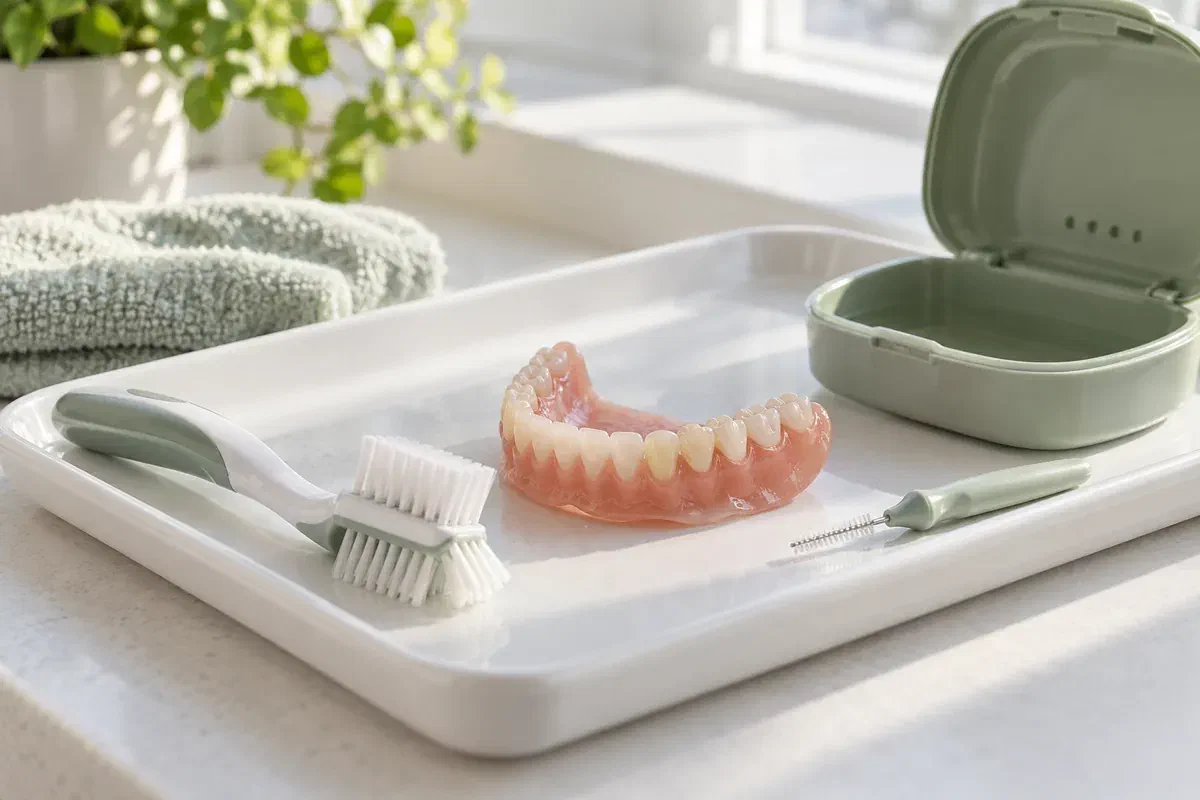
Telling the team about a concern ahead of time lets them plan the right amount of time and any parts that might be needed. Bring your cleaning tools and products, or note their names.
Weaker hands, a sore shoulder or poor visibility can make thorough cleaning hard. Say which steps cause trouble and ask to try adapted brushes or aids during the appointment.
A new food trap might relate to technique, wear or a shift in fit. Record where it occurs and whether you also notice tenderness, bleeding or a change in how the denture seats.
Movement, clicking, a pressure spot or difficulty removing a removable denture all need examination. Several causes are possible, and a stronger cleaning routine is rarely the answer on its own.
For severe pain, facial swelling that is spreading, fever or difficulty swallowing, seek urgent care near you, such as an emergency department, rather than travelling first. Call us about other new symptoms promptly.
Seeing the same team over time means each review can be compared against the last. The clinician looks at mechanical wear and at how the surrounding tissue is responding. The teeth themselves cannot decay, yet the gum around implants can become inflamed. Each visit should leave you clear on what is stable and what needs follow-up.
Life between trips matters as well. A new prescription, a period of illness or a drop in dexterity can make the home routine harder. Share those changes so instructions stay realistic and you are not left trying to manage steps that no longer fit your circumstances.
Patient information: Cambridge University Hospitals — continuing care of dental implants
Ask how the denture, its connectors and the gum around each support are examined. Understanding those separate areas shows why a professional review adds something to diligent cleaning at home.
Inserts and denture materials wear with use. When a repair is needed, ask whether it can be planned to reduce extra journeys, and expect an explanation of timing and costs first.
A short, demonstrated routine is easier to keep up between longer gaps. Bring a helper if useful, and ask us to show the exact spots on your own denture that need the most attention.
The appointment follows your restoration, your oral health and earlier findings. We explain examination, cleaning and any repair needs as we go, and flag anything that would require a return trip.
We go through the questions you brought, how the denture feels and how you clean it. Mention medication or health changes, smoking and any help at home, and share implant records you have.
The clinician may check the tissue around each implant, cleaning access, denture surfaces, attachments and bite. X-rays are taken when there is a clinical need for them, not simply as routine.
Cleaning and agreed upkeep are fitted to your restoration. If something needs repair, more tests or another clinician, we explain why, what the arrangements would be and estimated costs, including ways to limit trips.
You leave with suitable tools and products, things to monitor and your proposed recall. We also go over which symptoms mean calling us, and which mean seeking urgent care locally.
The denture, its attachments and your gums each need appropriate care. Stick with the instructions for your restoration, and phone before switching to a new cleanser, soak or tool.
Take out an overdenture only as you were shown and clean it and the supports. Clean around and beneath a fixed restoration using the demonstrated method, and never try to loosen it.
Confirm the brush, cleaning solution and case that work with your denture and attachments, and keep spares at home. A cleaner meant for ordinary acrylic plates may not suit metal parts or retentive inserts.
Report persistent soreness, bleeding, new movement or a bite change. Keep any detached piece safe, and do not use glue, filing or makeshift fixes. A call can help decide how soon you need to come in.
Patient information: European Federation of Periodontology — caring for dental implants
Your needs depend on the restoration and the health of the mouth. These questions cover urgent symptoms, repairs, scheduling and keeping the routine going between visits.
Reserve time with our team on Bronte Street so we can discuss your implant denture, its condition and your routine. We will explain what it needs now and how to plan care with as few extra trips as possible.
Bring implant records, the products you use and the list of questions you have gathered.
