The steps feel harder than they should
A product that needs scrubbing, rinsing and timing can be a lot on tired days or with stiff hands. Tell us what is awkward so we can trim the routine and suggest tools that suit you.


The pharmacy shelf is full of denture tablets, pastes and soaks, and not all of them suit implant hardware. Bring what you use and we will check it against your appliance, examine the attachments and gum, and help you settle on a routine.
Packaging tends to promise brighter, fresher dentures, but it rarely mentions implants. That matters, because an implant denture is not just acrylic. It may carry metal housings, nylon or rubber inserts and, for fixed designs, a framework that never leaves your mouth. A product that is harmless on one material can be unkind to another.
So the first step is sorting out what you have. Does your denture snap onto implants so you can take it out, or is it fixed so only the clinic removes it? Is there a bar, individual attachments or a screw-retained bridge? Once that is clear, choosing brushes and cleansers becomes much simpler.
Many people from Georgetown arrive with a bag of half-used products and a fair amount of uncertainty. That is welcome. Bring them, tell us how often you use each one, and mention any change in your health, hands or schedule since the denture was placed. We would rather sort through it together.
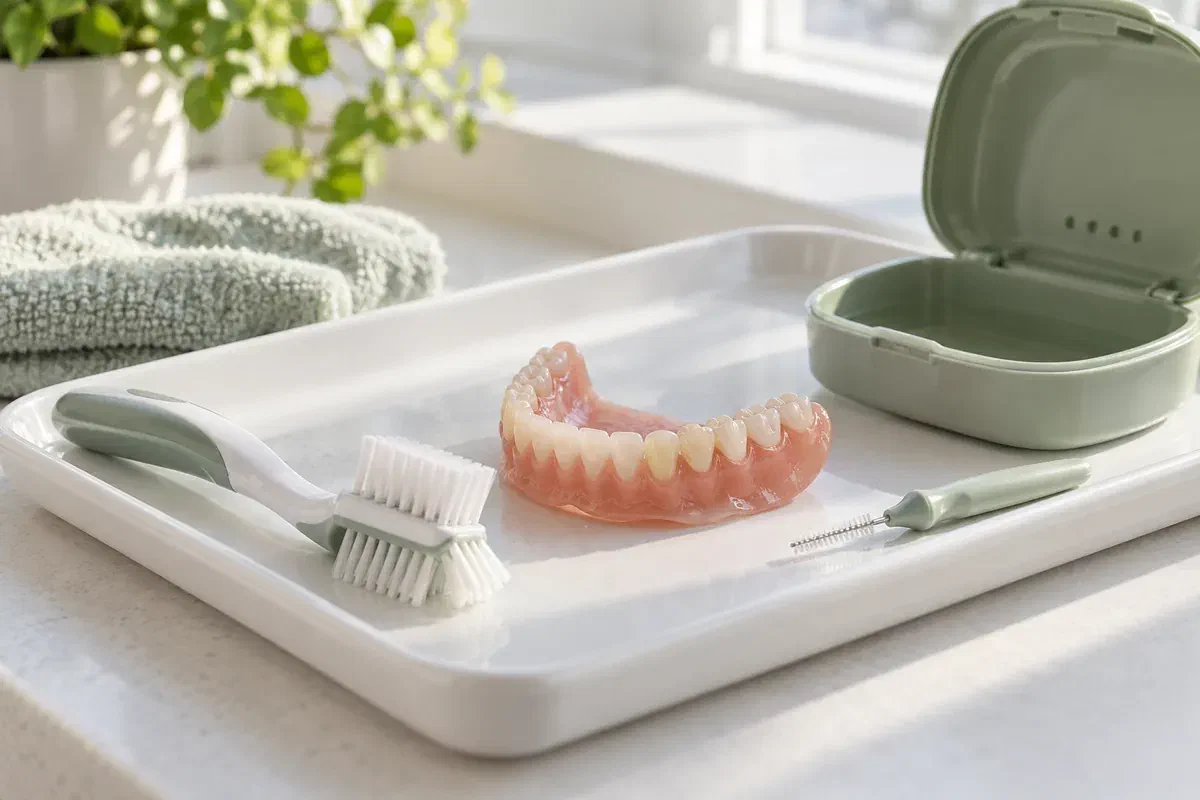
Problems with a routine often show up gradually. Pack the products, brushes and case you rely on, or photograph their labels, so recommendations relate to the appliance you actually wear.
A product that needs scrubbing, rinsing and timing can be a lot on tired days or with stiff hands. Tell us what is awkward so we can trim the routine and suggest tools that suit you.
Build-up that keeps returning may mean a product is not suited to the material, or that an area is hard to reach. Note where it forms and whether the gum nearby looks red or bleeds.
If a removable denture feels looser, clicks or is harder to take out, mention any recent change of cleaner. Wear in the attachments, denture changes or another cause could also be involved.
A rash, burning or swelling in the mouth after a new product, or new pain, discharge or a loosened restoration, should prompt a call rather than waiting for your review.
Reviews connect what you do at the sink with what we see in the chair. We look at the condition of the retentive parts, the denture surfaces and the gum around each implant. The replacement teeth will not decay, but the tissue supporting them can still become inflamed. You hear what is holding up and what deserves a closer watch.
Your needs can also change. A new medication that dries the mouth, a skin sensitivity or reduced dexterity may mean the routine that once worked is no longer right. Say so, and we can simplify the steps or swap products so the plan fits your life rather than fighting it.
Patient information: Cambridge University Hospitals — continuing care of dental implants
Ask the team to show you how they assess the denture, its connectors and the surrounding gum. Seeing those separate areas explains why a professional review still matters even with good home care.
Inserts and denture materials do not last forever. A review clarifies whether a finding should be watched, serviced or handled as a separate repair, and timing and estimated costs are explained first.
A short list of products, used the same way each day, is easier than rotating through many. Bring a caregiver if helpful, and ask us to point out the trickiest spots on your own appliance.
The appointment reflects your restoration, your oral health and earlier findings. We explain the examination, professional cleaning and any repair needs in plain terms, and mention when something requires a separate visit.
We look at what you use, how often and for how long. Tell us about medication changes, smoking, general health or help at home, and bring implant or attachment details if you have them.
The clinician may examine the gum around each implant, access for cleaning, the denture surfaces, the retentive parts and your bite. Imaging is considered when the findings point to a need for it.
Cleaning and agreed maintenance suit your restoration. If a part needs replacing, a repair is needed or another clinician should be consulted, we explain why, how it would work and approximate costs.
You go home knowing which brush, cleanser and case to use, what to watch for and when to return. Ask which reactions or symptoms should prompt a call before the next visit.
Each part of an implant denture, from the base to the inserts to the gum, has its own needs. Stay with the routine suggested for your appliance, and ask us first if you want to add anything new.
Take out an overdenture as shown and clean the fitting surface and supports separately. For a fixed restoration, clean around and beneath it with the demonstrated tools, and never try to release it.
Some soaks contain ingredients that suit plain acrylic but may affect metal or retentive inserts. Avoid very hot water, bleach and abrasive powders unless you have been told they are safe for your system.
Report lasting soreness, bleeding, new movement or a bite change. Keep any part that comes off, and avoid glue, filing or homemade fixes that could make the repair more complicated.
Patient information: European Federation of Periodontology — caring for dental implants
Every appliance and mouth is different. These questions cover cleansers, soaking, brushes, mouthwash and a few practical points about booking your reviews.
Book a review at our Bronte Street practice and bring your cleaning products along. We will look at your implant denture, its condition and your routine, then suggest a practical plan for ongoing care.
Bring each product you use, any implant records and your denture case.
