Daily cleaning has become harder
If gripping the denture, reaching a support or seeing the back of your mouth has become difficult, mention it. We can show alternatives designed for the dexterity you have now.


That first time your overdenture lifts during a meal, or a new click appears when you bite, is a good moment to book. We look at the attachments, the denture and the gum around each implant, and explain what the change really means.
You bite into a sandwich and feel the denture shift slightly. Or a faint clicking sound appears that was not there last month. Changes like these are common reasons to come in, and they usually point to one of three places: the denture, the retaining hardware, or the tissue around the implants.
Which place depends partly on your design. A removable overdenture relies on small retentive parts that you engage each morning and release at night. A fixed implant bridge is held so it does not come out at home, and any looseness there is a different matter entirely. Knowing which you have narrows the possibilities.
For people coming from Mississauga, especially the western neighbourhoods, a single well-planned visit can cover both the immediate change and your regular upkeep. Describe when the change began, what makes it worse and whether your cleaning routine, health or medications have shifted recently.
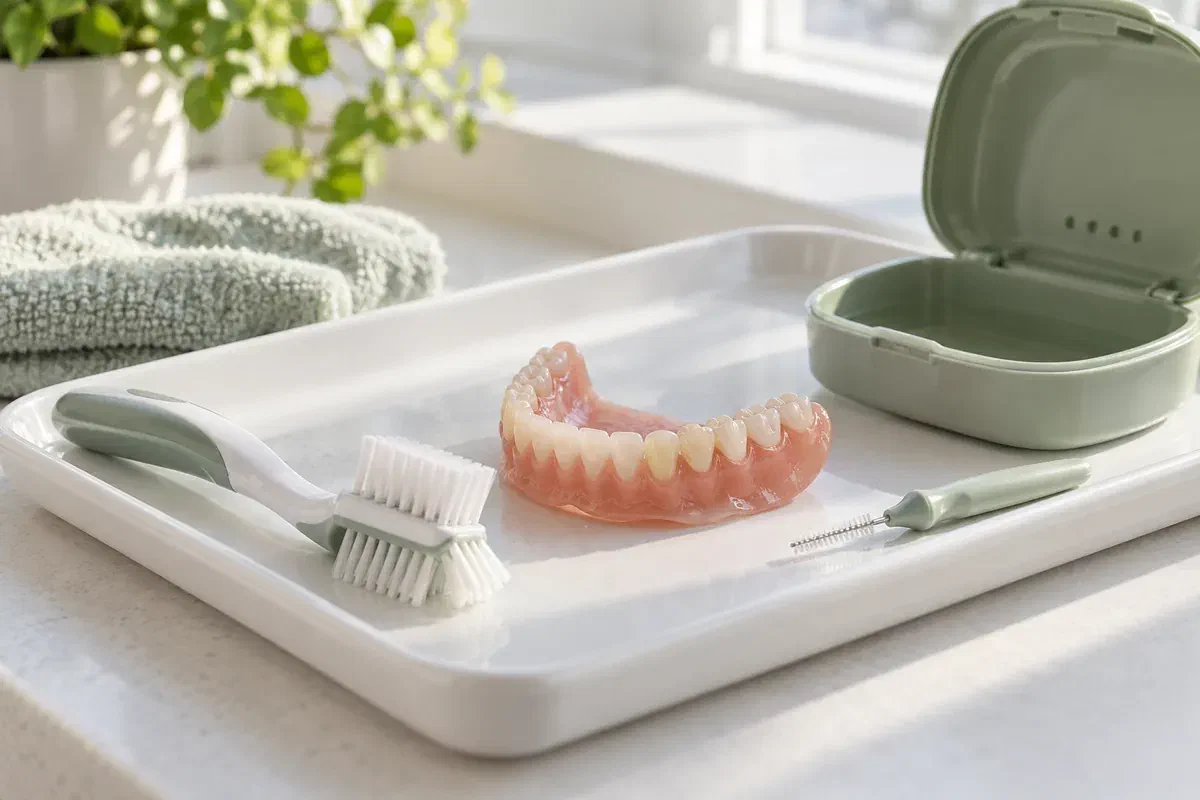
Specific details help the team narrow things down. Jot down when you first noticed a change and bring the brushes and cleansers you use, so advice is tailored to your own appliance.
If gripping the denture, reaching a support or seeing the back of your mouth has become difficult, mention it. We can show alternatives designed for the dexterity you have now.
A fresh trap for food can relate to cleaning, to wear on the denture, or to a change in fit. Notice where it sits and whether tenderness, bleeding or a different seat appears alongside it.
These changes warrant examination. A worn insert is one possibility, but the denture base, the bite or another finding could be responsible, so more brushing is unlikely to solve it.
If the change comes with new pain, swelling or discharge, or a fixed restoration feels loose, phone right away rather than waiting for a routine slot.
Grip and comfort are not purely mechanical questions. A connector that wears can let the denture move, and movement can irritate the gum. Inflamed tissue, in turn, can make cleaning more uncomfortable. Reviews examine the hardware and the living tissue together, then tell you plainly what is steady and what has changed.
Your routine may need to evolve too. Illness, a new prescription or reduced hand strength can affect how firmly you seat or remove a denture each day. Share those changes so instructions stay achievable instead of becoming one more frustration at the bathroom sink.
Patient information: Cambridge University Hospitals — continuing care of dental implants
Ask how the team checks the denture, its retentive parts and the surrounding gum. Understanding those separate areas explains why a professional look remains useful even if your home care is thorough.
Retentive inserts and denture materials wear through normal use. A review shows whether something should be monitored, serviced or repaired under its own plan, and timing and costs are discussed first.
Handling a removable denture well protects its parts. Ask to practise putting it in and taking it out, and bring someone who helps you if that would be useful.
Your appointment follows your restoration, your oral health and what was found before. We explain the examination, professional cleaning and any repairs in plain language, and say when something needs a separate booking.
Tell us how and when the denture started to feel different, and how you clean it. Mention medication changes, smoking, general health and home support, and bring whatever implant records you have.
We may assess the retentive parts, the denture surfaces, the gum around each implant, cleaning access and how your teeth meet. Imaging is considered when the findings call for it, not by default.
Cleaning and agreed maintenance are adapted to your restoration. If a part needs replacing, a repair is needed or another clinician should see you, we explain the reasons, arrangements and estimated costs.
You leave with tool and product suggestions, things to watch and a proposed return date. Practise any new technique with us, and ask which signs should prompt an earlier call.
The denture, the retentive hardware and the gum all benefit from the right care. Use the instructions given for your restoration and check with us before switching cleaners, soaks or brushes.
For an overdenture, line it up and remove it as demonstrated rather than biting it into place or prying at one side. A fixed bridge is cleaned around and beneath, never loosened at home.
Some soaks and pastes are fine for acrylic but less suitable for metal housings or retentive inserts. Ask which brush, cleanser and storage approach the team recommends for your particular system.
If an insert drops out or a piece detaches, keep it and call us. Do not glue, file or bend anything back into place, since that can make the proper repair more involved.
Patient information: European Federation of Periodontology — caring for dental implants
The right next step depends on your restoration and your oral health. These questions cover retention changes, handling, eating, and when to call rather than wait.
Arrange a visit at our Bronte Street practice to talk about how your implant denture feels, its current condition and your daily routine. We will explain what we find and set out a practical plan for upkeep.
Bring implant details if you have them, plus the names of the products you use.
