The routine has started to feel awkward
A weaker grip, a sore wrist or a corner you can no longer see can make cleaning less thorough without your noticing. Tell us where you struggle and ask to try tools that genuinely suit you.


Snap-in or screwed in place? The answer changes almost everything about caring for an implant denture. We confirm which design you wear, check its connections and the gum around each support, and set out a routine made for it.
It sounds basic, yet many people are unsure. An overdenture clips or snaps onto implants and is meant to come out in your hands. A fixed implant bridge is attached so that only a clinician removes it. Online advice rarely says which type it was written for, so it is easy to follow the wrong set.
Each design has three things to look after. There are the replacement teeth and their base, the hardware that holds everything on, and the gum and bone around the implants themselves. A review checks all three, because the cleanest-looking teeth can sit on a connector that is wearing or tissue that is sore.
For people travelling up from Oakville, it makes sense to get the most from each appointment. Come with your questions written down. Let us know which steps are easy, which are clumsy, and whether anything in your health or daily life has changed since the denture was placed.
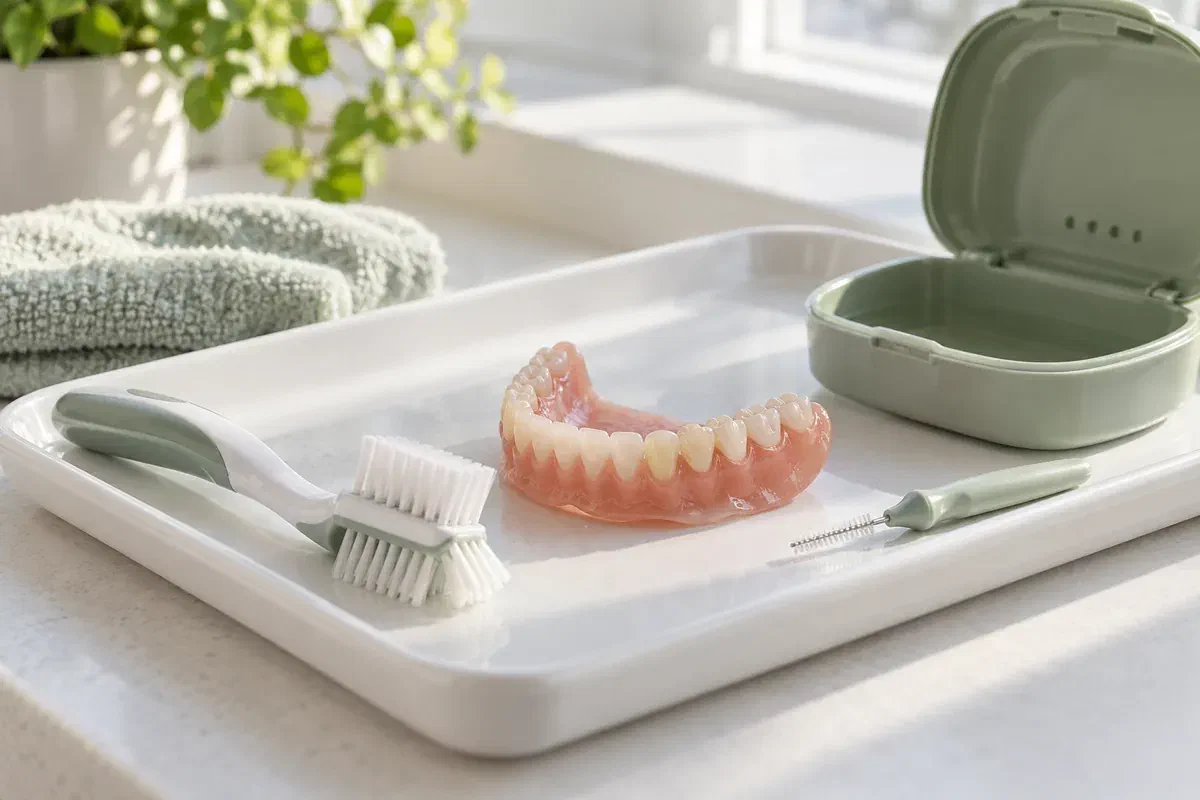
Minor problems are easier to discuss before they settle into habit. Pack the brushes and products you rely on, or jot down their names, so suggestions can be specific to the appliance in your mouth.
A weaker grip, a sore wrist or a corner you can no longer see can make cleaning less thorough without your noticing. Tell us where you struggle and ask to try tools that genuinely suit you.
When food or build-up collects in a new place, the reason may be technique, the denture's contour or its fit. Note where it happens and whether it comes with soreness, bleeding or a different seat.
Movement, clicking, a feeling of pressure or trouble taking out a removable denture all warrant a look. It may come down to attachments, the denture or another finding entirely, not just your cleaning.
Pain that is new, swelling, discharge or a restoration that has worked loose should be reported right away. Do not hold it for a review that is weeks off.
Every implant denture is a partnership between manufactured parts and living tissue. The teeth cannot get cavities, but the gum around a support can become inflamed, and connectors loosen or wear through normal use. A good review tells you which parts are stable, which have changed and what should be followed up.
Routines also need updating as life moves on. A surgery, new prescriptions or changes in dexterity can make the steps you learned at fitting harder to carry out. Talk to us about it so the guidance stays doable rather than turning into a list you dread each night.
Patient information: Cambridge University Hospitals — continuing care of dental implants
Ask how the team inspects the denture, the connectors and the gum around every implant. Seeing them as separate areas makes it clear why professional review has value even if you are careful at home.
Inserts and denture materials do wear. A review sorts findings into watch, maintain or repair, and if a separate repair plan is needed you hear about the timing and estimated costs before it begins.
A routine you can show us is worth more than one you only read about. Bring a helper if you would like, and ask us to point out the spots on your own denture that need extra care.
What happens depends on your restoration, your oral health and earlier findings. The team explains each part of the examination, cleaning and any repair need, and tells you when work would require another visit.
We establish whether your denture is removable or fixed and ask how it feels. Share any changes in medicines, smoking or health, any help you get at home, and whatever implant paperwork you have.
The examination can include the tissue around each implant, your access for cleaning, the denture surfaces, the attachments and your bite. Imaging is used when your situation calls for it, not as a matter of routine.
Professional cleaning and any agreed upkeep are adapted to your restoration. Anything that needs repair, more investigation or another clinician's opinion is explained, along with how it would be arranged and estimated costs.
You are shown which tools and products suit you, what to watch and when we suggest the next visit. Try the routine while we watch, and ask which symptoms should prompt a call before then.
Your denture, the attachment system and your gums each need care that fits. Follow the instructions for your own restoration, and check with us before adding a new product, soak or tool.
Lift out an overdenture only the way you were shown, then clean the denture and the supports. Leave a fixed restoration where it is, cleaning around and under it as demonstrated, and never try to remove it.
Ask which brush, cleanser and storage method are safe for your denture and attachments. A product designed for a regular acrylic denture may not be suitable for metal parts or retentive inserts.
Tell us about ongoing soreness, bleeding, new looseness or a bite that has shifted. If a piece comes off, keep it for us. Glue, filing or homemade adjustments can make the proper repair more difficult.
Patient information: European Federation of Periodontology — caring for dental implants
The right advice turns on your design and how your gums are doing. These questions cover identifying your design, cleaning tools, professional removal and planning appointments.
Book a review at our Bronte Street clinic to talk through your implant denture, its condition and how you care for it. We will confirm the design, explain what it needs now and suggest a plan for continuing care.
If you have them, bring your implant records and the names of your cleaning products.
