Handling the denture has become clumsy
Drops at the sink are a common cause of damage. If your grip or eyesight has changed, tell us. We can suggest safer ways to clean over water or a towel, and tools that are easier to hold.


A tube of glue in the kitchen drawer can look like a quick answer when a piece of your implant denture comes loose. It usually makes the proper fix harder. We assess the damage, check the attachments and gum, and plan the repair with you.
A tooth pops off the base, an insert falls into the sink, or a crack appears after the denture slips from your hand. The instinct, especially in a village household used to fixing things, is to repair it on the spot. With an implant denture, that instinct can backfire, because glue and filing change the fit in ways that are hard to undo.
What helps most is keeping every piece, noting what happened and calling. The right next step depends on your design. A removable overdenture can usually be brought in for assessment in its case. A fixed restoration that has chipped or loosened stays in your mouth until a clinician sees it, and you should not try to adjust it.
Breakages are also a reminder that implant dentures need regular attention between mishaps. Reviews look at the teeth and base, the retaining hardware and the gum around each implant. Tell us how your routine goes, where handling is tricky and what has changed in your health or circumstances since the restoration was made.
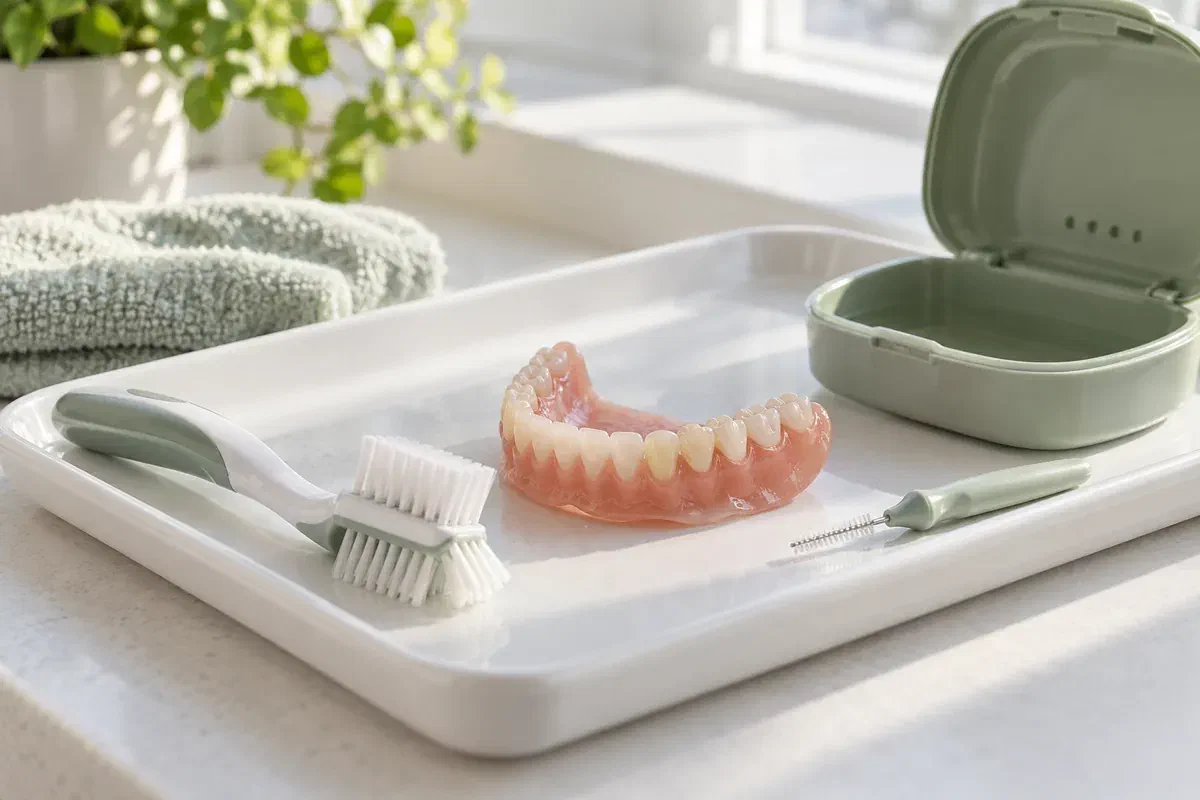
Many breakages follow a period of warning signs. Bring your brushes, cleansers and storage case, or note their names, so the team can suggest safer handling for your appliance.
Drops at the sink are a common cause of damage. If your grip or eyesight has changed, tell us. We can suggest safer ways to clean over water or a towel, and tools that are easier to hold.
A fine crack, a chipped tooth or a rough patch can collect debris and may grow. Note where it is and whether the nearby gum is sore, bleeds or feels different when you bite.
Movement places strain on the denture and its parts. Clicking, pressure or difficulty removing a removable denture should be examined before it leads to a fracture or a lost insert.
A sharp broken edge, new pain, swelling or discharge, or a fixed restoration that has shifted, needs a prompt call. Do not wait until the next routine review.
Regular reviews give the team a chance to notice thinning acrylic, worn inserts or a strained attachment while they are still minor. Those checks sit alongside an assessment of the gum around each implant, which can become inflamed even though the teeth themselves cannot decay. You should hear what is sound and what may need attention.
Your circumstances matter too. Arthritis, a tremor or a new medication that causes dizziness can make dropping the denture more likely. Mention them so the routine can be made safer and simpler, rather than relying on luck at the bathroom counter.
Patient information: Cambridge University Hospitals — continuing care of dental implants
Ask the clinician to show you how they examine the denture, its retentive parts and the surrounding gum. Knowing what they look for helps you notice early changes yourself.
Components and denture materials wear and can break. A review sorts out whether something should be watched, maintained or repaired under its own plan, with timing and estimated costs explained up front.
A routine that includes cleaning over water or a folded towel protects the appliance. A helper is welcome at the visit, and we can demonstrate safe handling with your own denture.
We start with the restoration, your oral health and what happened. The examination, any cleaning and the repair plan are explained clearly, including whether laboratory work means another visit.
Describe how the damage occurred and bring every piece. We also ask about medications, smoking, general health and help at home, and about any implant or denture records you have.
The clinician checks the broken area, the attachments, the gum around each support and your bite. X-rays may be suggested if there is a concern about an implant or the bone around it.
A minor fix may be possible in the clinic, while other damage needs a laboratory or a new component. We explain the options, how long they may take and the estimated costs before going ahead.
Once the repair is planned, we review safe handling, suitable tools and what to watch. You leave knowing when to return and which signs mean calling sooner.
Most breakages start with a slip, a harsh product or a quick home fix. Follow the instructions for your own restoration, and check with the team before trying a new product or tool.
Take out an overdenture only as you were taught, and do so over a basin of water or a folded towel. A fixed restoration stays in place; clean around and beneath it as shown.
Very hot water, bleach and harsh powders can damage denture materials. Ask which brush, cleaner and case suit your appliance, especially if it has metal components or retentive inserts.
If something comes off, put every piece in a labelled container and call. Household glue, filing or bending parts back can damage the denture and make the professional repair more difficult.
Patient information: European Federation of Periodontology — caring for dental implants
Every breakage is different, and so is every restoration. These questions cover broken pieces, adhesives, wearing a damaged denture and planning the repair.
Book a visit at our Bronte Street practice to have your implant denture, any damage and your daily routine assessed. We will outline repair options and set out a plan for continuing care.
Bring every broken piece in a labelled container, along with any implant records.
