

Illustrative consultation about maintaining gum health around a dental implant
Restorative Dentistry

Implant Gum-Care Maintenance

The tissues around an implant need attention throughout its life. Explore implant gum-care maintenance in Milton, with checks for inflammation, guidance for difficult-to-clean areas, and follow-up that responds to changes in your mouth.

A closer look at implant gum-care maintenance

Look beyond the replacement tooth to the tissues around it.

An implant restoration replaces a tooth, but it still sits within a living mouth. The gums around it can become inflamed, and the underlying support needs monitoring. Implant gum-care maintenance focuses on those tissues, the factors that affect them, and the changes that may need more than an ordinary cleaning appointment.

The assessment distinguishes inflammation limited to the soft tissues, called peri-implant mucositis, from peri-implantitis, which also involves loss of supporting bone. You cannot reliably make that distinction from appearance or discomfort alone. Examination findings and relevant records help determine whether the area is stable, needs treatment, or requires further investigation.

At Milton Dental Clinic, we can discuss your implant history and the gum changes you have noticed. Bring previous treatment information when available and explain what happens during cleaning. The purpose is to understand the current condition and make a workable plan, whether you are attending a routine review or returning after a concern.

Discuss the gums around your implant
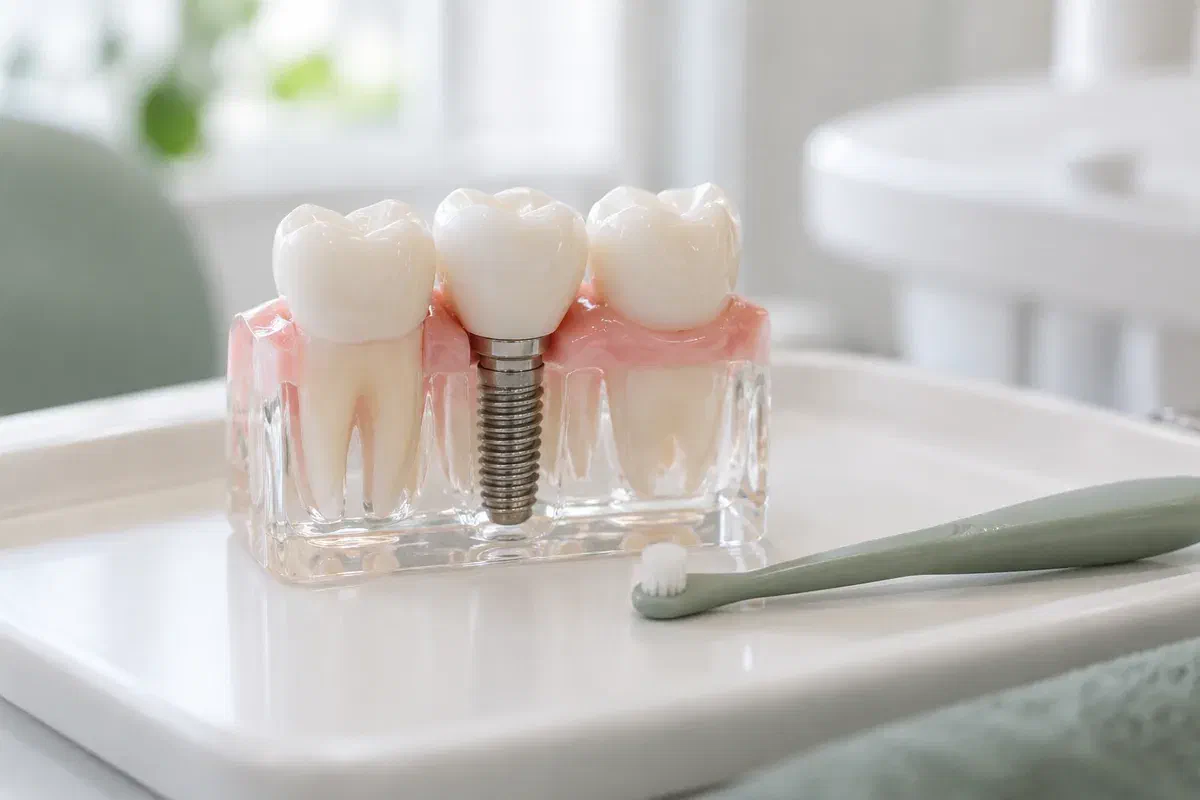
Implant teaching model beside a small brush used to illustrate targeted cleaning
Changes to bring to your visit

Do not wait for pain to make a gum concern worth checking.

Some changes are subtle or appear only when you brush. Describe the location, frequency, and duration rather than trying to name the condition yourself; those observations are useful starting points for an examination.

Bleeding returns around the same implant

Repeated bleeding during gentle cleaning deserves assessment. Tell the team whether it is new, whether the area feels tender, and if you have changed tools or technique. Bleeding alone does not establish how much support is affected.

The tissue looks or feels different

Redness, swelling, a changed gum outline, or a persistent unpleasant taste should be discussed. An examination can consider inflammation and other explanations instead of assuming every visible change has the same cause.

You cannot comfortably clean one area

A difficult contour or uncomfortable access can leave you unsure how to care for the site. Show the team exactly where the problem occurs so both the cleaning method and the restoration can be considered.

New swelling, discharge, increasing pain, or movement should prompt contact before a planned maintenance visit. Call to explain the symptoms and arrange an appropriate assessment.

Why monitor the surrounding tissues?

Use changes over time to guide the next decision.

A single comfortable day does not tell the whole story of implant health. Keeping relevant clinical records allows the team to compare findings and discuss whether the area is remaining stable. Ask what is being monitored and how the current assessment relates to previous visits.

Gum-care maintenance also makes prevention personal. Previous gum disease, smoking, cleaning difficulties, and health conditions can affect the plan. These are reasons to tailor support and follow-up, not reasons to avoid asking for care if your routine has been difficult or an appointment has been delayed.

Patient information: American Academy of Periodontology — peri-implant diseases

Recognize when routine care needs to change

The review can identify findings that need a defined treatment plan rather than continued observation alone. You should understand the concern, the proposed response, and how improvement or stability will be reassessed.

Connect gum care with the restoration's shape

Cleaning access matters as well as effort. If an area is persistently difficult to reach, the team can consider whether instructions, tools, or further assessment of the restoration would help address the obstacle.

Keep the rest of the mouth in view

Natural teeth and other implants need their own care alongside the site being discussed. A coordinated plan avoids treating the implant as an isolated object while overlooking relevant gum problems elsewhere.

Your gum-care maintenance visit

Review the tissues, explain the findings, and plan reassessment.

The appointment should help you understand what is happening around the implant and what the next step is intended to achieve. Let the team know if the area is sensitive or previous examinations have been uncomfortable.

  1. Gather the history of the implant and gums

    Discuss when the implant was restored, previous inflammation or treatment, and changes in health or medicines. Available records and your description of symptoms help establish what has changed and what needs comparison.

  2. Assess the tissues and supporting information

    The clinician examines the area and may record gentle measurements around the implant. Bleeding, cleaning access, and other findings are considered together; imaging may be recommended when it would help assess the support.

  3. Explain the condition and appropriate care

    The team discusses whether findings support routine maintenance, targeted treatment, or further assessment. Any proposed professional cleaning, additional care, or referral should have a clear reason, expected role, and estimate where relevant.

  4. Agree on a review point and home priorities

    Ask which areas need attention, how to clean them, and when the response will be checked. A review after treatment may serve a different purpose from the longer-term maintenance schedule.

Supporting gum health between reviews

Make your daily care specific, gentle, and repeatable.

The most useful routine is one you understand well enough to carry out consistently. Ask for a demonstration around your own restoration and explain any physical or practical difficulty that would stop you following it.

Follow the demonstrated cleaning route

Use the recommended brush and other cleaning tools for the space available. Avoid forcing an oversized tool into a tight area or replacing careful cleaning with hard scrubbing because the tissue has bled.

Report persistent changes in the tissue

Keep a simple note of recurrent bleeding, swelling, soreness, or an unpleasant taste. Contact the clinic if changes persist or worsen rather than assuming that a lack of severe pain means the area is healthy.

Keep health and risk information current

Tell the team about changes in medicines, diabetes care, smoking, or your ability to clean. Ask for support with relevant risk factors and continue prescribed medical care unless the treating professional advises otherwise.

Choosing care from the findings

Stable tissue, inflammation, and bone changes need different conversations.

Maintenance and active disease treatment are related, but they are not interchangeable. The dentist should explain which situation the findings suggest and what information is still needed before recommending further care.

When the current condition is stable

Supportive maintenance

Continue an individualized plan for professional review and home cleaning. Discuss the interval, the areas being monitored, and symptoms that should prompt an earlier appointment.

When the gums need targeted attention

Care for soft-tissue inflammation

Professional cleaning, home-care changes, and correction of contributing factors may form part of treatment. Reassessment is important to determine whether the tissue response is satisfactory.

When supporting bone or persistent disease is a concern

Further peri-implant disease assessment

More extensive disease needs a specific plan and may require specialist care. Discuss the diagnosis, treatment options, limitations, and follow-up rather than assuming routine maintenance will resolve it.

Patient information: European Federation of Periodontology — peri-implant disease treatment

Questions about the gums around implants

Understand the findings without having to diagnose them yourself.

Bring your questions about symptoms, measurements, and follow-up. The details of your implant and its previous care matter more than a general description of what another patient's gum problem involved.

(905) 876-4488
Does bleeding around an implant always mean that supporting bone has been lost?
No. Bleeding can occur with soft-tissue inflammation, but it cannot show the condition of the bone by itself. A clinical assessment, comparison with previous findings, and imaging when indicated help the dentist distinguish the problem and recommend appropriate care.
Why might the team measure the gum around an implant that feels comfortable?
Measurements can contribute to monitoring tissue health and identifying changes over time. They are interpreted alongside bleeding, other examination findings, and relevant records. Ask what your measurements mean in context rather than comparing one number with someone else’s implant.
Can gum disease around my remaining teeth affect my implant maintenance plan?
Yes. A history of periodontitis is relevant to implant risk and follow-up. The team should consider the health of your remaining teeth and gums alongside the implant, and explain how treatment or maintenance in different areas fits together.
Should I stop cleaning an implant completely if the gum bleeds?
Arrange advice about repeated bleeding and ask how to clean the area gently. Simply abandoning the area can leave deposits in place, while forceful cleaning can cause injury. The right response is an assessment and a suitable technique for the site.
Will implant gum-care maintenance include an X-ray at every appointment?
Not necessarily. Imaging should be guided by the clinical need, available records, and the question the dentist is trying to answer. Ask why a particular image is recommended and how it will contribute to monitoring or diagnosing the area.
What happens if the gums around my implant do not improve after initial care?
The response should be reassessed. The team may review cleaning access, contributing factors, the diagnosis, and whether additional treatment or specialist input is needed. Persistent inflammation should have a clear follow-up plan rather than an assumption that the same routine will eventually work.
Implant gum-care maintenance in Milton

Give a small tissue change a proper assessment.

Visit our Bronte Street clinic to discuss the gums around your implant and a maintenance plan that fits your needs. We can review what you have noticed and explain the findings, home priorities, and next review.

Mention bleeding, swelling, tenderness, or previous treatment around the implant when arranging your appointment.

Visit Milton Dental Clinic
Unit 1, 342 Bronte St. S, Milton, ON L9T 5B7
Get directions Clinic hours
Monday–Thursday
11am–7pm
Friday–Sunday
By appointment only

How can we help?

Milton Dental Clinic

Have a question about your smile? Choose the option that works best for you.

For urgent dental concerns, please call.
Messages are reviewed during clinic hours.