The same site bleeds on most evenings
If gentle cleaning keeps bringing blood at one implant, mention it. Note whether it is tender and whether you started using something new. Bleeding cannot show by itself what is happening to the bone.


Most of the care an implant gets happens at your own bathroom sink, not in a dental chair. For people in Erin and Hillsburgh, our reviews check the gum around the implant and then focus on the part you control: a cleaning routine shown on your own mouth and built to last.
Think about the time you spend with your implant. A review visit lasts part of a morning; brushing and cleaning between teeth happen twice a day, every day. That is where most of the work of keeping the gum healthy gets done, and it is also where small difficulties, such as a tool that never quite fits, add up over months.
Even so, home care cannot tell you what is going on beneath the surface. Inflammation confined to the gum is peri-implant mucositis; inflammation with loss of supporting bone is peri-implantitis. The difference is invisible in a bathroom mirror and cannot be judged by comfort. It takes a clinical examination, comparison with earlier notes, and imaging when there is a good reason.
So an Erin visit to our Milton office does both jobs. Our Bronte Street team checks the implant site and talks through its history, then spends time with you on the routine itself: which aids suit your gaps, which angles reach the tricky side, and how to keep it gentle. Bring your usual tools if that helps.
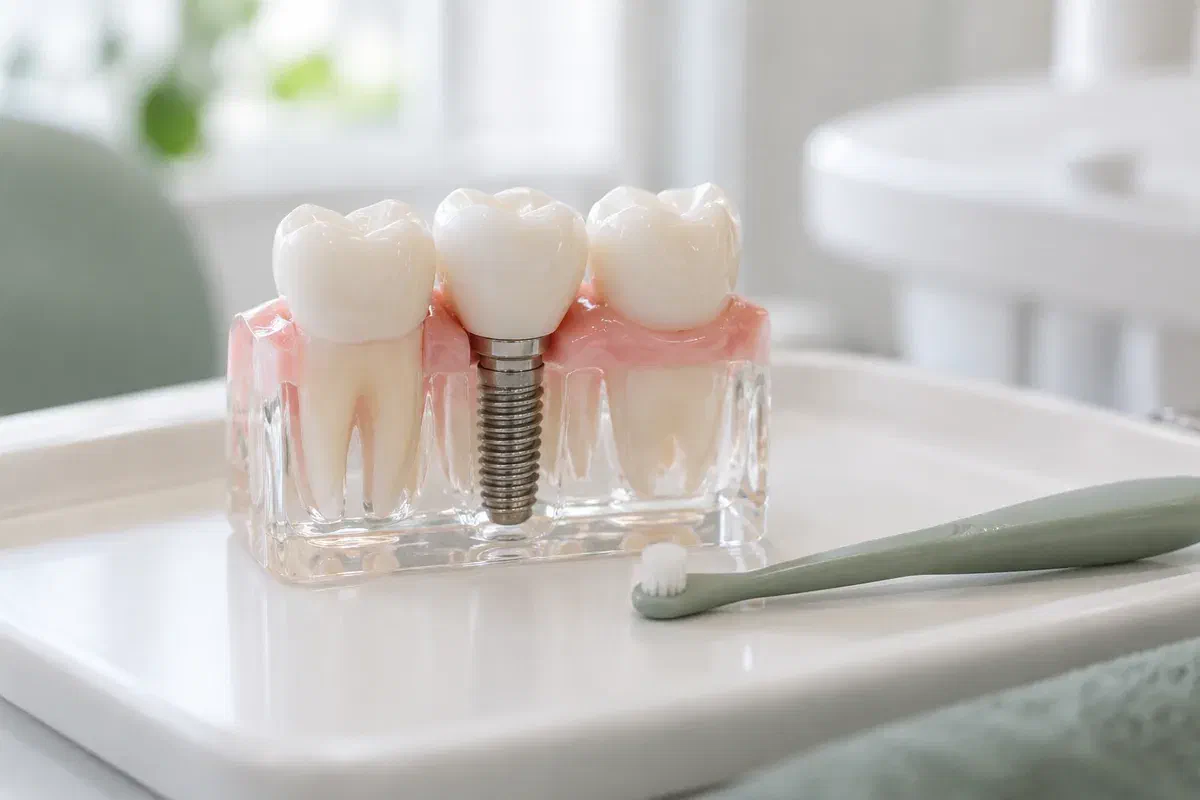
Because you see your implant every day, you are well placed to spot changes. Tell us where they occur, how often, and since when; that is more helpful than trying to work out what they are.
If gentle cleaning keeps bringing blood at one implant, mention it. Note whether it is tender and whether you started using something new. Bleeding cannot show by itself what is happening to the bone.
Colour changes, swelling, an altered gum edge, or a taste that keeps returning should be described. The dentist will consider inflammation as well as other causes rather than assuming one explanation.
When a brush is too wide for a gap, or a spot is sore to clean, it often gets skipped. Show us where, so we can choose a better aid and look at whether the restoration’s shape is involved.
Sudden swelling, pus or discharge, pain that builds, or an implant that feels loose should not wait. Call us to explain what is happening and we will arrange a timely assessment.
Your daily cleaning shapes what we see at each review, and our notes show whether that routine is working. When bleeding, measurements, and access are recorded visit by visit, we can tell you whether the site is holding steady and which part of your routine is helping most. Ask us to point that out.
Support is tailored, too. Earlier gum disease, smoking, health conditions, or limited dexterity all influence the plan and the tools we suggest. They are not reasons to delay a visit because your routine has fallen behind; they are reasons to make that routine easier.
Patient information: American Academy of Periodontology — peri-implant diseases
Sometimes findings call for professional treatment, not just a better routine. You should understand the concern, the proposal, and how improvement will be checked.
If one site stays hard to reach, different interdental brushes, floss threaders, or another approach may help. The team can also assess whether the crown’s contour is adding to the problem.
Natural teeth and other implants need cleaning too. A single, coordinated routine is easier to keep up and reduces the chance of missing a problem elsewhere.
You should leave understanding the state of the tissue around your implant and confident about cleaning it. Tell us if the area is tender or if earlier exams were uncomfortable.
We ask when the implant was restored, about past inflammation or treatment, changes in health or medicines, and what you currently use to clean. That helps us know where to focus.
The clinician checks the gum and may take gentle measurements. Bleeding, how well each side can be reached, and the tissue’s appearance are weighed together. An X-ray may be suggested if bone support needs a closer look.
We tell you whether findings fit routine maintenance, focused treatment, or further investigation. Any cleaning, care, or referral we suggest should come with its reason and an estimate where relevant.
We show you the routine on your own implant, let you try it, and agree on when to review. A recheck after treatment may have a different aim from regular maintenance.
A routine you understand is one you will keep. Ask us to show you each step on your implant and tell us about anything, from stiff hands to a busy schedule, that makes it difficult.
Use the soft brush and correctly sized interdental aids you were shown, working around the implant in the same order. Do not force a tool that is too big, and avoid heavier scrubbing when the gum bleeds.
If bleeding, swelling, tenderness, or an unpleasant taste keeps showing up, make a short note. Call us when it persists or gets worse. Little or no pain does not guarantee the tissue is healthy.
Changes in medicines, blood sugar management, smoking, or your ability to clean can affect the gum. Ask for support with those, and continue any medical treatment your doctor has prescribed unless they advise otherwise.
Ask about tools, technique, symptoms, or follow-up. Your own implant and routine matter more than general advice about someone else’s.
Visit our Bronte Street clinic in Milton for an implant gum review with real practice time. We will examine the site, show you each cleaning step on your own implant, and agree on when we will look again.
When you book, tell us what you currently use to clean around the implant and whether you have noticed bleeding, swelling, or soreness.
