

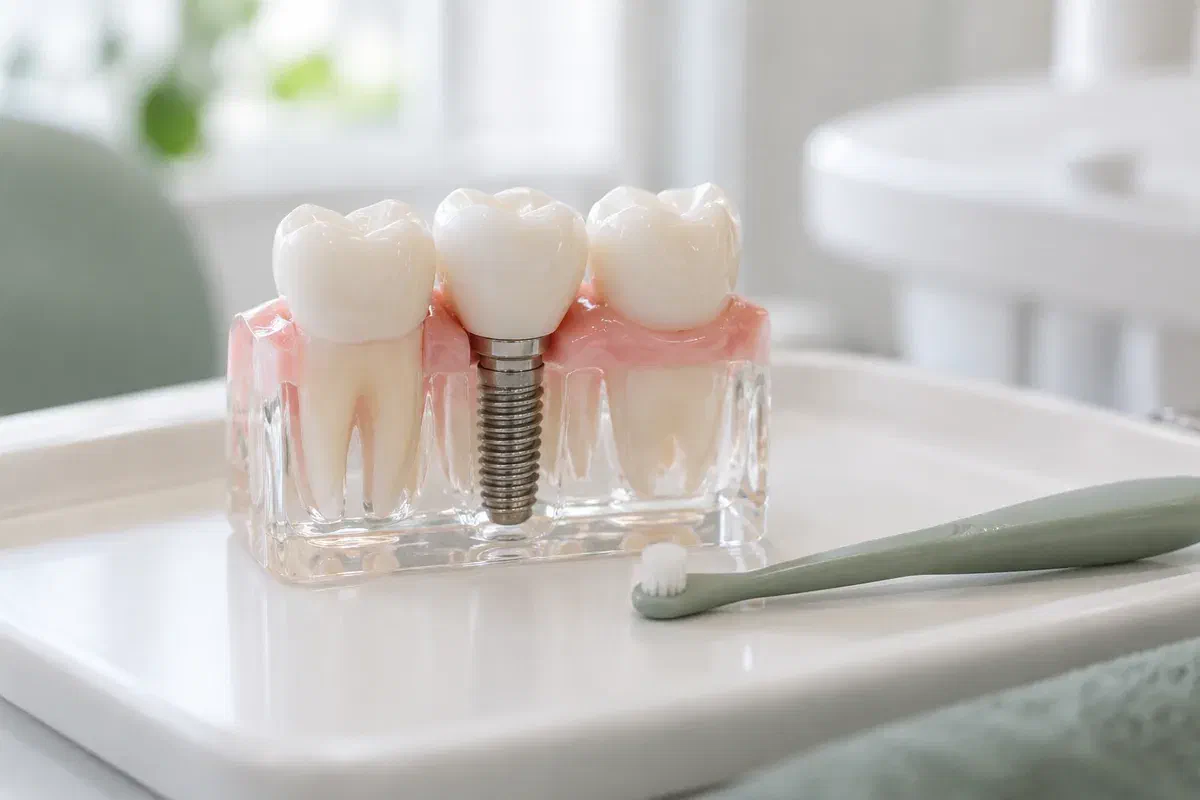
Illustrative consultation about maintaining gum health around a dental implant
Restorative Dentistry

Implant Gum-Care Maintenance in Milton

An implant that feels perfectly comfortable can still have gums worth watching. Here in Milton, our maintenance visits look at the tissue around each implant, help with awkward spots to clean, and set follow-up based on what the examination shows.

Comfortable is not the same as checked

Why look at an implant that never bothers you?

Most people stop thinking about an implant once the crown is in and chewing feels normal. That is a good sign, but the crown itself is only part of the picture. Gum tissue wraps around the implant, and bone holds it in place underneath, and both can change quietly while the tooth above looks exactly the same.

Two conditions matter most. Peri-implant mucositis is inflammation confined to the soft tissue. Peri-implantitis goes further and includes loss of the bone that supports the implant. Neither can be told apart reliably by how the area looks in a mirror or how it feels, so the examination, earlier records, and sometimes imaging do that work.

Our Bronte Street team in Milton can go over when your implant was placed, what has happened with it since, and anything you have noticed while brushing. If you have paperwork from the original treatment, bring it along. The goal is a clear picture of how the area is doing now and a plan you can realistically follow, for a routine check or a specific worry.

Talk to us about your implant gums
Implant teaching model beside a small brush used to illustrate targeted cleaning
Small signs worth mentioning

Pain often arrives late, so earlier clues count.

Many changes around an implant are easy to miss or show up only during cleaning. You do not need to know what they mean. Telling the team where it happens, how often, and for how long gives the examination a useful head start.

One implant keeps bleeding when you clean

If gentle brushing or flossing draws blood at the same site again and again, have it looked at. Mention when it started, whether the spot is sore, and whether you recently switched tools. Bleeding on its own cannot tell anyone how much support is involved.

The gum has changed colour, shape, or feel

Redness, puffiness, a gum line that sits differently, or a bad taste that lingers are all worth raising. The dentist can look at inflammation as well as other possible causes rather than assuming one explanation fits every change.

Part of the implant is hard to reach

Sometimes the shape of a crown or a tender spot makes cleaning awkward, and you are left guessing. Point to the exact area so the team can look at both your technique and the restoration itself.

Do not wait for a scheduled maintenance visit if you notice new swelling, pus or discharge, pain that is getting worse, or an implant that feels loose. Call the clinic, describe what is happening, and we will arrange a suitable assessment.

The value of a record

Trends tell more than a single visit.

One good week says little about an implant over years. When findings are written down at each review, the team can compare them and talk with you about whether things are holding steady. It is reasonable to ask what is being tracked and how today compares with last time.

Maintenance is also shaped around you. A past history of gum disease, smoking, trouble cleaning, and some medical conditions can all change the plan. None of these should keep you from booking, even if your routine has slipped or a review is overdue. They simply help the team decide what support you need.

Patient information: American Academy of Periodontology — peri-implant diseases

Spot when watching is no longer enough

A review can reveal findings that call for a specific treatment plan instead of more monitoring. You should come away knowing what the concern is, what is proposed, and how the team will judge whether it has helped.

Link cleaning to the crown's design

Effort is only part of it; access matters too. When one area stays hard to clean, the team can consider new instructions, different tools, or a closer look at the restoration's contours.

Care for the whole mouth, not one site

Your natural teeth and any other implants need attention as well. Looking at everything together keeps the implant from being treated in isolation while a gum problem elsewhere goes unnoticed.

How a maintenance appointment runs

History first, then the examination, then a plan you can follow.

By the end of the visit you should understand what is going on around the implant and what the next step is for. Tell us if the area is tender or if earlier checks have been uncomfortable so we can take that into account.

  1. Talk through the implant's story

    We ask when the implant was restored, whether there has been inflammation or treatment before, and whether your health or medications have changed. Records and your own description help show what is new and what needs comparing.

  2. Examine the gum and support

    The clinician looks closely at the site and may take gentle measurements around the implant. Bleeding, how easily the area can be cleaned, and other findings are weighed together. An X-ray may be suggested if it would help clarify the bone support.

  3. Explain what was found

    We tell you whether the findings point toward routine maintenance, targeted treatment, or more investigation. Any cleaning, extra care, or referral we suggest should come with a reason, its purpose, and a cost estimate when relevant.

  4. Settle on home care and a recheck date

    Ask which spots need the most attention, how to clean them, and when the area will be looked at again. A check after treatment can have a different purpose from the regular maintenance interval.

Between appointments

A gentle routine you can actually keep.

The best home care is the one you understand well enough to repeat every day. Ask us to show you how to clean around your own implant, and mention anything, such as limited hand movement, that makes a routine hard to follow.

Use the tools you were shown

Stick with the brush and cleaning aids suited to the space around your implant. Do not push a tool that is too large into a tight gap, and do not switch to harder scrubbing just because the gum bled.

Keep track of changes that linger

Jot down repeated bleeding, swelling, soreness, or a bad taste. Get in touch if these continue or get worse. A lack of strong pain does not mean the tissue is healthy.

Update us on health changes

Let the team know about new medications, changes in diabetes management, smoking, or anything affecting your ability to clean. Ask about help with risk factors, and keep up any medical treatment unless your doctor advises a change.

Matching care to what we find

Three situations, three different plans.

Routine maintenance and treatment for active disease are connected, but one cannot stand in for the other. The dentist should tell you which situation the findings point to and what else needs to be known before suggesting more care.

When the tissue is stable

Regular upkeep visits

Keep going with a personalized schedule of professional reviews and home cleaning. Talk about how often to return, which areas are being watched, and which symptoms mean you should come in sooner.

When the gums need focused help

Calming an inflamed gum

Treatment may include professional cleaning, adjustments to home care, and addressing factors that contribute. A recheck afterward shows whether the gum has responded well enough.

When bone loss or ongoing disease is suspected

A deeper look at bone support

More advanced disease needs its own plan and may involve a specialist. Ask about the diagnosis, the options, their limits, and follow-up, rather than expecting routine maintenance to fix it.

Patient information: European Federation of Periodontology — peri-implant disease treatment

Common questions

What people ask about implant gums in Milton

Bring any question about symptoms, measurements, or follow-up. What matters is your own implant and how it has been cared for, not a friend's experience with theirs.

(905) 876-4488
My implant feels fine. Do I still need gum-care maintenance?
Comfort is encouraging, but inflammation and early changes around an implant often cause little or no pain. Regular reviews let the team compare findings over time and catch changes while they are easier to manage.
How is cleaning an implant different from cleaning a natural tooth?
The gum attaches differently around an implant, and the crown’s shape can create spots that are awkward to reach. The team can show you which tools and angles suit your restoration so you clean thoroughly without being rough.
Is a history of gum disease relevant to my implant?
Yes. Past periodontitis is linked with a higher risk around implants and can change how often you are seen. The team should look at your remaining teeth and gums too, and explain how care for each area fits together.
The gum bled when I flossed. Should I leave that area alone?
No, but do not scrub harder either. Avoiding the site lets buildup stay in place, while force can injure the tissue. Ask for advice if it keeps happening, and for a gentle technique that suits the area.
Can my regular cleaning appointment double as implant maintenance?
Often the two can be combined, but the implant may need its own checks, such as gentle measurements and a closer look at cleaning access. Mention your implant when booking so enough time is set aside.
What if the inflammation does not settle after treatment?
The area should be reassessed. The team may look again at cleaning access, contributing factors, the diagnosis, and whether further treatment or a specialist is needed. Ongoing inflammation needs a clear follow-up plan, not more of the same.
Implant gum care, close to home

A quiet change deserves a proper look.

Visit our Bronte Street clinic in Milton to talk about the gums around your implant and a maintenance plan suited to you. We will go over what you have noticed and explain the findings, your home-care priorities, and when we will check again.

When you call, let us know about any bleeding, swelling, tenderness, or past treatment around the implant.

Visit Milton Dental Clinic
Unit 1, 342 Bronte St. S, Milton, ON L9T 5B7
Get directions Clinic hours
Monday–Thursday
11am–7pm
Friday–Sunday
By appointment only

Areas we serve

  • Milton
  • Oakville
  • Mississauga
  • Georgetown
  • Halton Hills
  • Acton
  • Campbellville
  • Brampton
  • Burlington
  • Puslinch
  • Rockwood
  • Erin
  • Caledon
  • Etobicoke
  • Old Milton
  • Bronte Meadows
  • Timberlea
  • Dorset Park
  • Dempsey
  • Clarke
  • Beaty
  • Coates
  • Harrison
  • Scott
  • Willmott
  • Ford
  • Bowes
  • Cobden
  • Walker
  • Mountain View
  • Milton Heights
  • Hawthorne Village
  • Valley View
  • Fallingbrook
  • Nassagaweya
  • Trafalgar
  • Esquesing
  • Nelson
  • Brookville
  • Moffat
  • Glen Williams
  • Norval
  • Limehouse
  • Stewarttown
  • Ashgrove
  • Hornby
  • Silver Creek
  • Speyside
  • Scotch Block
  • North Oakville
  • River Oaks
  • Glen Abbey
  • West Oak Trails
  • Palermo
  • Bronte Creek
  • College Park
  • Joshua Creek
  • Uptown Core
  • Preserve
  • Iroquois Ridge
  • Lisgar
  • Meadowvale
  • Meadowvale Village
  • Churchill Meadows
  • Erin Mills
  • Central Erin Mills
  • Streetsville
  • East Credit
  • Creditview
  • Heartland
  • Sheridan
  • Mount Pleasant
  • Credit Valley
  • Huttonville
  • Churchville
  • Springbrook
  • Northwest Brampton
  • Bram West
  • Fletcher's Meadow
  • Fletcher's Creek South
  • Alton Village
  • Orchard
  • Millcroft
  • Headon Forest
  • Tansley
  • Brant Hills
  • Tyandaga
  • Kilbride
  • Lowville
  • Aberfoyle
  • Morriston
  • Arkell
  • Hillsburgh
  • Freelton
  • Carlisle
  • Waterdown
  • Flamborough
  • Mountsberg

How can we help?

Milton Dental Clinic

Have a question about your smile? Choose the option that works best for you.

For urgent dental concerns, please call.
Messages are reviewed during clinic hours.