

Illustrative patient and hygienist discussing cleaning tools for an implant restoration
Restorative Dentistry

Implant Hygiene Appointments

An implant hygiene appointment is a chance to clean areas that need professional attention and make your home routine easier to use. Arrange implant hygiene care in Milton with guidance tailored to your crown, bridge, or denture.

A closer look at implant hygiene appointments

Leave with cleaner surfaces and a clearer daily routine.

The shape of an implant restoration can create cleaning tasks that feel different from those around natural teeth. A single crown, a connected bridge, and a removable overdenture each have their own access points. An implant hygiene appointment considers those details while providing appropriate professional care and practical instruction.

The visit is more than a quick polish of the visible replacement tooth. The dental team reviews the tissues, deposits, and areas you have trouble reaching, then selects care suited to the restoration and findings. If something needs a dentist's assessment or a separate treatment plan, that should be explained rather than treated as an ordinary cleaning concern.

At Milton Dental Clinic, tell us what your routine looks like on a normal day. You do not need to arrive with the right technical terms or a perfect technique. Bring the brushes you use, explain what catches or hurts, and ask to practise a suggested method before deciding whether it will work for you at home.

Arrange an implant hygiene appointment
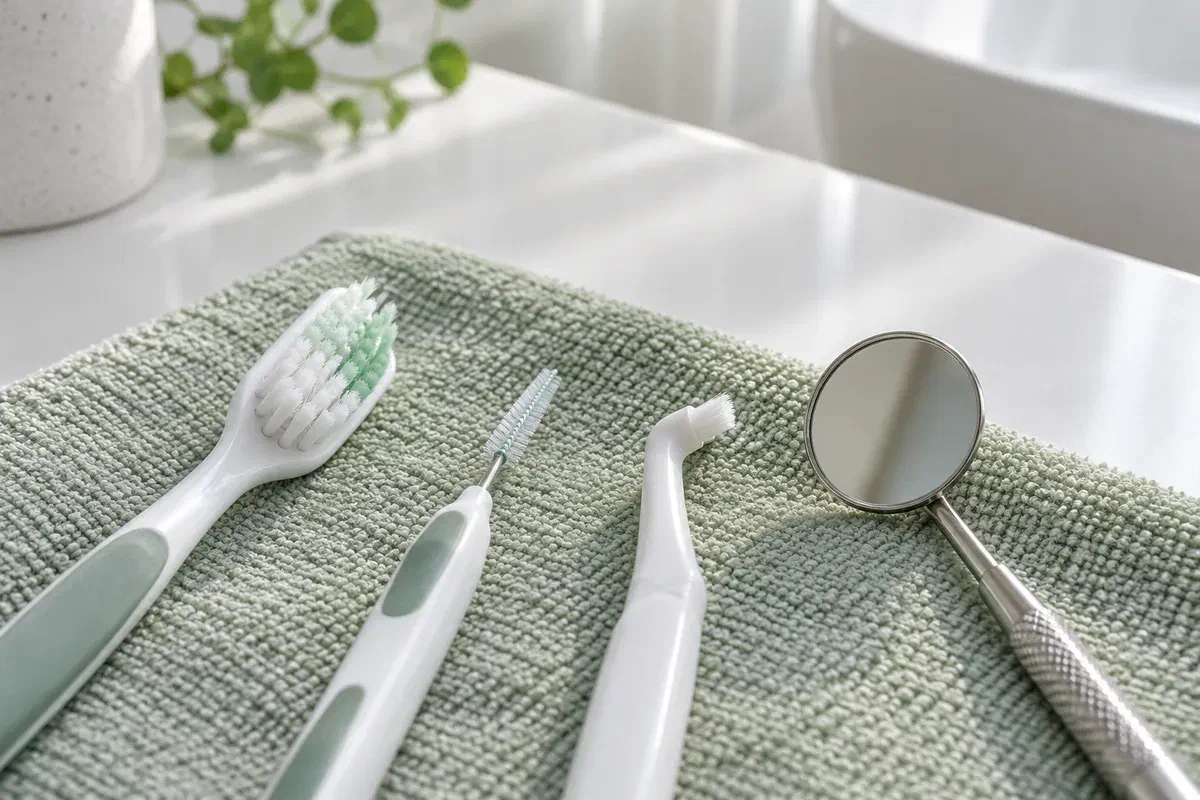
Soft toothbrush, interdental brush, single-tuft brush and dental mirror on a pale towel
What to mention before we begin

Make the visit useful for the areas you find difficult.

A specific example helps the team give specific advice. Whether it is a brush that will not fit, a bridge you cannot see beneath, or a sensitive area, show us the obstacle rather than quietly working around it.

You are uncertain which cleaning tool fits

Different spaces may need different approaches. Bring any tools you have tried and describe what happens when you use them, so the recommendation can account for access, comfort, and the restoration's contour.

Deposits remain despite regular brushing

Some areas need professional attention and a review of how deposits are collecting. Avoid scraping around the implant with household objects or buying a dental scaler to tackle a hard deposit yourself.

Previous cleanings have felt uncomfortable

Tell the team about sensitivity, anxiety, difficulty keeping your mouth open, or a strong gag response. Discuss pauses and comfort measures before care begins so the appointment can be planned around those concerns.

A loose implant restoration, swelling, persistent bleeding, or new pain needs assessment. Mention these symptoms when booking so the team can arrange the right type of visit.

What the appointment is intended to provide

Professional care that supports the work you do between visits.

Regular hygiene care creates an opportunity to remove deposits appropriately and review whether your cleaning reaches the necessary surfaces. It also gives you time to ask about products and technique with the actual restoration in view, rather than relying on a general demonstration that does not resemble your mouth.

The home routine remains an essential part of the plan. A professional appointment cannot compensate indefinitely for an area that is inaccessible or a method that is too difficult to repeat. The useful outcome is a combination of suitable care, an understandable routine, and a clear next step for any unresolved concern.

Patient information: European Federation of Periodontology — implant care and prevention

Choose tools for the space available

Ask the team to demonstrate the recommended approach and check your technique. The aim is effective access without forcing a brush, leaving an important surface untouched, or making the routine unnecessarily complicated.

Connect cleaning with tissue observations

The condition around an implant helps guide the conversation about care. If an area bleeds or remains tender, ask what that finding means and whether it needs monitoring, further assessment, or a specific treatment plan.

Adapt care when your circumstances change

Changes in vision, grip, coordination, or caregiver support can affect cleaning. Discuss them openly so the team can consider a manageable method and appropriate professional support rather than repeating instructions that no longer fit.

Your hygiene appointment, explained

Review, clean, demonstrate, and make a follow-up plan.

The order and extent of care depend on your restoration and findings. Ask what the appointment includes, whether a separate examination is needed, and how the team will help if an area feels sensitive.

  1. Talk through the restoration and routine

    The team reviews relevant health information, implant treatment history, and your current cleaning methods. Mention recent repairs, attachment changes, or instructions from another clinician that may affect the approach to care.

  2. Assess access and the surrounding tissues

    The implant areas and other parts of the mouth are checked as appropriate. Findings help identify where deposits collect, whether the routine reaches those areas, and whether additional dental assessment should be arranged.

  3. Provide cleaning suited to the implant restoration

    The clinician selects appropriate instruments and techniques for the surfaces being treated. Explain discomfort as it occurs and use the agreed pause signal; the exact care may differ from another patient's appointment.

  4. Practise the home method and confirm review

    Ask to try the recommended tools and have the technique checked. Clarify which products to use, where to focus, and when to return, including any separate follow-up needed for a finding identified during the visit.

Making the visit count at home

Keep the routine simple enough to use every day.

Follow the advice provided for your own restoration. If a new technique is difficult after you leave, contact the clinic for clarification rather than repeatedly forcing the tool or giving up on that area.

Use the recommended size and technique

A cleaning aid should suit the space and intended route. Do not assume a larger brush cleans better or that a tool suitable beneath one bridge can be used in exactly the same way around every implant.

Keep caring for natural teeth as well

Implant restorations and natural teeth share the same mouth but have different structures. Continue the recommended fluoride toothpaste and tooth-cleaning routine, alongside the specific access methods shown for your implant areas.

Follow up on persistent discomfort or bleeding

Ask what to expect after the care you receive. Contact the team about ongoing or worsening symptoms, and attend any planned reassessment rather than assuming the next routine cleaning will address an unresolved problem.

Choosing the appropriate visit

Cleaning, disease assessment, and repair serve different purposes.

An implant hygiene appointment can help identify a concern, but not every finding can be resolved within that visit. The team should explain what belongs in ongoing hygiene care and what needs a separate assessment.

For continuing professional support

Routine implant hygiene care

Appropriate cleaning and home-care coaching support an established restoration. The visit interval and areas of emphasis are based on your needs and previous findings.

When gum changes need explanation

Assessment of inflamed tissues

Persistent bleeding, swelling, or other tissue findings may need a defined diagnosis and treatment plan. Routine cleaning should not substitute for investigating a concern about implant support.

When movement or damage affects care

Restoration or attachment assessment

A loose crown, altered denture attachment, or damaged bridge may require repair planning. Explain the mechanical concern so it can be assessed before assuming the difficulty is only a cleaning issue.

Questions before an implant hygiene visit

Bring the awkward cleaning questions, too.

The appointment is a useful place to discuss the small details that affect daily care. Ask for a demonstration, repeat an instruction, or explain why an earlier recommendation has been difficult to follow.

(905) 876-4488
Can the same hygiene appointment include my implants and natural teeth?
Often the care can be coordinated, but the appointment needs to allow for your overall condition and any additional treatment required. Tell the clinic about your restorations and concerns when booking so the appropriate assessment and time can be arranged.
Should I bring my interdental brushes to an implant hygiene appointment?
Yes, that can make the discussion more practical. The team can see the sizes and designs you use, ask you to demonstrate, and explain any recommended change. Bring packaging or product names if carrying the items is inconvenient.
Can I use one interdental brush size around every implant restoration?
Not necessarily. The available spaces and restoration contours vary. Ask the clinician to show which tool and route suit each area. A brush that feels too tight should not be forced simply because it works well in another part of your mouth.
Will my implant hygiene appointment always involve removing the crown or bridge?
No. Many restorations are assessed and cleaned in place. Whether professional removal is needed depends on the design and the clinical reason. If access is inadequate or another problem is suspected, the dentist should explain the options and any separate procedure.
Can an oral irrigator replace every other way of cleaning around my implant?
Do not assume it replaces the full routine. It may be useful for some people, but the recommendation depends on the restoration and what needs cleaning. Ask how it fits with brushing and any other methods demonstrated for your particular mouth.
What if I have missed implant hygiene appointments for a long time?
Arrange a review and explain any symptoms or difficulties. The team can assess your current needs and help restart a workable routine. Do not postpone because you are embarrassed; a longer gap may mean the first visit needs additional assessment before continuing maintenance.
Implant hygiene appointments in Milton

Make your next visit useful beyond the dental chair.

Book at our Bronte Street clinic to discuss professional implant hygiene care and a daily routine you can manage. Bring your questions and current cleaning tools so the guidance can address the areas that matter to you.

Tell us which implant restorations you have and whether you are experiencing discomfort, bleeding, or movement.

Visit Milton Dental Clinic
Unit 1, 342 Bronte St. S, Milton, ON L9T 5B7
Get directions Clinic hours
Monday–Thursday
11am–7pm
Friday–Sunday
By appointment only

How can we help?

Milton Dental Clinic

Have a question about your smile? Choose the option that works best for you.

For urgent dental concerns, please call.
Messages are reviewed during clinic hours.