Every aid you’ve tried has disappointed
Often the problem is size or angle, not effort. Bring the aids you own and describe what goes wrong, so recommendations account for access, comfort, and the contour of your restoration.


Standing in the pharmacy aisle wondering which brush suits your implant? Implant hygiene visits for people from Acton sort out the tools question in your own mouth, alongside professional cleaning for your crown, bridge, or overdenture.
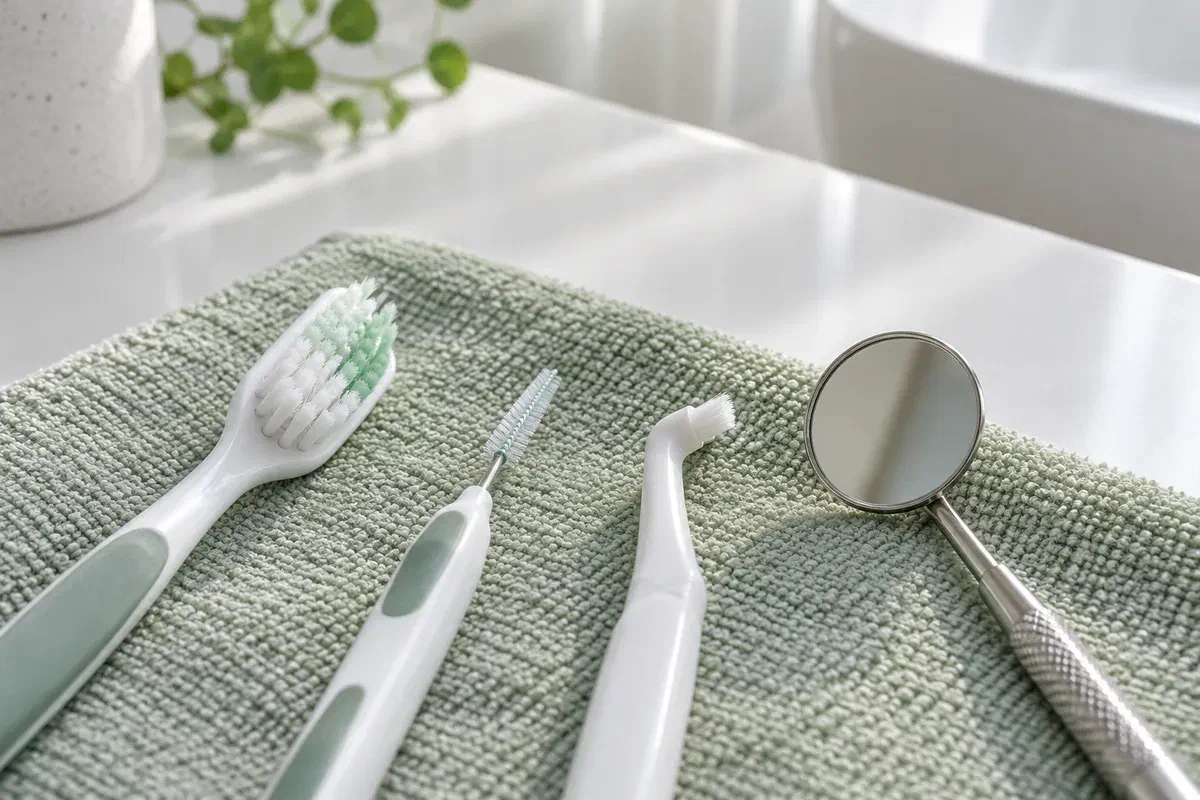
Shelves are full of interdental brushes in a dozen sizes, threaders, tufted floss, single-tuft brushes, and water flossers. Choosing among them is hard without seeing your own restoration up close. A single crown, a bridge joined across several implants, and a snap-on overdenture each present different spaces, and the right aid for one may be useless for another.
An implant hygiene appointment answers that question with your mouth in front of the clinician. The team checks the tissue, locates deposits, and asks where cleaning feels hardest, then suggests aids for the spaces that exist. Findings that call for the dentist’s examination or a separate treatment plan should be pointed out clearly rather than tucked into the cleaning.
If you’re coming from Acton, bring the whole collection, including the gadgets you bought and abandoned. Showing what didn’t work is just as useful as showing what did. Demonstrate your usual technique, say what pinches or catches, and try any recommended aid in the chair before buying more.
Specific stories get specific answers. Let the team know about the brush that bent on the first try, the bridge you can’t thread under, or the spot that stings, at the beginning of the appointment.
Often the problem is size or angle, not effort. Bring the aids you own and describe what goes wrong, so recommendations account for access, comfort, and the contour of your restoration.
Calculus needs professional cleaning and some thought about why it forms in one spot. Don’t try to remove it yourself with sharp objects or a scaler from an online shop.
Mention sensitivity, nerves, difficulty holding your mouth open, or a strong gag reflex. Breaks and comfort measures can be agreed before anything begins so the visit is shaped around you.
Pain that’s new, swelling, recurring bleeding, or a restoration that shifts should be assessed. Mention it when you call so the team can plan the appropriate appointment.
Professional hygiene care lets deposits be removed with suitable methods and shows whether your current tools reach the surfaces that matter. It’s also the best time to ask about products, because the clinician can point to the exact space each one is meant for, rather than you guessing from the packaging.
Your home routine is still where most cleaning happens. No appointment can keep making up for a gap that never gets reached or a method too fussy to repeat. What you want is suitable professional care, a few tools you know how to use, and a clear next step for any unresolved concern.
Patient information: European Federation of Periodontology — implant care and prevention
Ask the team to fit and demonstrate each recommended aid and to check how you use it. Good cleaning reaches the surface without forcing, skipping important spots, or adding steps you’ll drop.
The tissue around an implant affects which approach makes sense. When a spot bleeds or stays sore, find out what it signals and whether the next step is watching it, assessing it further, or a specific plan.
New glasses, weaker hands, a tremor, or different help at home can make some aids impractical. Raise it so the team can suggest easier options and appropriate professional support.
What’s done depends on your restoration and on the findings. Ask what the visit covers, whether a separate examination is needed, and how any tender areas will be treated.
The team reviews your health details, implant history, and what you use at home. Mention recent repairs, attachment changes, or recommendations from another clinician.
The implant areas and other parts of your mouth are examined as appropriate. This shows where deposits gather, whether your tools reach them, and whether anything warrants a closer look by the dentist.
The clinician uses instruments and techniques suited to the surfaces. Say if something feels uncomfortable, or raise a hand as arranged to stop for a moment; no two appointments are identical.
Practise with the recommended tools while the team watches. Confirm exactly which products and sizes to buy, which areas to prioritise, and when to return, plus any separate follow-up.
Stick with the advice given for your restoration. If a new aid becomes awkward at home, call the clinic for help rather than forcing it or quietly putting it back in the drawer.
Each aid is chosen for a specific space. A bigger brush isn’t automatically better, and an aid that slides under one bridge may need a different route around another implant.
Your own teeth and implant restorations are built differently. Continue fluoride toothpaste and regular tooth cleaning alongside the implant techniques you practised.
Ask what’s normal after your care. Contact the team about bleeding or discomfort that continues or worsens, and keep any reassessment instead of saving the problem for a routine visit.
Small practical points often decide whether a routine lasts. Ask for another demonstration, ask for product names written down, or explain why something didn’t work.
Visit our Bronte Street practice for professional implant cleaning and help narrowing down the tools that suit you. Bring everything you currently use so the advice can focus on the aids worth keeping.
Let us know which implant restorations you have and if you’ve noticed soreness, bleeding, or movement.
