Not knowing which aid to trust
One space might take an interdental brush while another needs floss with a stiff end. Bring what you have and describe the results, so recommendations reflect reach, comfort, and the restoration’s outline.


A little pink on the brush near an implant is easy to ignore and worth mentioning. Implant hygiene visits for people from Brampton look at the gum, clean the restoration properly, and help you work out what that bleeding is telling you.
Bleeding while you clean around an implant does not automatically mean something serious, but it shouldn’t be brushed aside. It can reflect plaque collecting where your routine doesn’t quite reach, or tissue inflammation that needs a proper look. A crown, a bridge, and an overdenture each create different places for that to happen.
During the visit, the team examines the gum around your implants, checks where deposits are forming, and asks which spots you have trouble with. If what they see points toward a dentist’s assessment or a separate treatment plan, they should say so clearly rather than handling it as an everyday cleaning.
When you book from Brampton, mention how long the bleeding has been going on and when it tends to happen. On the day, bring the tools you use at home, demonstrate how you use them, and point out anything that catches or hurts. You can rehearse any change in the chair before you try it alone.
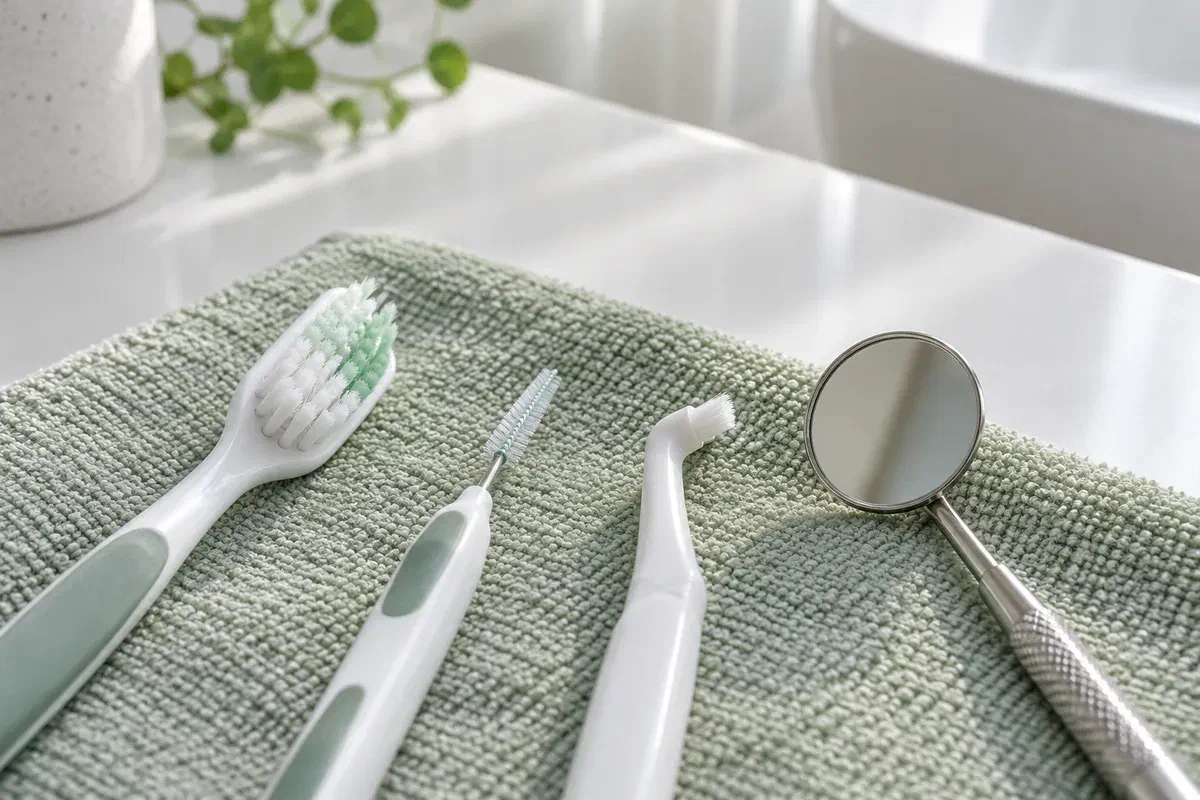
Precise information leads to precise suggestions. Explain which side bleeds, which brush won’t fit, or which part of the bridge you can’t reach, rather than waiting to see whether anyone notices.
One space might take an interdental brush while another needs floss with a stiff end. Bring what you have and describe the results, so recommendations reflect reach, comfort, and the restoration’s outline.
Hardened deposits around an implant need professional cleaning and a look at why they form there. Avoid scratching at them with pins, picks, or a scaling instrument bought on the internet.
If the gum is already tender, or you feel anxious, gag easily, or find it hard to stay open, say so first. Agreeing on pauses and comfort measures lets the team plan the visit around your needs.
Swelling, bleeding that won’t settle, new pain, or a restoration that moves needs to be assessed. Describe these signs on the phone so a suitable appointment is set up.
A professional visit allows deposits to be cleared in a way suited to the restoration and helps show whether your daily cleaning reaches the surfaces it needs to. You can also ask about products and technique while the clinician points to your actual implant work, which is more useful than advice that ignores the shape of your mouth.
Home care is still where most of the progress happens. Appointments can’t indefinitely offset an area that never gets cleaned, or a routine too awkward to repeat. A good result means suitable care in the chair, a routine that makes sense, and a clear next step for anything unresolved.
Patient information: European Federation of Periodontology — implant care and prevention
Ask the team to show the approach they recommend and then watch you try it. Effective cleaning reaches the surface without jamming a brush in, missing important areas, or making the routine longer than it needs to be.
The state of the gum around an implant shapes the care discussion. If a spot keeps bleeding or stays sore, ask what that indicates and whether it needs monitoring, closer assessment, or its own treatment plan.
Changing eyesight, grip, coordination, or home support can all make cleaning harder. Raise them so the team can find an easier method and the right professional support.
The order and depth of care depend on your restoration and what the team finds. Ask what’s included, whether a separate examination is needed, and how tender areas will be treated.
The team reviews your health information, your implant history, and how you clean. Tell them when the bleeding started, about any recent repairs, and about advice from another clinician.
The implant areas, and the rest of your mouth where appropriate, are examined. This shows where deposits collect, whether your routine gets there, and whether the dentist should arrange further assessment.
The clinician chooses instruments and methods for the surfaces involved. Let them know immediately if something hurts and use the pause signal agreed beforehand; care is tailored to you.
Try the recommended aids with the team checking how you use them. Confirm what to use, which areas need the most attention, and when to come back, including any follow-up for today’s findings.
Use the advice tailored to your restoration. If a new aid is tricky once you’re home in Brampton, call the clinic for guidance instead of forcing it or avoiding the area.
Each cleaning aid suits a particular gap and direction. A thicker brush won’t necessarily clean better, and a technique for one bridge may not apply around a different implant.
Natural teeth and implants coexist but are built differently. Keep up fluoride toothpaste and regular tooth cleaning, along with the methods shown for your implant areas.
Ask what to expect after your care. If bleeding or discomfort continues or worsens, contact the team, and attend any reassessment booked rather than waiting for the next routine cleaning.
Small practical points are often the key. Ask for a demonstration, ask the team to slow down, or explain why an earlier recommendation didn’t work out.
Our Bronte Street team can assess the tissue, clean around your restoration, and help you settle on a home method that holds up. Arrive with your current aids and a few notes on your symptoms, and the time will centre on what is bothering you.
Tell us which implant restorations you have and when you have noticed bleeding, discomfort, or movement.
