Confused about which aid goes where
A threader may suit one area and a single-tuft brush another. Bring the aids you have tried and explain what happens with each, so suggestions reflect comfort, reach, and the contours of your restoration.


Clip-in overdenture, fixed bridge, or one crown: every implant design has its own hidden edges. Implant hygiene care for Burlington households combines professional cleaning with a hands-on lesson in reaching the parts you can’t easily see.
Take out an implant overdenture and you face two jobs: cleaning the denture itself and cleaning the attachments left in your mouth. A fixed bridge has an underside you never see. A single crown has a margin tucked into the gum. Each layout asks for its own approach, and a hygiene appointment is built around which one you have.
Professional care here means more than polishing visible enamel-coloured surfaces. The team checks the tissue, records where plaque and tartar are gathering, and asks you which areas feel hardest to clean. Anything that seems to need the dentist’s examination or a separate treatment plan is flagged clearly, not handled as though it were routine.
For people travelling up from Burlington, it helps to bring the whole kit. That means the denture case and brush if you wear an overdenture, or the threaders and interdental brushes you use around a fixed restoration. Show what snags, describe what stings, and practise any new step before you head home.
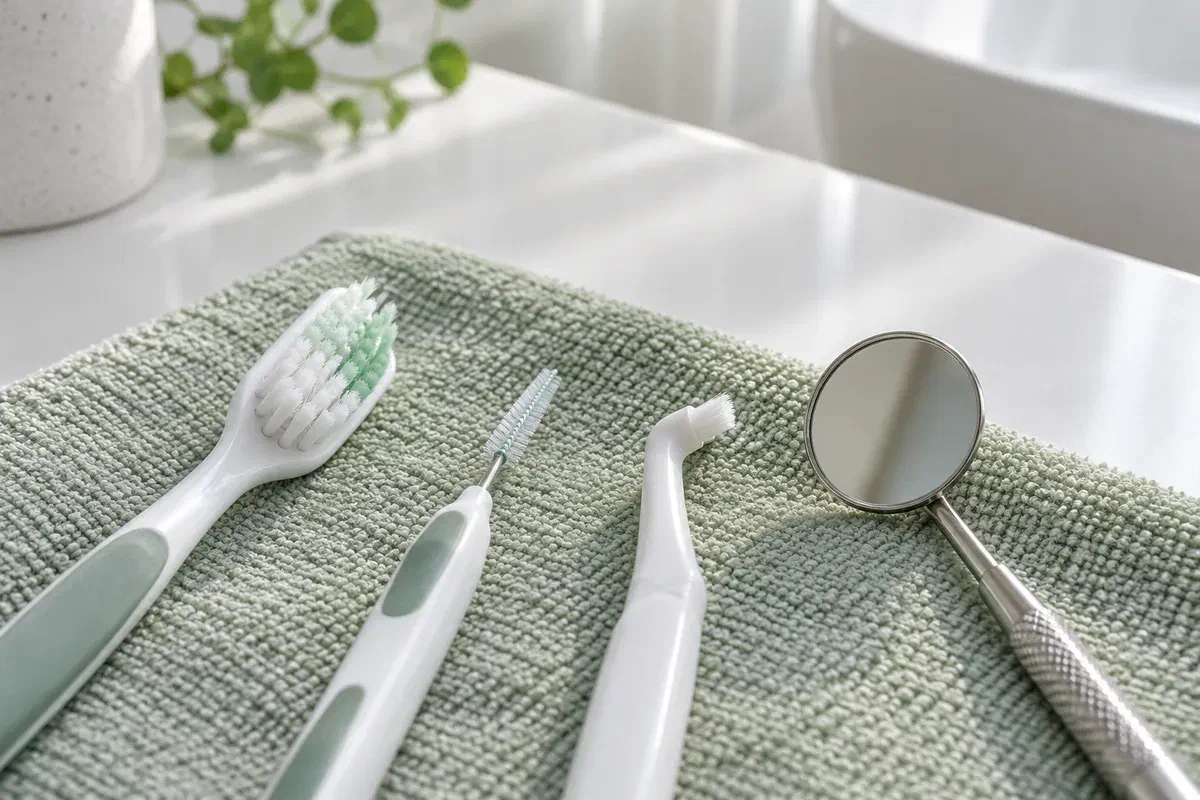
Specific examples lead to useful answers. A clip that seems to trap food, a bridge you can’t get under, or a tender spot along the gum are all good starting points for the conversation.
A threader may suit one area and a single-tuft brush another. Bring the aids you have tried and explain what happens with each, so suggestions reflect comfort, reach, and the contours of your restoration.
Hard buildup calls for professional cleaning and a look at why it collects. Please don’t try to chip it off with a knife tip, pin, or a scaler bought for home use.
Talk about sensitivity, nervousness, jaw strain, or a quick gag reflex before anything begins. Breaks and comfort measures can then be agreed in advance and the appointment planned with them in mind.
Looseness, swelling, bleeding that keeps happening, or fresh pain around an implant needs assessment. Mention it when booking so the team can set aside the right type of visit.
Routine professional care is a chance to remove deposits safely and to see whether your cleaning reaches the surfaces it needs to. It also gives you time to ask questions about technique and products with the clinician pointing at your actual restoration, which beats general instructions that may not match your mouth.
Your daily habits still do most of the work. Appointments, however regular, cannot keep compensating for an area that stays out of reach or a routine too complicated to repeat. A useful visit ends with suitable professional care, a method you understand, and a definite next step for anything still open.
Patient information: European Federation of Periodontology — implant care and prevention
Ask the team to show the method they suggest and then watch you try it. The goal is reaching the surface without forcing anything, skipping key areas, or adding steps you won’t keep doing.
Tissue around an implant tells the team a great deal. If something bleeds or stays sore, ask what the finding means and whether it needs watching, further assessment, or a dedicated plan.
Changes in eyesight, hand strength, or who helps you at home can make cleaning harder. Raise them so the team can recommend a manageable method and the right amount of professional care.
The details shift with your restoration and with what the team finds. Ask what the visit includes, whether an exam needs a separate booking, and how tender spots will be approached.
The team goes over your health history, implant treatment, and how you clean now. Mention recent repairs, replaced clips or attachments, or instructions from a surgeon or prosthodontist.
Implant areas, and other parts of the mouth as appropriate, are checked. Findings show where buildup forms, whether your cleaning gets there, and whether a further dental assessment is needed.
The clinician picks instruments and techniques that suit the surfaces involved. Speak up about discomfort as it happens and use the agreed pause signal; no two appointments look exactly alike.
Practise the suggested method while the team checks your technique. Confirm which aids and products to use, where to focus, and when to return, plus any separate follow-up for today’s findings.
Stick to the advice given for your particular restoration. If a new technique feels clumsy at home, ring the clinic for help instead of forcing the aid or quietly abandoning that area.
Each aid is chosen for a specific gap and route. Bigger does not mean cleaner, and an aid that works beneath one bridge may need a different path around another implant.
Your own teeth and your implant restorations are built differently. Keep using fluoride toothpaste and your regular tooth-cleaning habits as well as the implant-specific steps you were shown.
Ask what is normal after your care. Contact the team if symptoms continue or get worse, and keep any reassessment rather than hoping the next routine cleaning will resolve it.
The fine details usually decide whether a routine lasts. Ask to see something again, ask what a term means, or explain why earlier advice was hard to follow.
Book at our Bronte Street practice for professional implant hygiene care and a home routine you can stick with. Bring the aids you use now so the advice is aimed squarely at the areas you find hardest.
Let us know whether you have a crown, bridge, or overdenture on implants, and whether anything feels sore, bleeds, or moves.
