Your current aids no longer seem to reach
If a brush that once worked now misses or catches, bring it along and explain what has changed. Advice can then account for reach, comfort, and the current contour of your restoration.


An odd taste, a bit of food trapping, a crown that feels slightly different: is that a cleaning issue or something more? For people in Bolton and across Caledon, implant hygiene visits help sort routine upkeep from symptoms that need a closer look.
Small changes around an implant are easy to second-guess. Food might start catching beside a crown, a bridge might leave a faint taste, or an overdenture might seem to sit differently. Sometimes the cause is plaque in a hard-to-reach spot that better cleaning can address. Other times it’s a signal that something needs assessment.
An implant hygiene appointment is a good place to sort out which is which. The team examines the tissue around each implant, looks for deposits, and asks what you’ve noticed and when. Professional cleaning is carried out as appropriate, and if the findings point toward a dentist’s examination or a separate treatment plan, you should be told that clearly.
If you’re driving in from Caledon, a quick call first can save a wasted trip. Describe the change so the team can book the right kind of visit. When you come in, bring your cleaning aids, show how you use them, and point to where the problem seems to be. Practise any new technique before leaving.
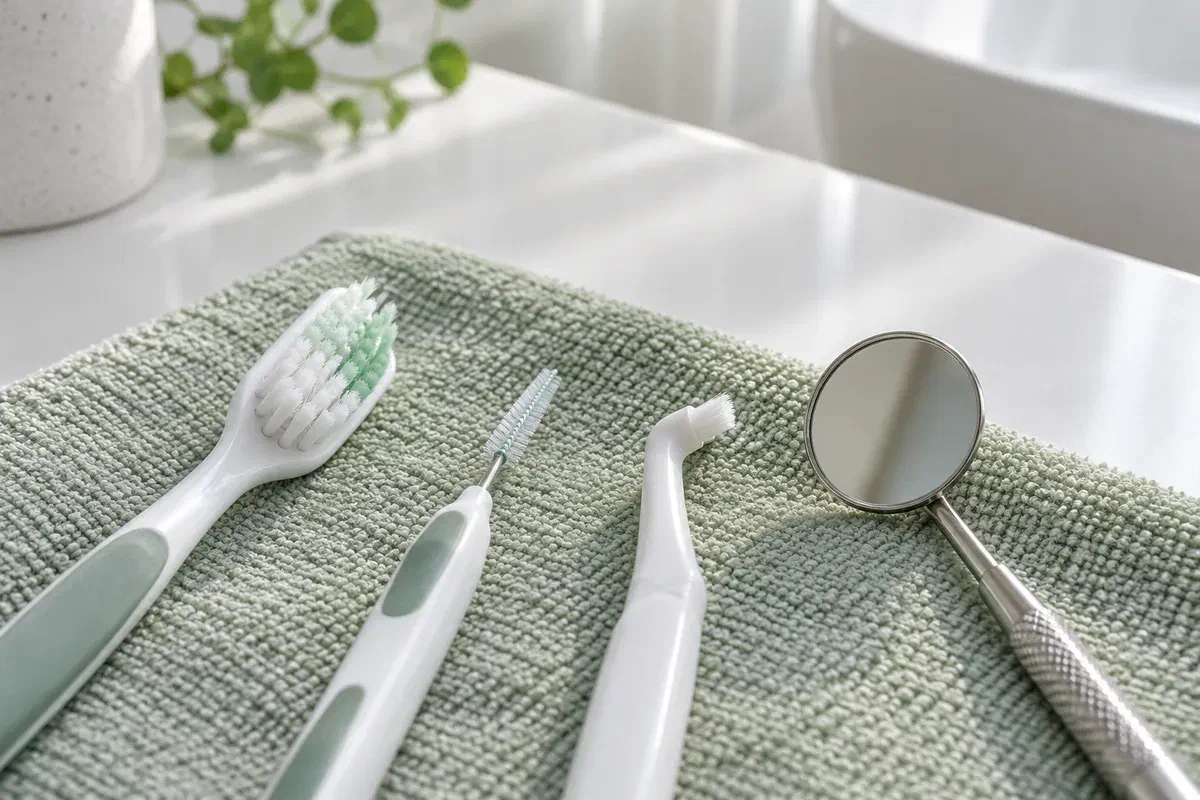
Details help the team plan the appointment. Note when food trapping started, which side tastes odd, which aid no longer seems to work, or where the gum feels tender.
If a brush that once worked now misses or catches, bring it along and explain what has changed. Advice can then account for reach, comfort, and the current contour of your restoration.
Rough or hard deposits need professional cleaning and a look at why they’re forming. Don’t try to scratch them off with pins, knives, or a scaling tool purchased online.
If sensitivity, anxiety, jaw strain, or gagging have kept you away, say so. Pauses and comfort measures can be agreed beforehand so the visit is organised around those concerns.
Swelling, bleeding that doesn’t stop, worsening pain, or a restoration that moves should be assessed promptly. Call to describe these symptoms so the team can advise on the appropriate appointment.
In the chair, deposits are cleared using methods suited to the restoration, and you find out whether your home routine is reaching the right surfaces. It’s also a chance to describe what you’ve noticed and ask questions while the clinician looks at your actual restoration, so the explanation fits your situation rather than a general one.
Your daily routine remains central to keeping implants healthy. Appointments can’t indefinitely offset an area that never gets cleaned or a method that’s too awkward to manage. The best outcome is suitable care, a routine that makes sense to you, and a clear plan for any finding that needs follow-up.
Patient information: European Federation of Periodontology — implant care and prevention
Ask the team to demonstrate a suitable method for the spot that’s bothering you and to watch you try it. The aim is good access without forcing a brush or missing nearby surfaces.
The gum around an implant helps the team interpret symptoms. If an area bleeds or remains sore, ask what the finding suggests and whether monitoring, further assessment, or treatment is recommended.
Changes in eyesight, dexterity, health, or support at home can affect cleaning. Bring these up and the team can work out an easier method and the right level of professional help.
The steps depend on your restoration and what is found. Ask what today’s appointment covers, whether a separate exam is needed, and how sensitive areas will be handled.
The team reviews your health information, implant history, and routine, and asks about recent changes. Mention when symptoms started, any repairs, and advice from another clinician.
The implant areas and the rest of your mouth are examined as appropriate. Together with what you’ve described, this helps explain the change and shows whether more assessment is warranted.
The clinician chooses instruments and methods for the surfaces involved. Speak up about discomfort and use the agreed pause signal; your appointment is planned around your needs.
Practise any recommended aids with feedback. Confirm your aids, the trouble spots to prioritise, and a return date, and make sure you understand any separate follow-up being suggested.
Follow the advice for your restoration. If a technique becomes difficult or a symptom returns, call the clinic for guidance rather than forcing an aid or waiting it out.
Each aid suits a specific space and direction. A bigger brush isn’t necessarily better, and the angle you use at one implant won’t always suit the next.
Your own teeth and your implant work are built differently. Continue fluoride toothpaste and regular tooth cleaning alongside the implant-specific methods shown at the visit.
Ask what to expect after care. If bleeding, soreness, food trapping, or an odd taste persists or returns, contact the team, and keep any reassessment you’ve been given.
Small details help the team advise you. Describe what you’ve noticed, ask for a demonstration, or explain why a past suggestion hasn’t worked.
Call our Bronte Street practice to discuss what you’ve noticed and arrange implant hygiene care that fits the concern. Bring your cleaning aids and notes on any symptoms so the appointment can focus on what’s changed.
Tell us about your implant restorations and any bleeding, discomfort, food trapping, unusual taste, or movement.
