You’ve lost track of which aid to use
Instructions from years ago are easy to forget. Bring whatever tools you have left and describe how they feel, so new guidance considers reach, comfort, and the shape of the restoration.


Let your implant check-ups slide for a season or two? Implant hygiene appointments for Campbellville households are a judgement-free way back: an honest look at the tissue, professional cleaning, and a routine that fits rural life.
Life on a rural property has a way of filling every free afternoon, and a maintenance appointment for a tooth that isn’t hurting is easy to postpone. Meanwhile plaque keeps collecting along the margin of a crown, beneath a bridge, or around the clips of an overdenture, often without any obvious sign.
Coming back after a gap starts with a careful look. The team examines the gum around each implant, notes where deposits have built up, and asks how cleaning has been going. A longer absence may mean the first visit includes more assessment. If anything needs the dentist’s examination or its own treatment plan, that should be explained openly.
For a household in Campbellville, honesty helps more than a tidy story. Tell us roughly how long it’s been and what your routine has slipped to. Bring the aids you still have, show where cleaning has become difficult, and practise any revised method before you head home, so restarting feels manageable.
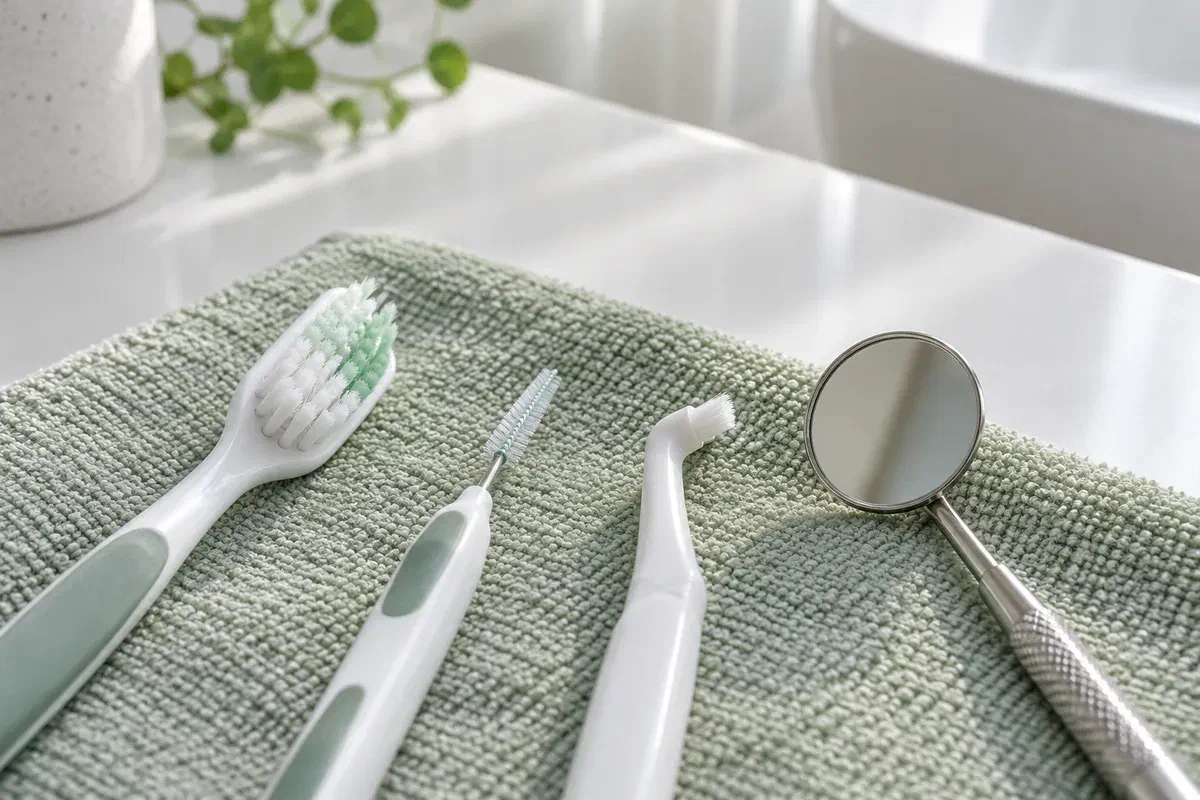
Clear details help the team focus. Mention a brush you stopped using, a bridge that now traps food, or a spot that’s become tender, and the advice can start where you really are.
Instructions from years ago are easy to forget. Bring whatever tools you have left and describe how they feel, so new guidance considers reach, comfort, and the shape of the restoration.
Calculus that forms over months needs professional removal and a review of where it collects. Avoid trying to pick it away with a knife, pin, or a scaling tool from the internet.
A longer gap can make people nervous. Mention sensitivity, anxiety, a tired jaw, or a strong gag response, and agree on breaks and comfort steps beforehand so care is paced for you.
If you’ve noticed swelling, persistent bleeding, new pain, or a restoration that moves, mention it when you call. These need assessment, and the team can book the right kind of appointment.
A professional visit allows deposits that have built up to be removed with suitable methods, and shows whether your home cleaning is reaching the necessary surfaces. It also gives you space to ask about products and technique with your restoration in view, instead of relying on half-remembered advice.
Home care carries the weight between appointments. No number of visits can keep making up for an area that’s never reached or a method that’s too much hassle to repeat. Aim to leave with the cleaning done, a practical routine you understand, and a definite plan for anything still unresolved.
Patient information: European Federation of Periodontology — implant care and prevention
Ask the team to demonstrate a recommended method and to watch your attempt. The aim is good access without forcing a brush, ignoring important areas, or creating a routine you’ll abandon.
The condition of the gum around an implant shapes your plan. If an area bleeds or remains tender, ask what that means and whether it should simply be watched, looked at more closely, or treated under a dedicated plan.
Busy stretches, changes in eyesight or grip, and changes in household help can all affect cleaning. Talk about them so the team can suggest a manageable method and a sensible recall interval.
Care depends on your restoration and findings, and on how long it’s been. Ask what’s included today, whether a separate exam is needed, and how sore spots will be handled.
The team reviews your health information, implant history, and current routine. Mention any repairs, attachment changes, new medications, or advice from another clinician since your last visit.
Implant areas and the rest of your mouth are checked as appropriate. This shows where deposits are sitting, whether your routine reaches them, and whether more assessment should be booked.
The clinician chooses instruments and methods suited to the surfaces involved. Speak up about discomfort as it happens, and stop the clinician with your agreed signal whenever you need a break.
Have a go with each suggested aid and let the hygienist correct your angle or pressure. Confirm what to use, what to focus on, and when to return, and ask for a reminder if you tend to lose track of dates.
Follow the advice for your own restoration. If a technique becomes tricky after you get home, call the clinic and ask, rather than forcing the aid or letting that area go again.
Each tool suits a particular space and angle. A larger brush won’t necessarily clean better, and a tool that works beneath one bridge may need another approach around a different implant.
Your own teeth and your implant work are built differently. Continue using fluoride toothpaste and the tooth-cleaning routine recommended, as well as the implant-specific steps you practised.
Ask what to expect after care. Contact the team if bleeding or tenderness lingers or worsens, and attend any reassessment you were booked for instead of waiting for the next routine visit.
Practical details make restarting easier. You’re welcome to request a demonstration, have instructions repeated, or explain what made the old routine hard to keep.
Call our Bronte Street office to restart implant maintenance with a thorough clean and a routine that holds up through busy seasons. Bring any aids you still have and your questions, and we’ll start from where you are.
Let us know roughly how long it has been, what type of implant work you have, and any bleeding, soreness, or movement you’ve noticed.
