You need replacement teeth you never have to remove
For a stretch of adjoining missing teeth, fixed replacement may be discussed if implants can be positioned beneath it. Ask how that changes your routine at the end of a long day outdoors.


Implant treatment rarely fits neatly around a working rural life, so timing deserves as much thought as the clinical plan. For adults in Campbellville considering a fixed bridge on implants to replace neighbouring teeth, here is how suitability, healing periods, appearance and ongoing care fit together.
On a rural property, some weeks simply cannot be spent resting. That is worth saying out loud before planning an implant-supported bridge, which replaces a row of missing teeth with one fixed, connected restoration held by implants in the jaw. It works without borrowing support from the natural teeth beside the gap, but it does unfold over months, with surgery and healing along the way.
Inside that timeline, the clinical choices are made carefully. Bone volume, the length of the space, the way your teeth come together, the visible result and your ability to clean beneath the bridge all decide how many implants are suggested and where they sit. Two neighbours with similar gaps can still need quite different designs.
Our Bronte Street practice is within the same municipality as Campbellville, so a first visit is straightforward to arrange. Tell us when your busy periods are, how the gap affects chewing and speech, and whether you wear a partial. We will explain the treatment, the healing windows and the long-term care, so you can choose a sensible time to start.
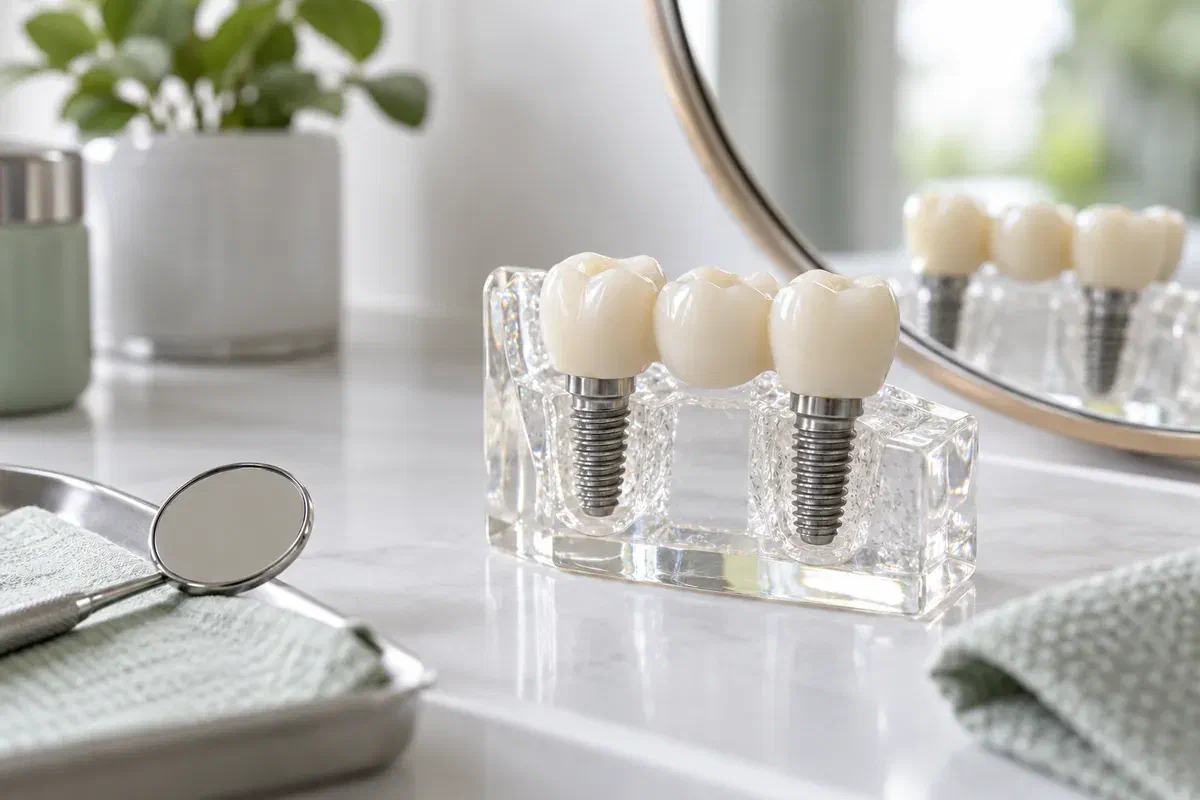
Where the gap is and how healthy the rest of the mouth is determine what is possible. Share your priorities, including timing, so chewing, appearance and practical upkeep can be weighed with you.
For a stretch of adjoining missing teeth, fixed replacement may be discussed if implants can be positioned beneath it. Ask how that changes your routine at the end of a long day outdoors.
Implants can provide the support, so adjoining teeth need not be shaped as anchors. Expect them to be checked anyway, since their health can still steer the plan and the alternatives.
Maybe it shifts when you are talking outdoors, or you leave it at home on the counter. An implant bridge should be weighed against those practical frustrations, not assumed to solve every problem.
When teeth remain where a bridge is being planned, their diagnosis and any realistic option to keep them should be talked through before extraction is written into the proposal.
When conditions are right, implants give a joined row of replacement teeth its own footing, so nothing hooks onto the neighbours and nothing comes out at night. That steadiness is the main attraction. How much difference it makes to your chewing and comfort is something your dentist should estimate frankly for your mouth.
Stability is paid for with time and responsibility. There is surgery, which has risks of its own, a healing interval with checks along the way, and the likelihood that some part of the bridge needs servicing years from now. Set that beside a removable partial, a conventional bridge on natural teeth, or holding off until a quieter season.
Patient information: American Academy of Periodontology — multiple-tooth implant replacement
Every support in the plan should have a job, whether that is carrying chewing load at the back or holding the end of the span. If the reasoning is unclear, ask before agreeing to the layout.
Colour, tooth length and the way gum meets bridge are easier to adjust early. Ask whether a temporary version will let you see the shape first, and where your own tissue sets the limits.
Threading beneath joined teeth is a skill. Trying it with a model or a demonstration before treatment tells you a lot about whether the daily routine will be realistic for you.
No two schedules are identical, because the site, any groundwork and your own healing all set the pace. Ask for a written outline with visit counts, interim tooth arrangements, the people involved and the estimate, so you can mark a calendar.
Expect an examination of the teeth, gums and bite, a review of your health history and any scans needed for planning. This is also when alternatives, limits, referrals and your preferred start date are talked through.
The proposed implant sites, any site preparation and how surgery will be done are described in advance. Ask which days afterward call for lighter activity. Moving on depends on confirmed healing and firm support.
Once the implants are ready, records go to the laboratory. At try-in visits the team looks at seating, the line-up of teeth, how you bite and how the gums sit, sometimes using a temporary bridge first.
On the final visit the bridge is secured with its planned connection. You leave with a cleaning demonstration, notes on settling in and review dates that can be booked around your commitments.
What you do in the days after surgery is different from what you do for years with the finished bridge. Ask for written instructions for each phase, covering food, activity, cleaning and when to come back.
Store your threaders or interdental brushes where you will actually use them. Joined teeth block ordinary floss, so the under-bridge clean needs its own tool and a little practice.
If the bridge seems to move, makes a new sound, chips or changes how your teeth meet, call and describe it so you know whether to come in. Leave it alone in the meantime and skip any home repair.
Implants, joins and the surrounding gum all benefit from routine checks. Booking the next review before you leave makes it easier to fit around busy seasons.
Most questions about implant bridges come down to support, looks and scheduling. Use these answers as a starting point for your own consultation rather than a fixed rule for every gap.
Reserve a first appointment with Dr. Anjum to talk about the missing teeth and when treatment could realistically fit your year. You will hear what an implant bridge would need, how long the stages run and how it measures up against simpler options.
Bring any notes on past extractions, implants or appliances in the area, and a rough idea of your busiest months.
