You are leaning toward something fixed
With several neighbouring teeth gone and room to plan implants, a fixed span can be a realistic goal. Ask what it involves to keep it clean and how often it would be reviewed by the team.


You do not have to decide about an implant bridge at the first appointment. Understanding the choices, including waiting, often makes the decision easier. For adults from Erin and Hillsburgh, this page explains how a fixed bridge on implants is assessed, staged, designed and maintained.
Some people arrive certain they want implants. Others just want to know whether doing nothing is safe. Both are reasonable starting points. An implant-supported bridge is one of several answers for a row of missing teeth: a fixed set of joined replacement teeth carried by implants in the jaw, with no reliance on the natural teeth that border the gap.
To judge whether it fits, the dentist gathers facts first. How much bone is there? How long is the span? How do your teeth meet, what will be visible, and can you reach underneath to clean? The answers decide how many implants a bridge would need and where. They also clarify what may happen if you wait, which is part of a fair comparison.
From Erin, it often helps to treat the first visit to our Bronte Street practice as information only. Tell us how the gap affects eating and speaking, what you think of any partial you have, and what is making you consider treatment now. You will leave with options and trade-offs to talk over at home, with no pressure to choose that day.
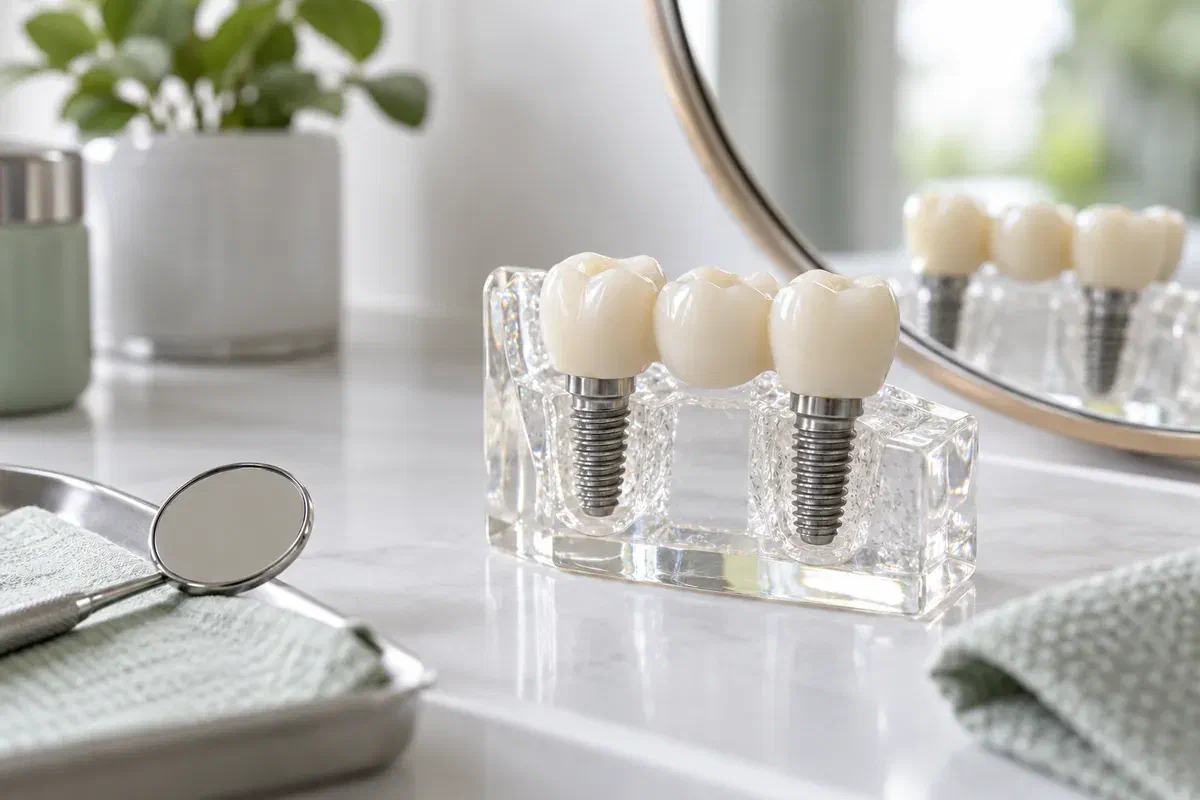
The location of the gap and the health of nearby teeth and gums decide the realistic choices. Your priorities, including how soon you want to act, help us weigh function, looks, schedule and daily care.
With several neighbouring teeth gone and room to plan implants, a fixed span can be a realistic goal. Ask what it involves to keep it clean and how often it would be reviewed by the team.
Implants do the supporting, so the teeth on each side need no preparation for this design. They are examined regardless, and their condition may shift both the plan and the urgency.
Maybe a partial works but you rarely wear it. Explain what makes it tolerable rather than good, so any new plan targets those exact shortcomings instead of promising to fix everything.
Where teeth remain in the area, deciding whether they can reasonably be kept comes before any talk of extraction. That decision deserves a proper diagnosis, not a quick assumption.
In a suitable mouth, implants let a row of replacement teeth stay in place without touching the neighbouring teeth. The span is shaped for your gap and bite. Ask your dentist to describe a realistic result, including what might still feel or look different from your natural teeth.
Going ahead means taking on a sequence and a long-term routine. Surgery has risks, healing is monitored, and the bridge may need repairs in later years. Set those commitments beside a partial, a tooth-supported bridge or a considered decision to wait and review the area again.
Patient information: American Academy of Periodontology — multiple-tooth implant replacement
Implants, replacement teeth and bite forces are planned as one system. If a plan proposes a particular spacing, ask what led to it so you can judge the reasoning rather than the count.
Shade, proportion and the meeting point between bridge and gum are all part of the result. Ask whether a temporary version can preview them, and where your tissue may set limits.
A span of joined teeth needs a nightly clean underneath. Trying the tools before deciding is one of the most useful ways to tell whether this option fits your routine.
Time between stages depends on the site, preparation and healing. Before you commit, ask for a written plan with the expected visits, interim tooth arrangements, the clinicians involved and costs for each phase.
Your dentist checks teeth, gums, bite and medical history and arranges imaging where planning depends on it. Every realistic option, including waiting, is discussed, along with whether a referral would help.
If you go ahead, implant sites, any groundwork and the surgical approach are explained beforehand. The restorative stage begins only after healing is confirmed and the implants are firm.
The lab works from impressions or scans. Try-in visits check how the bridge seats, how the teeth line up, how you bite and how it sits against the gum, sometimes with a provisional along the way.
The completed bridge is fastened with its planned connection. You receive a cleaning lesson, guidance on getting used to it and a review schedule for both the bridge and implants.
After surgery there are short-term healing instructions; after the bridge is fitted there is a lasting routine. Keep the two apart and follow your team’s advice on food, cleaning and recall visits.
Keep threaders, interdental brushes or a water flosser by the sink. Because the teeth are joined, regular floss will not pass between them, so practise the under-bridge route until it feels easy.
Slight movement, clicking, a chip or a bite that feels different is a reason to call. Describe what you notice rather than testing it, and never reach for household glue.
Booking your next review before leaving each appointment makes it easier to group visits from a distance. Ask what interval suits your gums and whether it should change over time.
Choosing how to replace several missing teeth is a decision about support, appearance and timing. These answers can help you think it through without assuming one design suits every gap.
Book a consultation at our Bronte Street practice to talk about the missing teeth and every reasonable way to replace them. We will explain what an implant bridge would require, what waiting might mean, and how the other options compare.
Bring notes on past extractions, implants or partials in that area, and a list of questions you want answered.
