You want teeth that stay where they are
A fixed bridge may be discussed for adjoining missing teeth when implants can be planned to support it. Ask what a fixed restoration means for cleaning at home and for future maintenance appointments.


Several missing teeth in a row may be replaced by one fixed bridge held on dental implants. Because the treatment spans multiple stages, anyone travelling from Etobicoke benefits from a well-organised plan. Learn how suitability, staging, temporary teeth, appearance and long-term care are handled.
When the clinic is a longer drive away, the shape of a treatment plan matters almost as much as the treatment. An implant-supported bridge replaces neighbouring missing teeth with one joined, fixed restoration that sits on implants in the jaw. It does not lean on the natural teeth at either end, and it is completed over a series of planned stages.
The layout of that bridge comes out of careful assessment. Your dentist looks at bone volume, the length of the gap, how your teeth come together, what will be visible and how you will reach beneath the bridge to clean it. Those details set the number and placement of implants, so a plan is tailored rather than copied.
For anyone making the trip from Etobicoke, it helps to raise logistics as soon as you sit down with us on Bronte Street. Ask which appointments can be combined, which ones need a quiet day of recovery afterward, and what to do if something comes up between visits. Tell us how the gap affects eating, speech and your smile, and bring any partial you wear now.
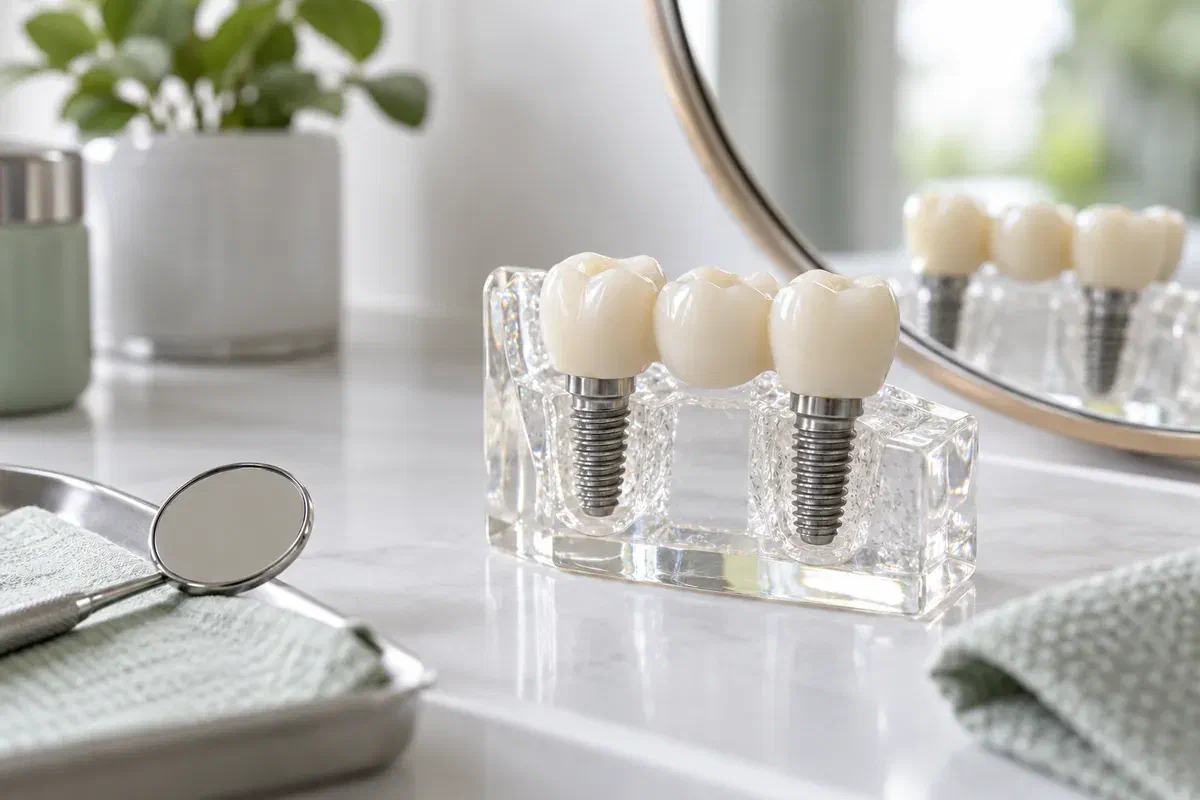
Where the gap sits and the health of the teeth around it determine what is possible. Bring your priorities, including timing and travel, so chewing, appearance and practical care can be weighed together.
A fixed bridge may be discussed for adjoining missing teeth when implants can be planned to support it. Ask what a fixed restoration means for cleaning at home and for future maintenance appointments.
Implant support can spare those teeth from preparation as anchors. They are still examined, and if they have problems of their own, that may influence the plan and the alternatives.
Tell us what is wrong, whether that is rocking, bulk or food working underneath. An implant bridge should be judged against those specific complaints instead of being assumed to fix everything.
Teeth still present in the proposed area need a clear diagnosis and a fair look at whether they can be kept before any extraction becomes part of the bridge plan.
If your bone and gums are suitable, implants can hold a fixed replacement for several consecutive teeth. It is shaped to your space and bite, and it keeps the neighbouring teeth separate from its support. Your dentist should explain the improvement that is realistic in your case, not a best-case promise.
Those benefits sit alongside stages and responsibilities. Surgery carries risks, healing has to be confirmed in person, and the bridge or its parts may need work later on. Weigh that against a partial you take out, a bridge on natural teeth or waiting, and consider how each fits your travel.
Patient information: American Academy of Periodontology — multiple-tooth implant replacement
Replacement teeth, implants and chewing forces are planned together. Ask for the reasoning behind the proposed spacing rather than judging the plan by how many implants it uses.
Tooth size, shade, gum contours and where the bridge meets your tissue all matter. A temporary bridge may let you judge these before the lab finishes the final piece, though your gums can set limits.
Every evening, each implant and the underside of the span need attention. Learning that routine before treatment helps you decide whether the design suits your hands and habits.
The order and timing depend on the site, any preparation and your healing. Ask for the expected visits, temporary teeth plan, clinicians involved and costs in one written outline you can plan around.
Your dentist reviews teeth, gums, bite and medical history and selects imaging. Alternatives, limitations and any need for a specialist opinion are covered, along with how visits might be grouped.
Proposed implant positions, preparatory work and the surgical approach are explained. Healing time varies, and the team must confirm stable support before the bridge stage moves ahead.
Impressions or scans guide fabrication. Fit, tooth arrangement, bite and gum relationship are reviewed, with a provisional bridge or additional checks when they genuinely add value.
The finished bridge is checked and secured using the planned system. You receive cleaning guidance, adaptation tips and a review schedule designed with your travel in mind.
Surgical healing advice and long-term bridge care are separate, so keep the instructions apart. Follow your team’s guidance on eating, cleaning and when to return, and know when to call before driving in.
Ask for a demonstration with tools sized for your bridge and practise before you leave. Standard floss usually will not slide through joined teeth the way it does between separate ones.
A wobble, clicking, a chip or an altered bite should be checked. Call to describe it so the team can advise on timing. Leave the bridge alone in the meantime rather than trying a home repair.
Bridge teeth, connections and the gums around each implant need regular assessment. Ask what interval suits you and whether past gum problems mean closer follow-up.
An implant bridge involves choices about support, appearance and scheduling. These answers can help shape your conversation without assuming one standard plan suits every gap.
Schedule a consultation about replacing several neighbouring missing teeth. We will review your priorities, describe what implant support involves, sketch how the visits could be organised around the drive, and set out the other options.
Bring X-rays, records of earlier extractions or implants, and any current partial if you can.
