Several teeth in a row are failing at once
If extraction is unavoidable, a fixed bridge on implants may be considered when support can be planned. Ask how treating the area as one span compares with handling each tooth separately.


Sometimes the teeth in question are not gone yet, just failing. Before anyone talks about an implant-supported bridge, those teeth deserve a fair diagnosis. For adults across Halton Hills, this page explains how keeping, replacing and bridging are weighed, and what the treatment and upkeep involve.
A cracked molar here, a loose premolar beside it, an old crown that keeps coming off. When a few neighbouring teeth are in trouble together, people naturally start asking about replacing the whole stretch. An implant-supported bridge is one possibility: a joined, fixed set of replacement teeth anchored to implants in the jaw rather than to the natural teeth around it.
Reaching that point responsibly starts with the teeth you still have. Each one should be diagnosed, and realistic ways of keeping it explained, before extraction is part of any plan. If replacement does make sense, bone, the length of the space, your bite, the visible result and access for cleaning all guide how many implants are used and where.
From Georgetown, Acton, Glen Williams or the smaller hamlets, a first visit to our Bronte Street practice is a chance to sort out which teeth are worth saving. Describe how chewing, speaking or smiling has changed, and mention any partial you already wear. We will lay out the options, including keeping what you have, in plain terms.
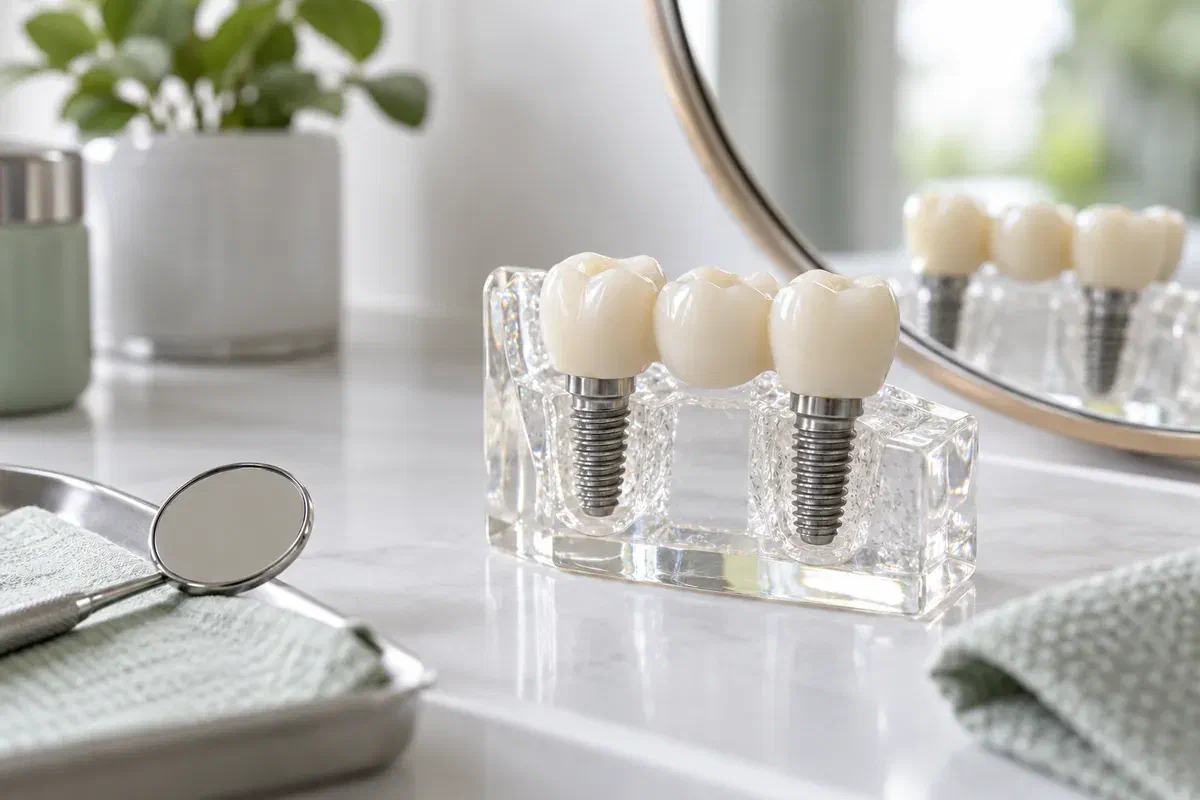
Whether teeth are already missing or only struggling, the location and condition of the area set the choices. Share what matters to you so function, appearance, schedule and daily care are weighed as a whole.
If extraction is unavoidable, a fixed bridge on implants may be considered when support can be planned. Ask how treating the area as one span compares with handling each tooth separately.
Using implants for support means sound teeth at each end need not become anchors. They are still examined, and what is found may influence the plan and how it compares with alternatives.
Perhaps it no longer fits after another tooth was lost, or it rocks when you chew. An implant bridge should be measured against those specific issues, not assumed to settle all of them.
No tooth should be removed simply to make a bridge design tidier. Diagnosis comes first, and keeping a tooth that can reasonably be kept is always part of the discussion.
Where the mouth suits it, an implant bridge provides a fixed replacement for neighbouring missing teeth. Its shape follows your gap and bite, and the adjacent natural teeth play no part in holding it. Your dentist should be candid about the degree of improvement you are likely to notice.
Choosing that route brings surgical stages and ongoing care. Implant placement has risks, healing must be confirmed, and the bridge or its parts may need attention later. Compare that with keeping and restoring individual teeth, a removable partial, a tooth-supported bridge or deferring.
Patient information: American Academy of Periodontology — multiple-tooth implant replacement
The teeth, supports and chewing forces of the span are considered as one. Ask why the proposed implant arrangement fits your area instead of judging the plan by its total number of implants.
Losing teeth can change the gums, which affects the visible result. Ask whether size, shade and gumline can be tried out in a temporary version first, and where healing tissue may limit the result.
Plaque gathers beside every implant and beneath the connected teeth, so the span needs a daily clean. Seeing the routine demonstrated beforehand helps you judge whether it suits your hands and your day.
Sequence and timing depend on whether extractions are needed, any preparatory care and how you heal. Ask to see the visits, temporary teeth arrangements, clinicians and estimated costs as a single plan.
Your dentist examines the teeth, gums, bite and health history, choosing imaging to support planning. Saving teeth, replacing them and referral for another opinion are all discussed honestly.
If extractions are needed, the team explains how they fit with implant timing and any site preparation. Healing and adequate support must be confirmed before the restorative work goes ahead.
Impressions or scans guide fabrication. Fit, tooth position, bite and the relationship with healing gums are checked, with a provisional or added try-in when the case calls for one.
The completed bridge is assessed and attached using the planned method. You receive cleaning instructions, advice on settling in, and a schedule for reviewing the bridge and implants.
Instructions after extraction or implant surgery differ from the routine for a finished bridge. Follow the team’s advice on eating, cleaning and return visits for each stage.
Ask to be shown threaders, small brushes or other aids that fit your bridge, then try them in the chair. Regular floss usually cannot pass through joined teeth as it does between separate ones.
Looseness, a new sound when you bite, a chipped surface or teeth meeting differently should be checked. Avoid pressing on the bridge to test it, and never use glue at home on a loose piece.
The bridge, its joins and the surrounding gums need ongoing checks. Ask how often to come back, especially if gum disease contributed to losing the original teeth.
When several teeth are struggling, the decisions involve diagnosis as well as replacement. These answers can help you discuss the options without assuming one design suits every situation.
Book an assessment to talk about the struggling or missing teeth in that area. We will look at what can be kept, explain what an implant bridge would need if replacement makes sense, and compare it with the other options.
Bring any recent X-rays or notes about previous treatment on the teeth in question if you have them.
