You want teeth that stay in overnight
When several adjoining teeth are missing and implants can be positioned to carry them, a fixed bridge may be discussed. Ask how a fixed design changes your cleaning routine and how it is maintained.


Worn a partial denture for years and wondering about something fixed? A bridge carried by dental implants can replace neighbouring missing teeth in some mouths. Here is how we look at suitability, staging, appearance, cleaning and long-term care for people in Old Milton.
Some people have taken a partial out of a glass every morning for a decade or more. It works, mostly, yet the clasps wear, the fit loosens and meals come with small compromises. An implant-supported bridge offers a different idea: a joined set of replacement teeth fastened to implants in the bone, staying in place and leaving the natural teeth nearby out of the job of holding it.
There is no fixed formula for how many implants that takes. Your dentist works backward from the bridge itself and from your jaw, considering bone, the length of the space, your bite, the look you are after, and how you will clean beneath it. Matching a neighbour’s treatment tooth for tooth would miss what makes your mouth different.
Our Bronte Street practice sits a short way from Milton’s historic downtown, so a first conversation is easy to arrange. Bring your current partial if you have one and tell us what frustrates you about it. We will explain what an implant bridge would involve and what caring for it would ask of you, in terms you can weigh at home.
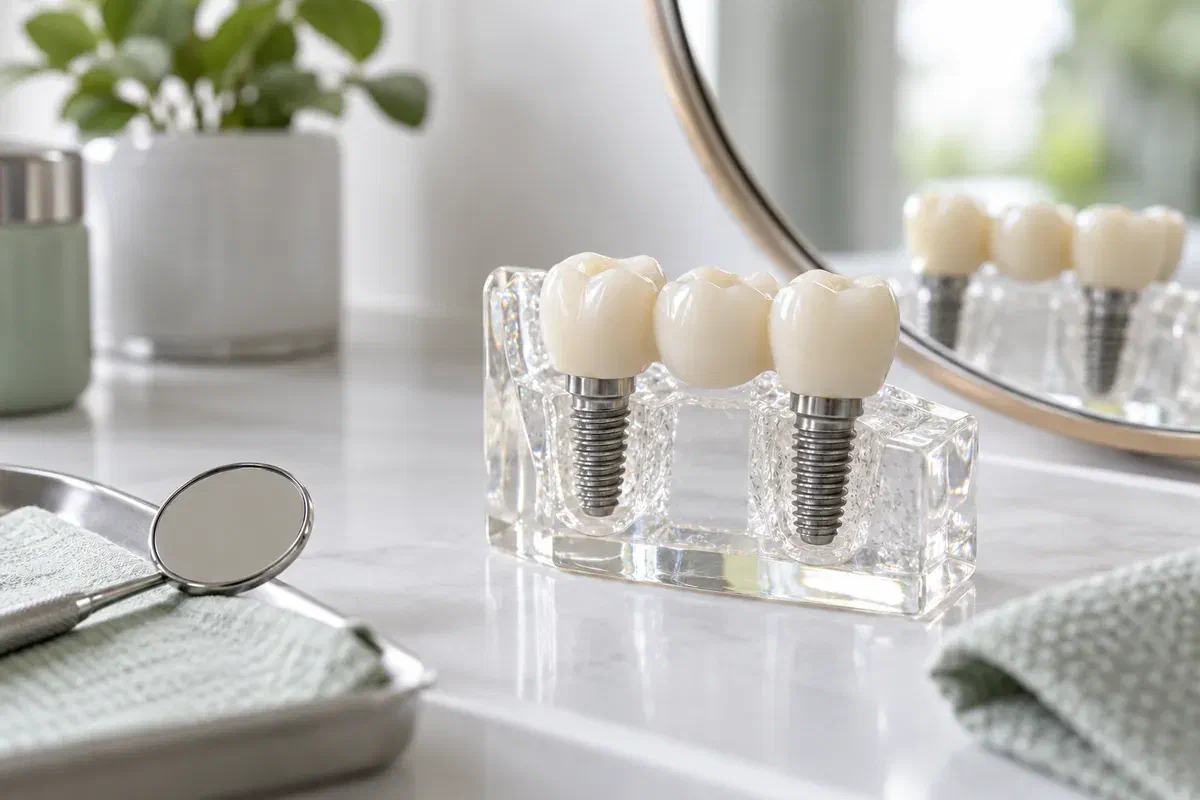
Which teeth are missing, and how healthy the rest of the mouth is, sets the range of choices. Your own list of priorities helps us consider comfort, appearance, timing and everyday care as a whole.
When several adjoining teeth are missing and implants can be positioned to carry them, a fixed bridge may be discussed. Ask how a fixed design changes your cleaning routine and how it is maintained.
Partials often grip neighbouring teeth, and some people dislike that pressure. An implant design can leave those teeth free, though they still need a check, and their condition may shape the plan.
Movement while talking, food sliding underneath, or the bulk against your palate are all worth describing. An implant bridge should be judged against those exact frustrations, not assumed to cure everything.
If any teeth are still standing where a bridge is being considered, their diagnosis and any reasonable chance of keeping them should be explored before extraction is written into the plan.
For a mouth that suits it, an implant bridge is a fixed replacement for a run of missing teeth. It is shaped to the space and the way you bite, and it does not depend on the teeth on either side for support. We will talk plainly about how much improvement is realistic in your case.
Getting there involves stages, and staying there involves upkeep. Implant surgery carries risks, healing is monitored, and the bridge or its parts may need work later. Compare that commitment with a new or adjusted partial, a tooth-supported bridge, or holding off for now.
Patient information: American Academy of Periodontology — multiple-tooth implant replacement
The bridge, its supports and the forces of chewing are considered together. Ask why the suggested number and spacing of implants suit your space instead of treating the total as the measure of quality.
Shade, tooth size, gum outline and where the bridge meets your own tissue all affect the result. Ask what can be trialled during planning or with a provisional, and what your gums may limit.
Even a fixed bridge needs daily attention around its supports and underneath the joined teeth. Learning that routine early helps you decide whether it is manageable for your hands and habits.
Pace and order depend on the site, any preparation needed and how you heal. Ask for the likely visits, what you will wear in the meantime, who is involved, and the estimated costs, all explained as one plan.
The dentist examines teeth, gums, bite and health history and chooses the imaging the plan requires. Expect a discussion of alternatives, limitations and whether another clinician should be consulted.
You learn where each implant would go, whether groundwork is needed first and how the surgery is approached. Timing varies, and healing and stable support must be confirmed before the next phase begins.
Impressions or scans guide the lab work. Fit, tooth arrangement, bite and gum contours are assessed during these visits, with a provisional or extra check when it helps.
The finished bridge is checked and fastened using the planned method. You go home with cleaning guidance, notes on getting used to it, and a review schedule for the bridge and its implants.
Surgical healing instructions and long-term bridge care are different things, so keep them apart. Follow the team’s advice on eating, cleaning and return visits as you move through each stage.
Ask for a hands-on demonstration with tools that suit your bridge’s contours. Ordinary floss usually cannot pass through joined teeth as it would between separate ones, so practise the route.
Looseness, a new click, a chip, or a bite that feels off should be examined. Avoid wiggling the bridge to test it, and never reach for household glue if something comes loose.
Replacement teeth, joins and the tissue around the implants need ongoing review. Ask how often to return and how any history of gum disease or cleaning difficulty affects that timing.
Switching to an implant bridge raises questions about support, appearance and timing. These answers are a starting point for your own conversation, not a promise that one design fits every gap.
Arrange an assessment at our Bronte Street clinic to talk about replacing neighbouring missing teeth. We will hear what matters to you, explain what an implant bridge would need, and compare it fairly with the other options available.
Bring your current appliance and any records of past extractions or implants in that area if you can.
