You want a permanent-feeling replacement
For neighbouring missing teeth, a bridge resting on implants can stay in day and night when support is available. Ask what that means for cleaning and how often professional servicing is expected.


Most people ask how an implant bridge goes in. Fewer ask how it is looked after ten years later, which is just as important. For adults in Puslinch weighing a fixed bridge on implants for several neighbouring missing teeth, this page covers suitability, stages, design and the long-term servicing a bridge may need.
Someone you know may have had a bridge chip, loosen or need replacing, and that story tends to stick. It is a fair thing to ask about early. An implant-supported bridge is a single fixed piece carrying several replacement teeth, screwed or cemented onto implants in the jaw, and like any restoration it has a working life that depends on design, habits and maintenance.
Good long-term outcomes begin with planning. The dentist looks at how much bone there is, how far the gap stretches, how hard and in what pattern you bite, what will show, and whether you will be able to clean beneath the finished span. Those answers decide the number and spacing of implants, and they also influence how easily the bridge can be serviced later.
For a household in Puslinch, the first appointment at our Bronte Street practice can cover the long view as well as the immediate one. Tell us how the missing teeth affect meals and speech, whether you wear a partial, and whether you clench or grind. We will talk through the treatment and the realistic upkeep in plain language.
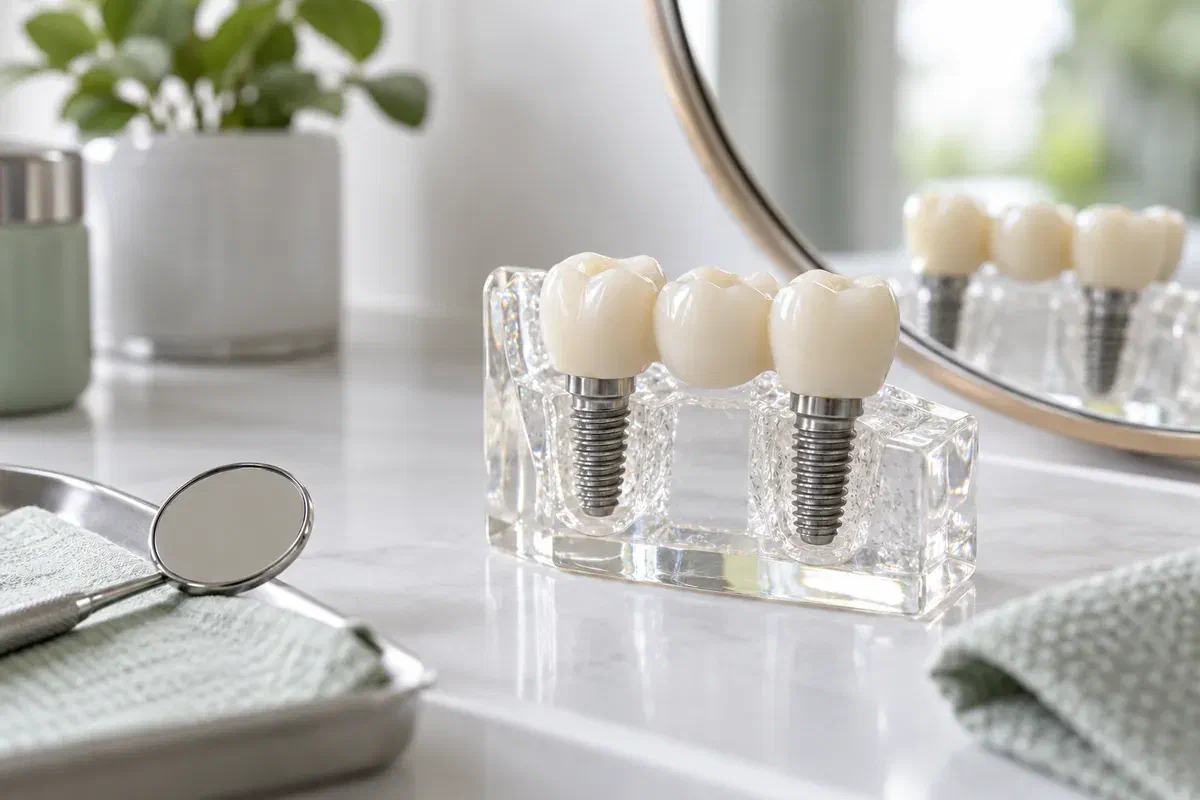
The space’s position and the health of what surrounds it narrow the options quickly. Tell us your priorities, so daily function, looks, time commitment and future servicing get equal weight.
For neighbouring missing teeth, a bridge resting on implants can stay in day and night when support is available. Ask what that means for cleaning and how often professional servicing is expected.
Because implants carry the load, the teeth at the edges of the gap keep their enamel. Your dentist still checks them, and their condition can change both the plan and how alternatives compare.
Describe what failed and when, whether a partial, a crown or an old bridge. Understanding that history helps shape a sturdier plan, though no design can promise to remove every risk.
Teeth still present in the planned span should be properly diagnosed, with any sensible way to keep them explained, before extraction is accepted as part of the bridge plan.
Where it suits the mouth, the bridge gives a stable, fixed set of teeth across the gap, built to your bite and kept independent of the teeth on either side. Ask your dentist how much better chewing and comfort are likely to be for you specifically, and which limits are worth knowing about from the start.
Ownership includes maintenance. Surgery has its own risks and healing is confirmed before moving on, but the longer commitment is the decades that follow, during which a porcelain surface may wear, a screw may need tightening or the bridge may need remaking. Weigh that against a partial, a bridge on natural teeth or waiting.
Patient information: American Academy of Periodontology — multiple-tooth implant replacement
A span that suits your bite tends to be easier to keep in good shape. Ask your dentist to explain why the suggested implant spacing fits your chewing pattern, not only the length of the gap.
Materials affect appearance, chip resistance and how repairs are handled. Ask what is proposed, what can be previewed before the final piece, and how your gums may shape the look.
Some designs let the dental team take the bridge off for repairs or deep cleaning. Knowing which kind you are getting, and how you will clean it daily, helps you plan for the years ahead.
Pace depends on the site, any preliminary work and your healing response. Ask for a single written plan showing likely visits, how the gap is handled meanwhile, who is involved and the estimated cost of each phase.
Teeth, gums, bite habits and medical history are reviewed, and scans are taken where planning needs them. You will talk about alternatives, what each option cannot do, and whether a specialist should weigh in.
Implant positions are chosen with the finished bridge in mind, including access for future servicing. Any preparatory work is explained first, and the bridge stage waits until healing and stability are confirmed.
The laboratory works from impressions or a digital scan. Try-in appointments look at seating, tooth position, the bite and how the bridge meets the gum, sometimes with a temporary version before the final one.
The bridge is fastened with its planned connection and checked once more. You receive cleaning instruction, a description of what normal adjustment feels like and a maintenance schedule for the years ahead.
Short-term healing advice ends; the everyday routine for a finished bridge does not. Keep the two sets of instructions apart, and follow your team’s advice on food, cleaning and recall visits.
Food and plaque collect under joined teeth where floss cannot simply slide through. Ask which threaders, brushes or water flossers match your bridge and rehearse the motion with the hygienist.
A rough edge, a new click, slight movement or a bite that suddenly feels high can signal a component issue. Phone and describe it rather than wiggling the bridge, and do not try a home fix.
Clenching, grinding or using your teeth as tools puts extra strain on any restoration. Mention these habits, and ask whether a night guard is worth considering for your situation.
Choosing an implant bridge means thinking about support and appearance now, and servicing later. These answers can frame your consultation without suggesting one design suits every gap.
Make an appointment with Dr. Anjum to look at the gap and talk about what an implant bridge would mean over time. We will cover the support it needs, how it would be maintained and how it compares with the other suitable choices.
Records of any existing implants, bridges or partials, including the implant system if known, are useful to bring.
