You are tired of a denture that won’t stay seated
Explain when it moves and the adjustments you have had. Then we can weigh whether a reworked conventional denture, implant support or another step tackles what is really going on.


An implant denture is a commitment that runs well past the day it is fitted. For anyone weighing it from Brampton, our Milton team sets out the full picture: each treatment stage, what follow-up involves, which parts wear over time, and how a conventional denture compares.
It is natural to focus on the finished smile. Yet an implant denture involves surgery, healing, fabrication and a lifetime of upkeep. The implants, placed in the jaw, add retention or support to an appliance that replaces many teeth, and the way it connects decides much of the work that comes after.
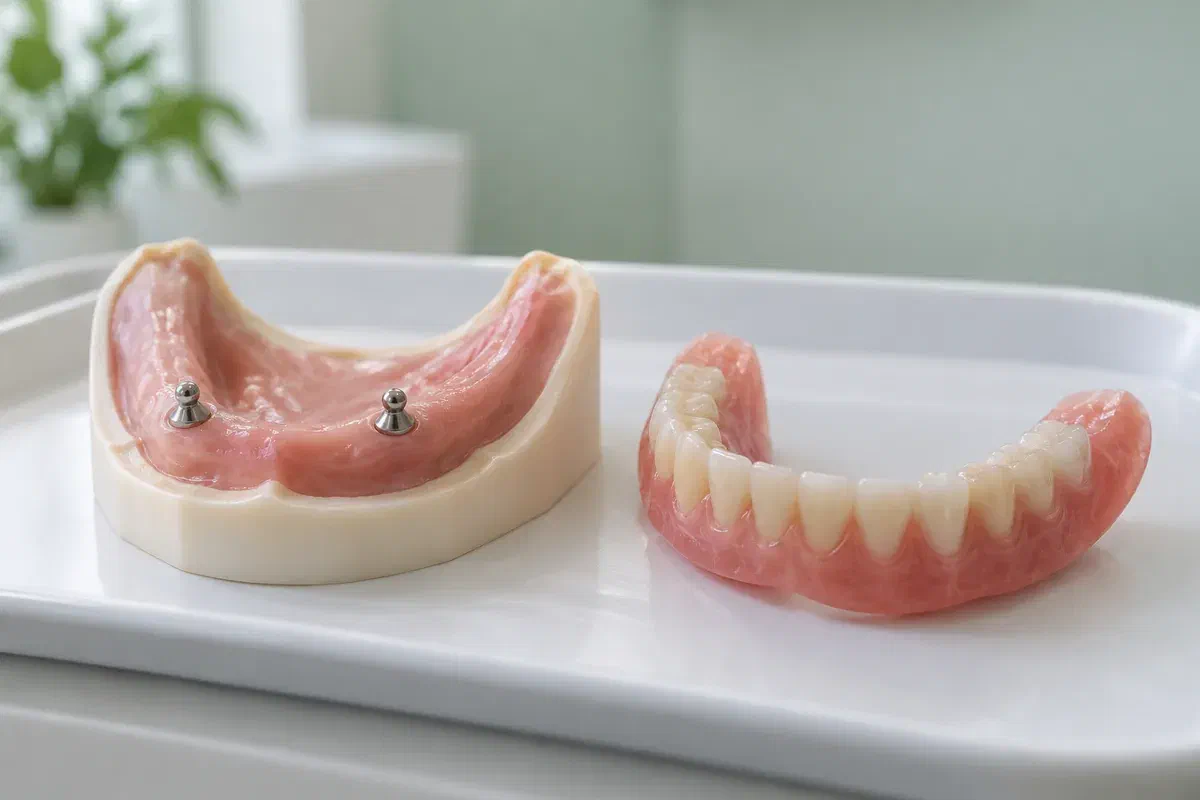
A removable overdenture is held by implant attachments, rests partly on the gums and comes out each day so you can clean it. A fixed restoration is carried more fully by the implants and is removed only by a clinician. Neither is maintenance-free, and the type of upkeep is quite different for each.
Families in Brampton often juggle work shifts and caregiving, so knowing the whole sequence up front helps. We begin by asking what you would like to improve, then assess bone, gum tissue and general health, and compare realistic options alongside the time and care each would involve over the years.
Implants suit some denture problems better than others, so your existing appliance and the tissues under it still need examining. Knowing exactly why a denture feels unstable or sore stops you from paying for the wrong fix.
Explain when it moves and the adjustments you have had. Then we can weigh whether a reworked conventional denture, implant support or another step tackles what is really going on.
Fixed designs bring their own demands. Look at cleaning access beneath them, the ease of removing a clip-in alternative, how each feels and the professional maintenance each will need over time.
Before removing teeth, ask how they are likely to fare and whether saving them is reasonable. A full plan explains the in-between period, temporary teeth and the stages beyond the first fitting.
Implants are not suitable for all people or all parts of the jaw. Your examination should make the limits clear and compare options that are practical for your health and circumstances.
Where implants suit, linking a denture to them can make it more retentive or stable than relying on the tissues alone. Ask for that benefit in practical terms: how the appliance is expected to sit, what adjustment may be needed and which of your present concerns it is likely to ease.
That improvement comes with ongoing responsibilities and no guarantee of unrestricted eating. Surgery, healing, regular maintenance and possible future repairs belong in your decision. Considering them together with the benefits helps you choose a plan you are comfortable sustaining.
Patient information: Cleveland Clinic — removable and fixed implant-supported dentures
Removable attachments and a fixed restoration solve support in distinct ways. Ask why one is recommended and how daily life, maintenance and future work would differ with the other.
Tooth placement, the material replacing lost tissue and lip support influence how the denture looks and feels. Ask what will be reviewed during fabrication and where adapting may take time.
Consider what you can manage now and what help you may need later. Cleaning, part replacement and professional reviews should be visible parts of the plan from the outset.
Expect multiple appointments and possibly more than one clinician. Ask for the sequence in writing, from preparatory treatment and any interim appliance to healing reviews, the final fitting and continuing maintenance.
The dentist looks at your remaining teeth, gums, health history and current denture. Records and imaging help determine suitability, and your priorities around chewing, speaking, handling and cost frame the discussion.
Removable and fixed approaches are compared where both apply, with the planned implant layout and alternatives. Ask about surgical risks, additional procedures, temporary teeth and which costs could change.
The treating team carries out the planned order and checks healing before continuing. Impressions, lab fabrication and try-ins shape the appliance around its support, and timing depends on your mouth.
At fitting, the appliance is assessed and its use explained. Practise any removal and placement, learn the cleaning method, and lock in your early review and long-term maintenance.
Healing-period guidance differs from long-term care of the completed appliance. Keep your written instructions and ask about wear, cleaning, diet and contact details at each stage.
An overdenture is removed as directed so it and the tissues can be cleaned. A fixed restoration is cleaned in the mouth, around and below; do not try to free its connections at home.
Ask which brushes, cleansers and storage suit your appliance. Avoid very hot water, household chemicals or improvised tools, which can harm materials and parts.
Report pressure spots, movement returning, difficulty removing the appliance or an altered bite. Attachments and denture materials wear, so servicing may be needed even with stable implants.
Ask about design and stages, even if dentures are familiar to you. Implants bring new decisions about treatment, handling and the care needed in the years after fitting.
Come in to our Bronte Street practice for a consultation about your current denture or plans to replace several teeth. We will review designs that may suit you, explain the full sequence and describe the long-term care involved.
Bring your current dentures and any details about previous implants or restorative treatment you have had.
